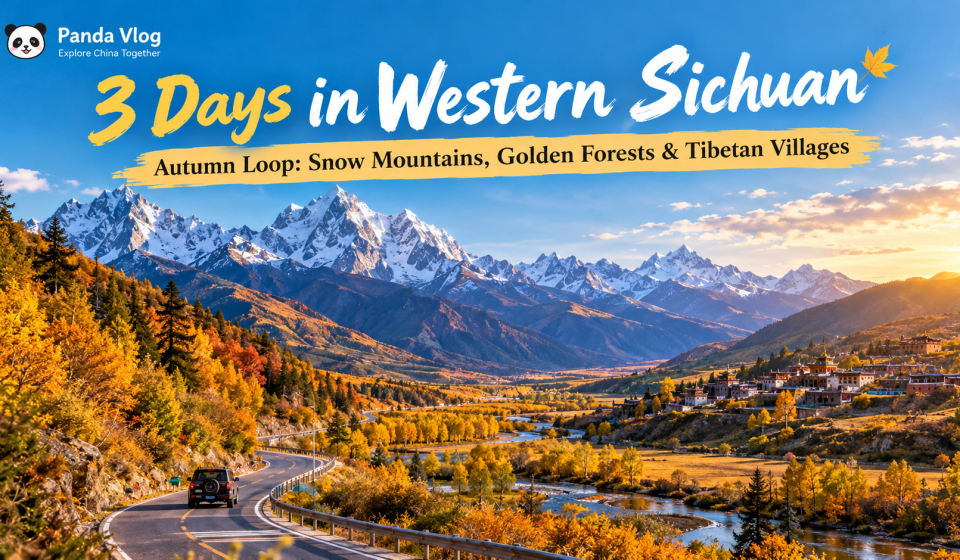
3 Days in Western Sichuan: An Autumn Loop of Snow Mountains, Golden Forests and Tibetan Villages

Autumn in western Sichuan feels like nature has opened a giant paint box.
From September to November, different parts of western Sichuan gradually take on their autumn colors. Golden grasslands, red and yellow forests, deep-blue alpine lakes, snow-covered mountains and traditional Tibetan villages create some of the most photogenic landscapes in southwest China.
This 3-day western Sichuan loop is designed around the scenery rather than rushing through cities. Starting from Chengdu, the route passes through Siguniang Mountain, Danba, Yala Snow Mountain, Moshi Stone Park, Yuzixi, Xinduqiao, Gedilamu and Mugecuo before returning to Chengdu.
If you are looking for an autumn road trip filled with snow mountains, colorful forests, Tibetan villages and sunset views, this route offers a compact introduction to the landscapes of western Sichuan.
Travel Tip: Autumn arrives at different times depending on altitude, location and weather conditions. The scenery can change quickly in the mountains, so keep some flexibility in your schedule.
Western Sichuan 3-Day Autumn Loop at a Glance
| Day | Route | Main Highlights | Overnight |
|---|---|---|---|
| Day 1 | Chengdu → Shuangqiao Valley → Danba | Autumn forests, snow mountains, Tibetan villages | Danba |
| Day 2 | Danba → Yala Snow Mountain → Moshi Stone Park → Yuzixi → Xinduqiao | Snow mountains, black stone landscape, sunset and golden scenery | Xinduqiao |
| Day 3 | Xinduqiao → Gedilamu → Mugecuo → Chengdu | Alpine scenery, autumn forests, lakes and reflections | — |
This is a scenic but relatively intensive three-day route. You will spend a significant amount of time on mountain roads, so it is better suited to travelers who want to see a lot of scenery in a short period of time.
Day 1: Chengdu → Shuangqiao Valley → Danba
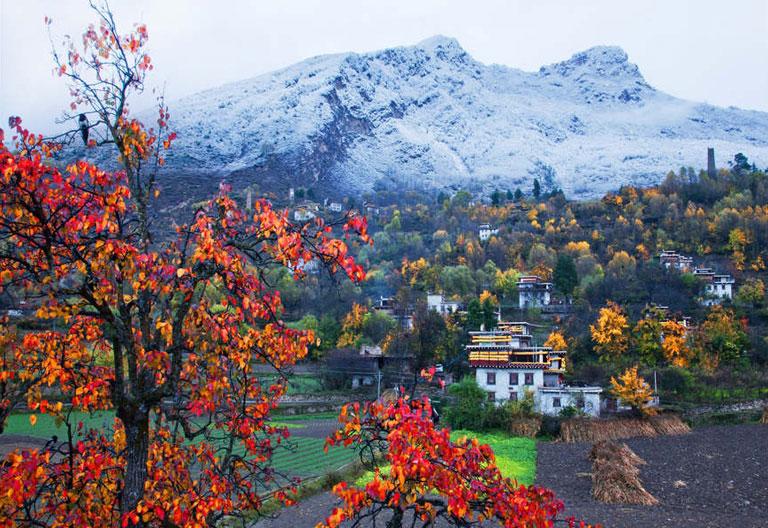
Start from Chengdu
An early start is recommended. Leaving Chengdu at around 7:00 AM gives you more time to enjoy Shuangqiao Valley before continuing toward Danba.
The further you travel west, the more the landscape begins to change. Urban scenery gradually gives way to mountains, forests, valleys and highland landscapes.
Shuangqiao Valley: Autumn Forests and Snow Mountains
The first major stop is Shuangqiao Valley in Siguniang Mountain.
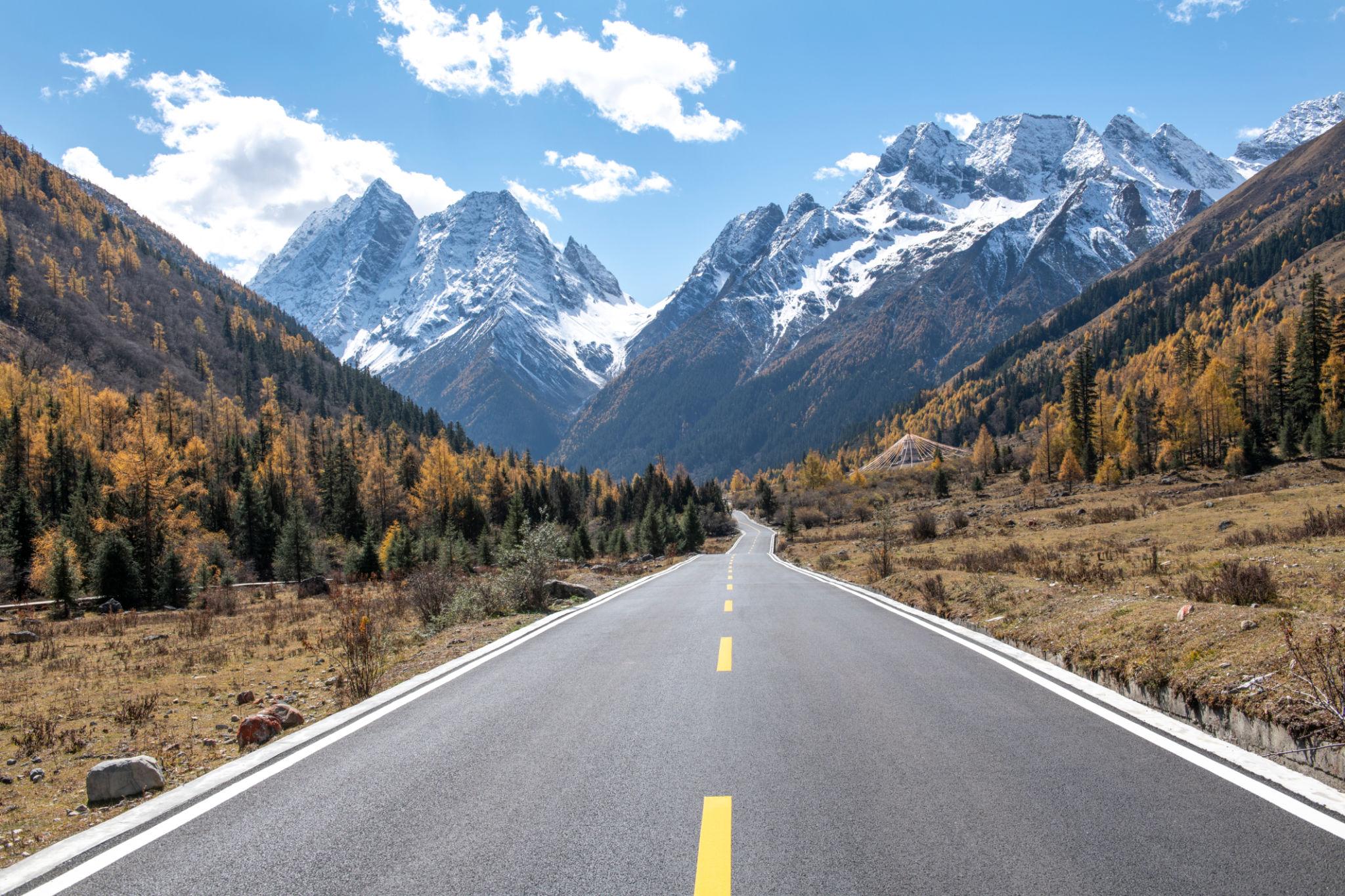
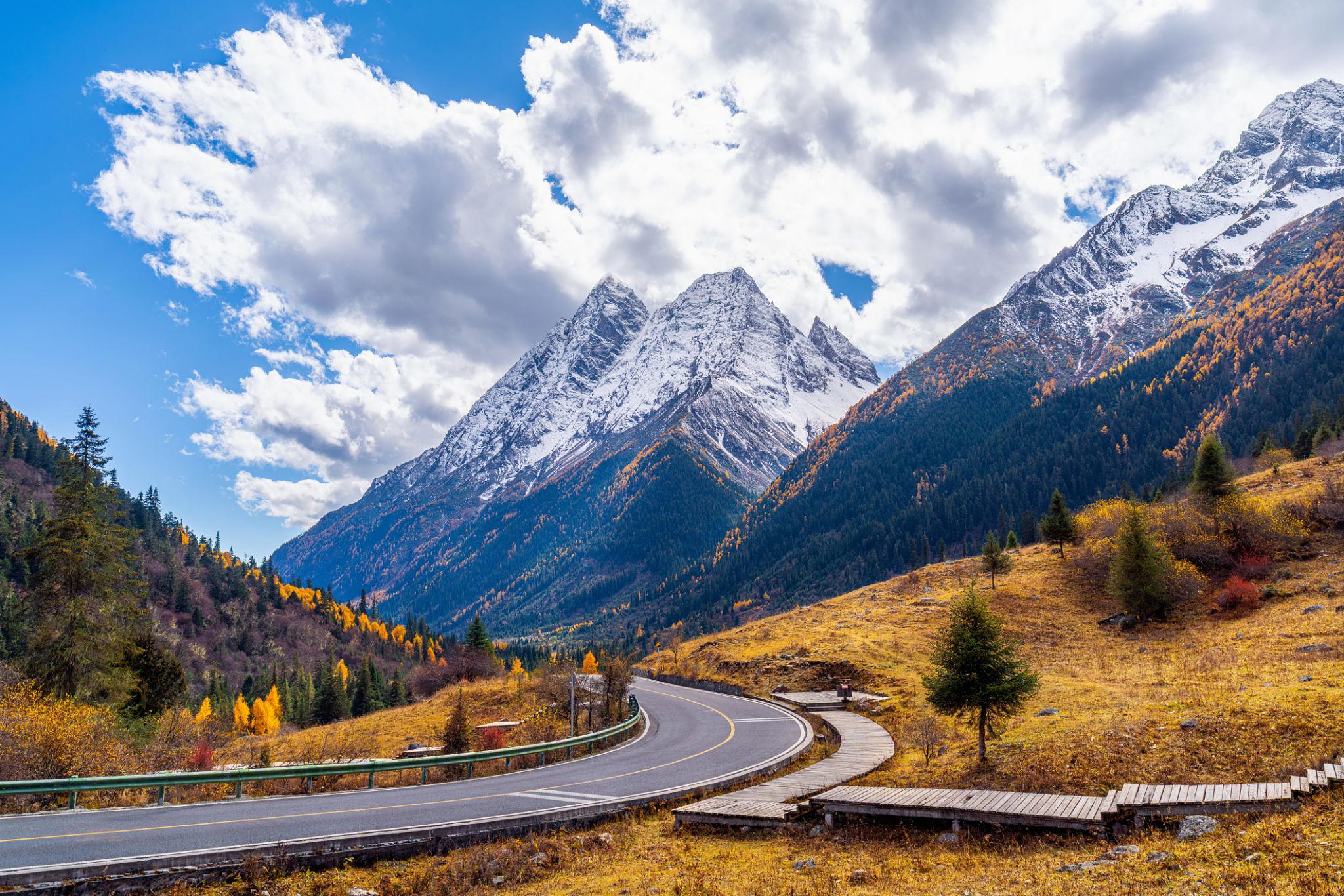
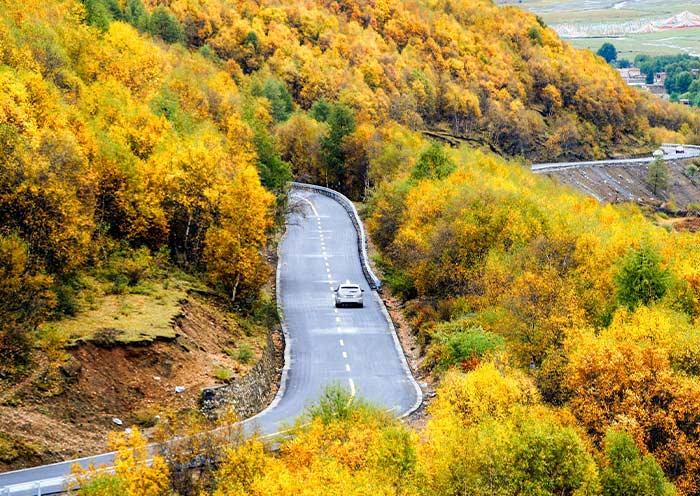
Autumn transforms the valley into a mixture of golden and red forests, with snow-covered mountains rising behind the trees. The combination of colorful forests and high peaks is one of the main reasons to include Shuangqiao Valley in an autumn western Sichuan itinerary.
One of the most recognizable views is around Budala Peak, where the mountain scenery, forest and road can create dramatic photographs.
For photographers, the route offers plenty of opportunities to capture:
- Golden and red autumn forests
- Snow-covered mountain peaks
- Mountain roads surrounded by forests
- Highland valleys
- Wide landscape views
If fresh snow arrives in the mountains, the contrast between white snow, colorful forests and blue sky can make the scenery even more striking.
Photography Tip: Look for compositions that combine the road, forest and snow mountains rather than photographing the mountains alone. The road can add depth to wide landscape photographs.
Evening in Danba
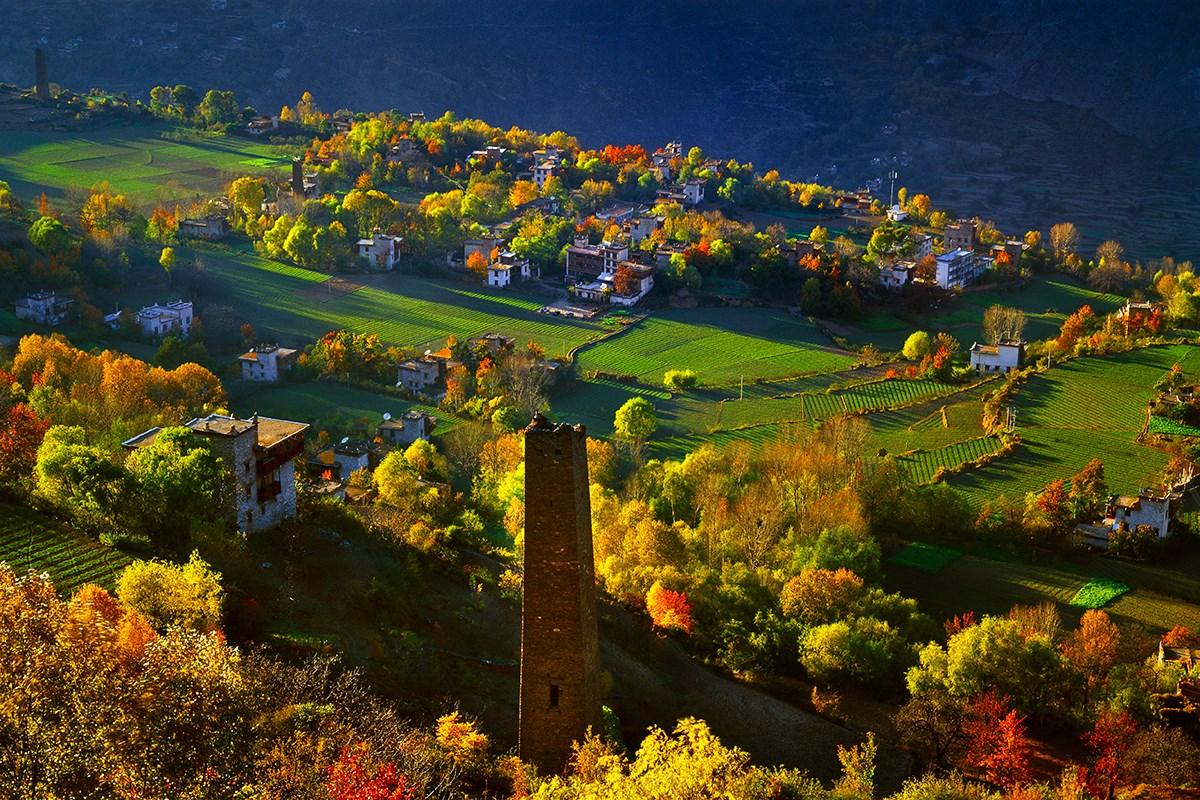
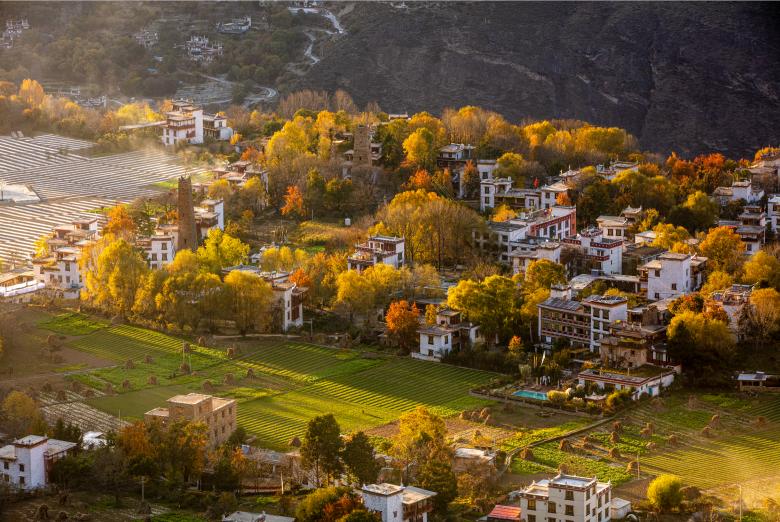
After visiting Shuangqiao Valley, continue toward Danba.
Danba is known for its traditional Tibetan villages and distinctive mountain scenery. Arriving in the evening gives you the opportunity to stay in a local-style accommodation, including a Tibetan-style guesthouse or village homestay.
If the weather is clear, the evening can also be a good time to enjoy the mountain surroundings and, away from strong city lights, look up at the night sky.
Overnight: Danba
Day 2: Danba → Yala Snow Mountain → Moshi Stone Park → Yuzixi → Xinduqiao
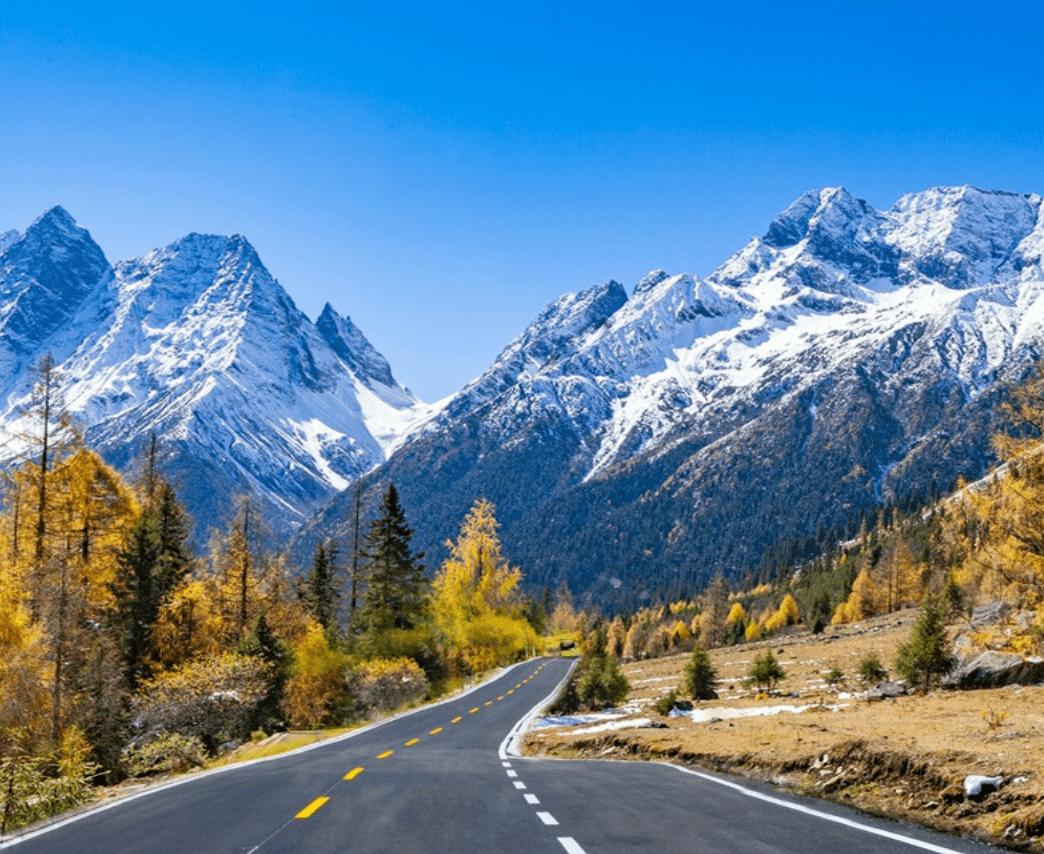
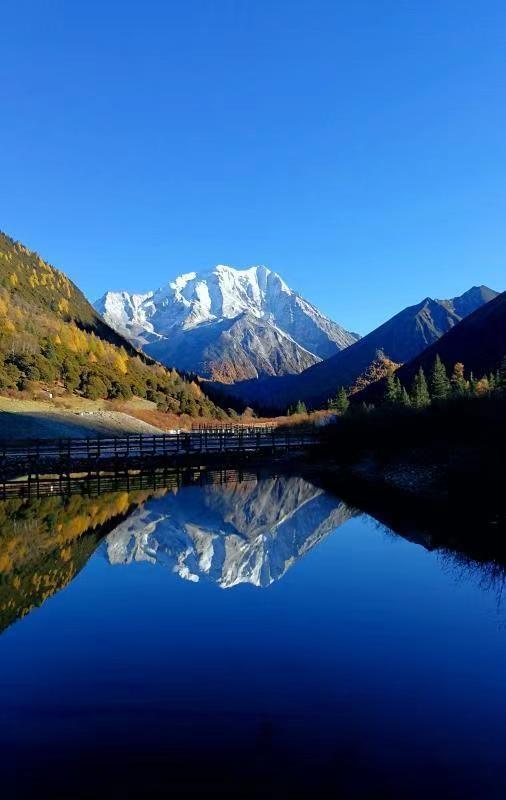
Day 2 is the most scenic-packed day of the itinerary, combining snow mountains, unusual geological landscapes, highland grasslands and sunset views.
Yala Snow Mountain
The first major stop is Yala Snow Mountain.
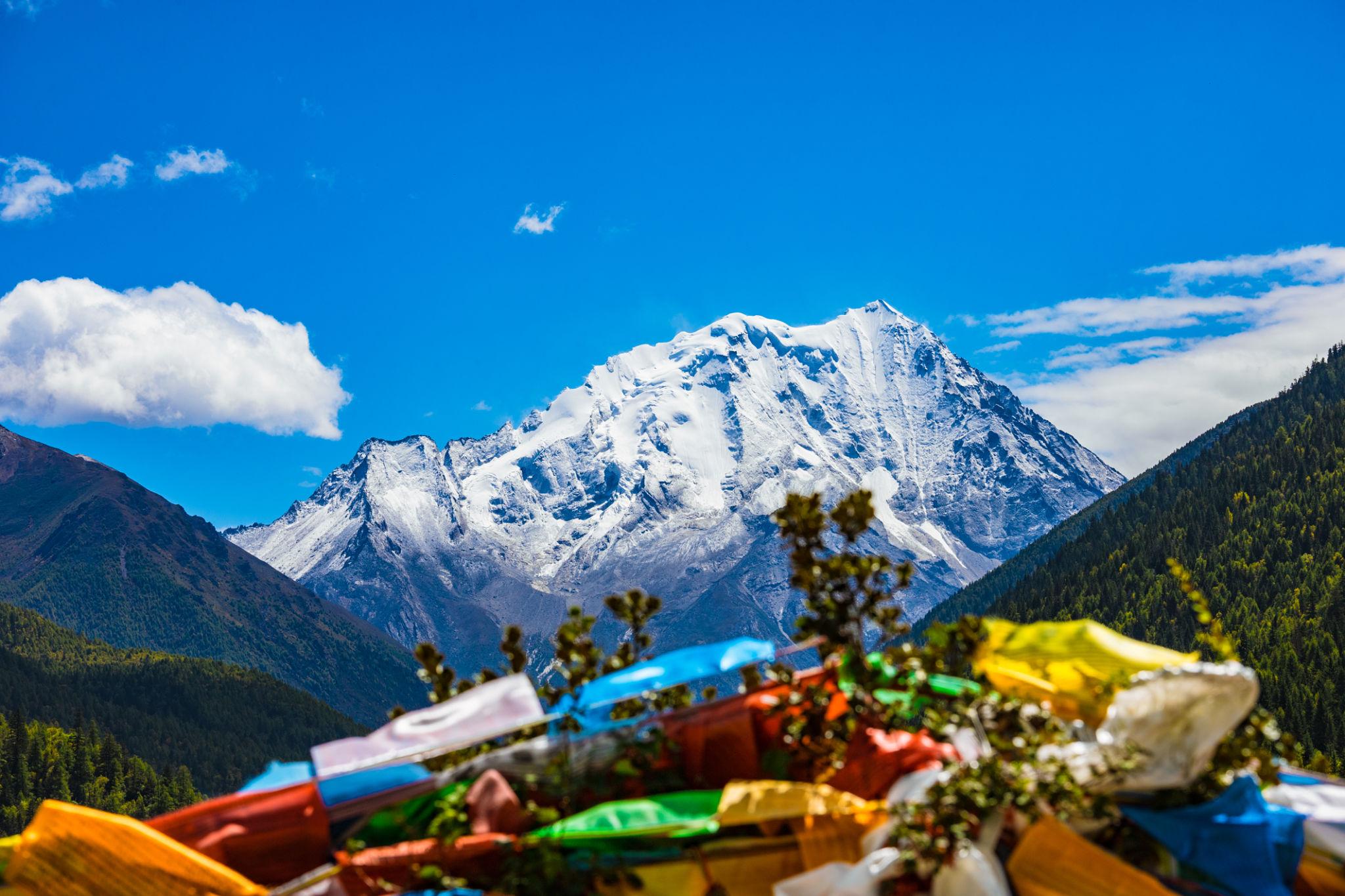
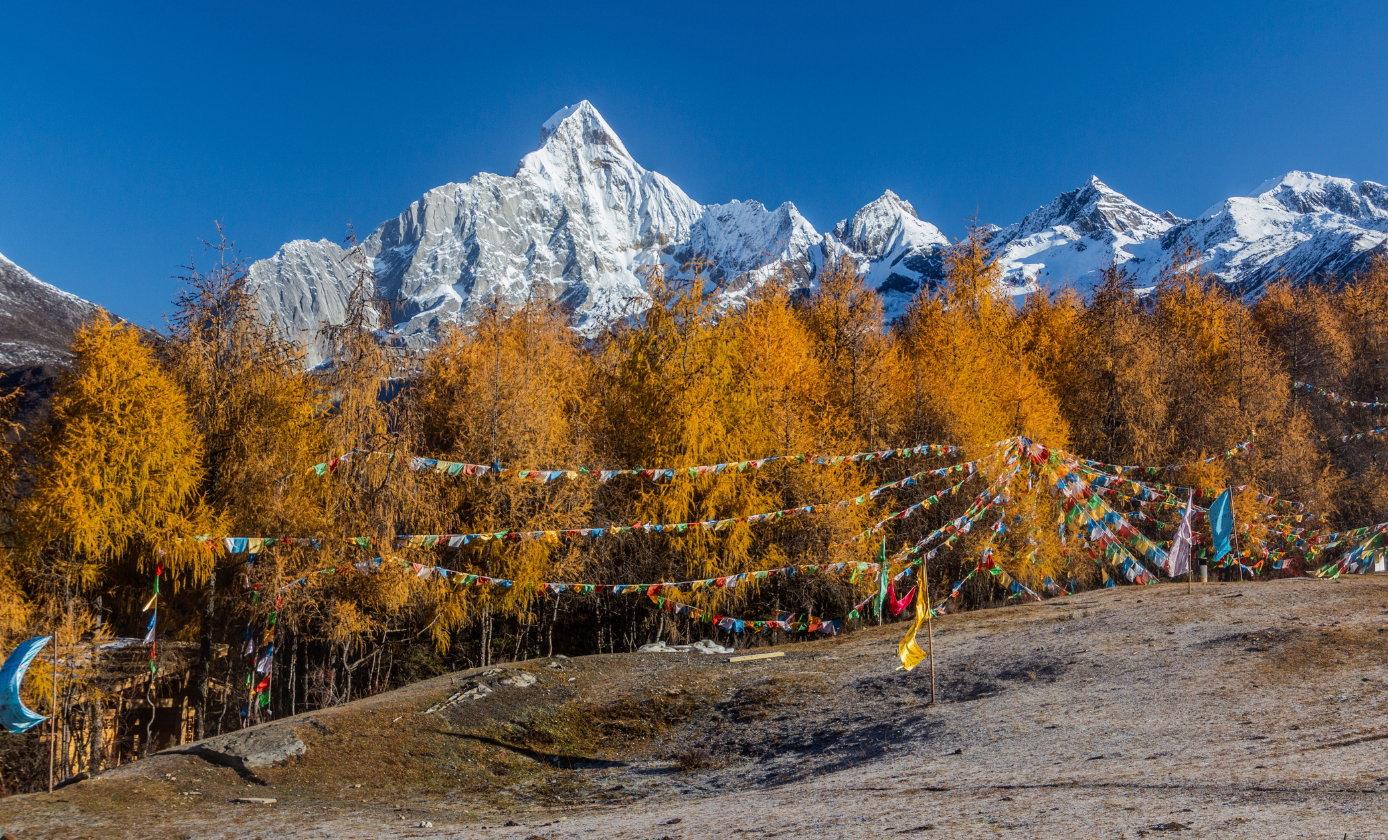
The combination of snow-covered peaks, highland scenery and colorful prayer flags creates a distinctly Tibetan landscape.
In autumn, the surrounding landscape can become especially beautiful as the grasslands and vegetation begin to change color.
This is a place where it is worth slowing down for a while rather than simply taking a quick photograph.
Moshi Stone Park: A Different Side of Western Sichuan
Next, continue to Moshi Stone Park.
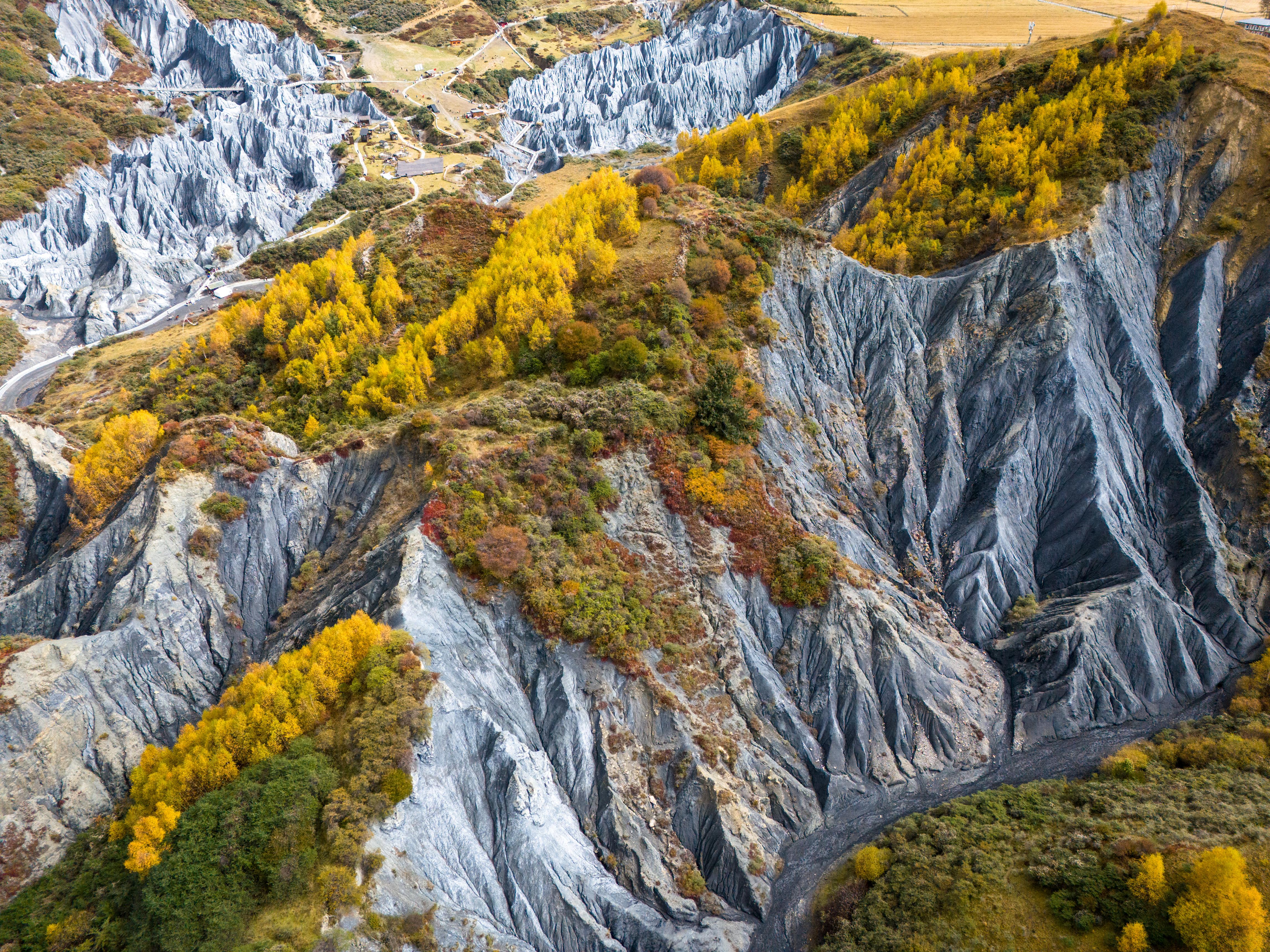
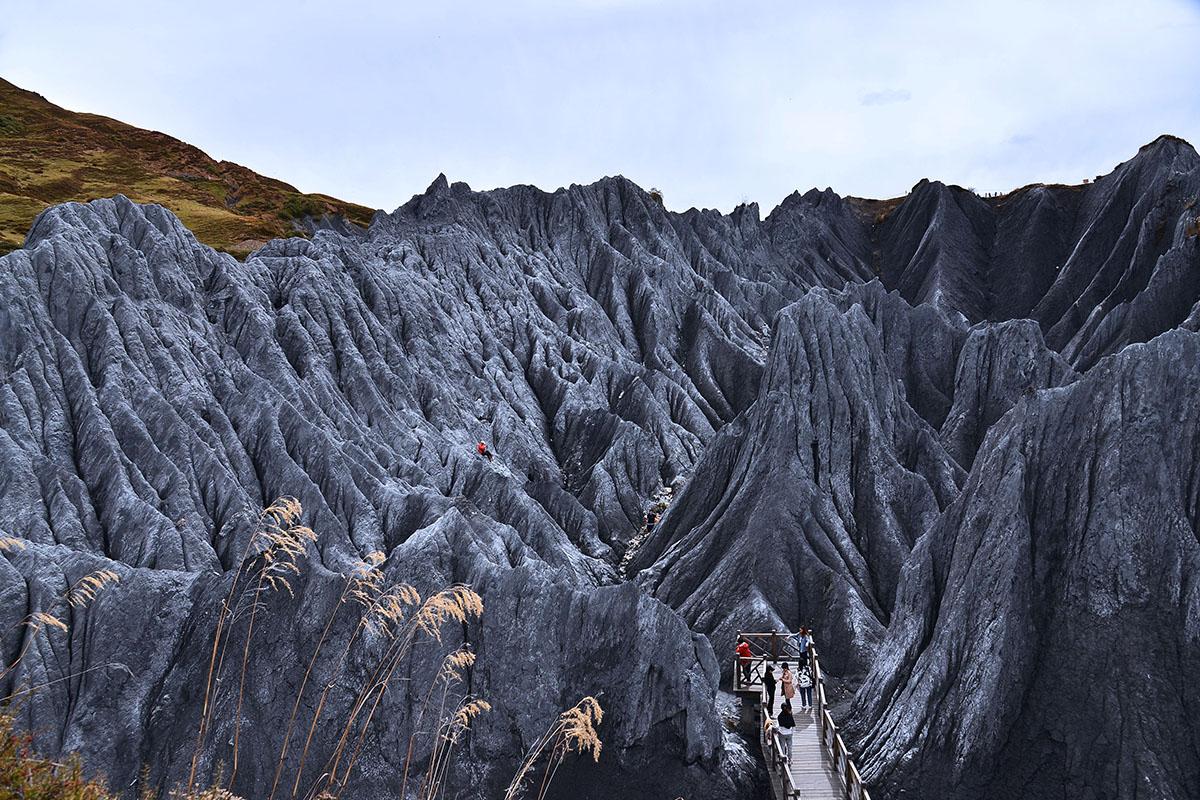
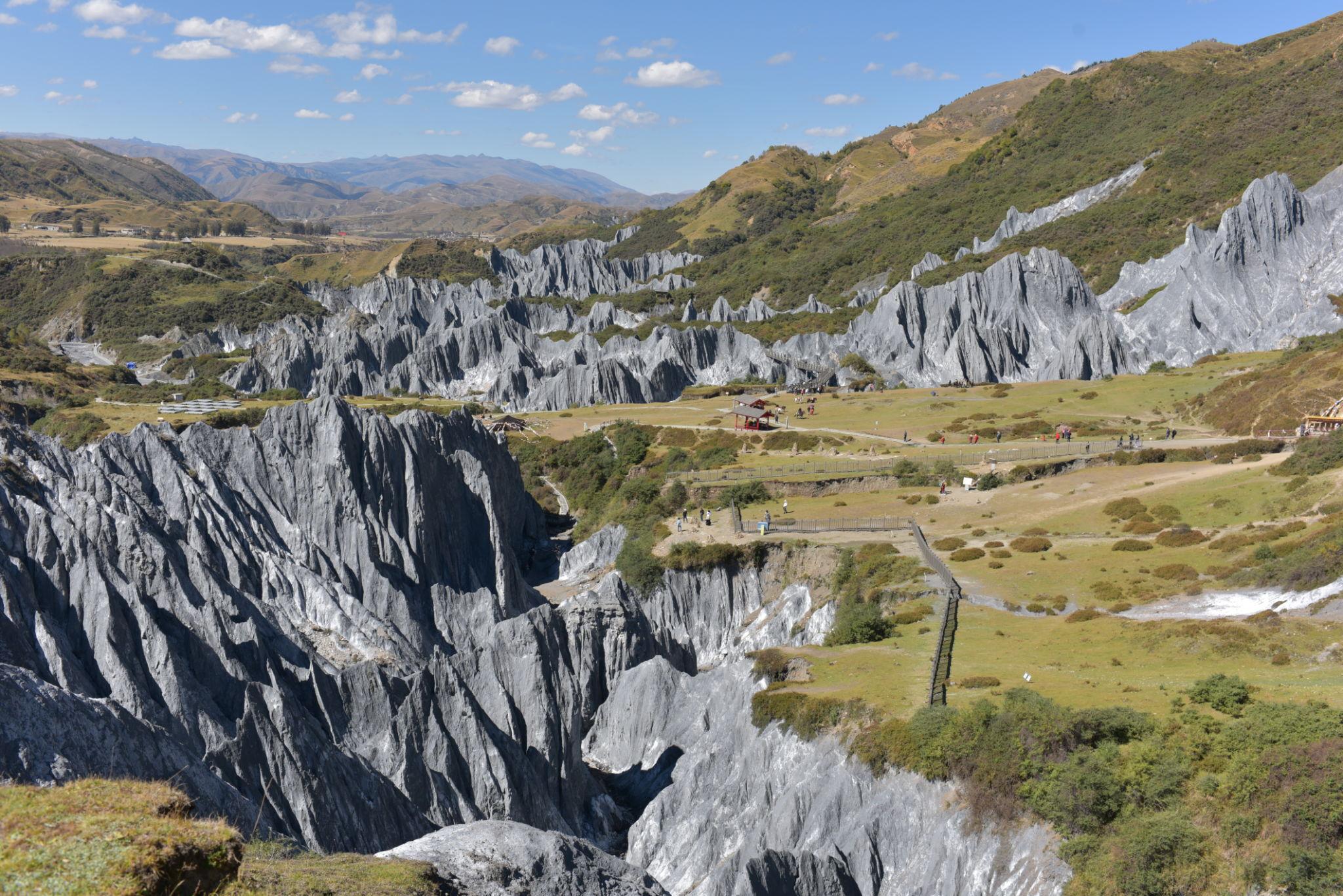
Unlike the forest and snow-mountain scenery earlier in the trip, the landscape here is dominated by dark stone formations.
The unusual rock formations can create an almost otherworldly atmosphere, which is why many visitors feel as if they have stepped onto another planet.
The dark rocks also provide a strong contrast with autumn colors and bright clothing.
Photography Tip: Bright-colored clothing can stand out strongly against the dark stone landscape, especially in wide-angle photographs.
Yuzixi: Snow Mountains and Sunset
Continue toward Yuzixi, one of the highlights of the second day.
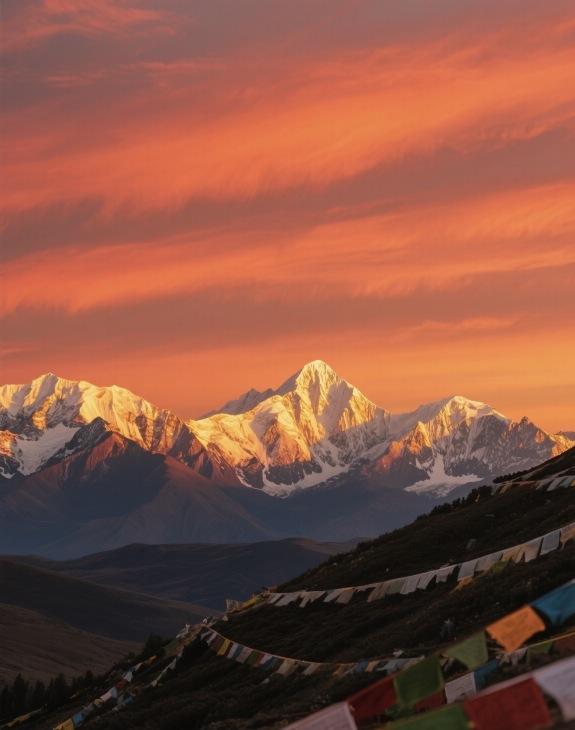
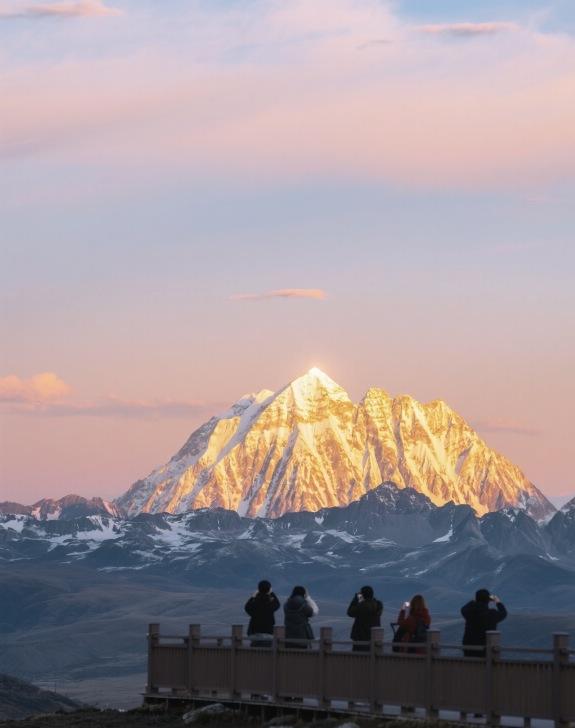
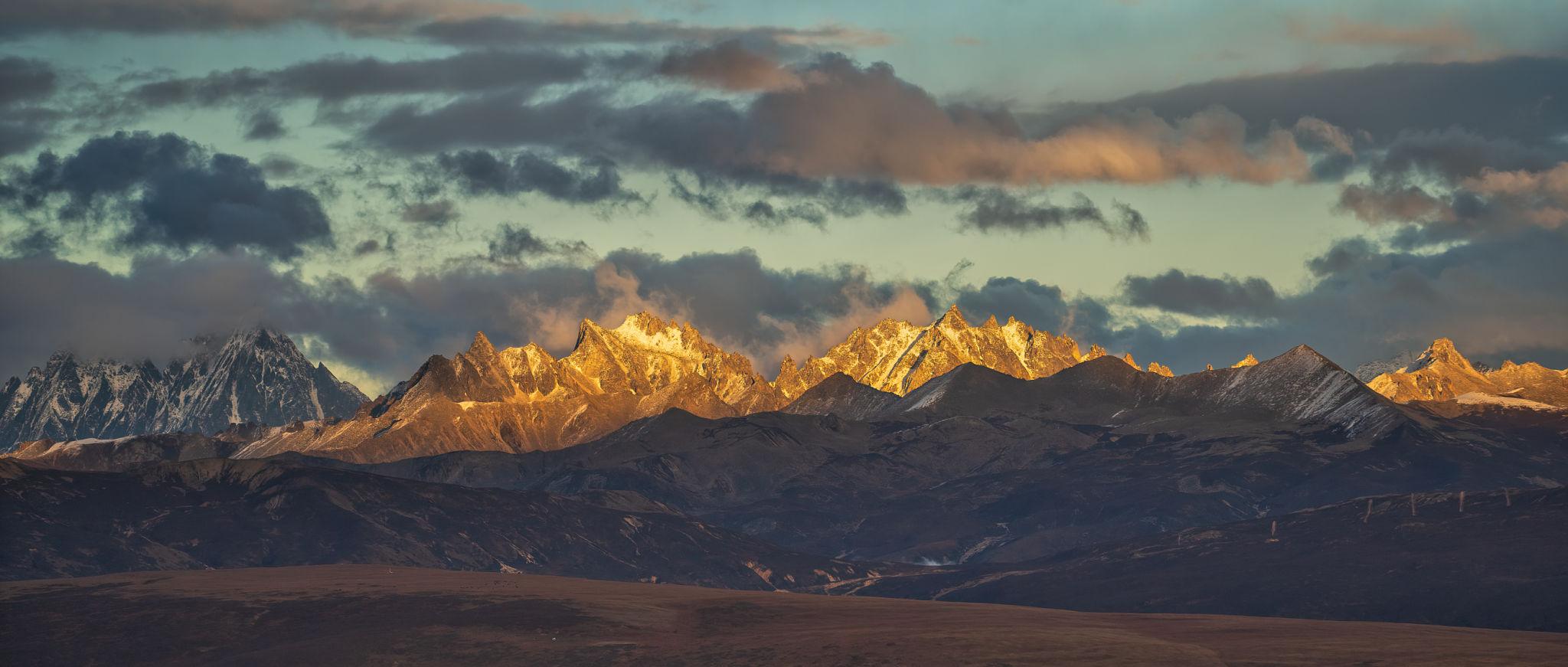
Yuzixi is known for its highland landscape and panoramic views toward surrounding snow mountains. At an elevation of around 4,200 meters, the viewpoint can offer wide views across the mountain landscape.
The late afternoon is particularly attractive when weather conditions are good.
As the sun gets lower, the snow-covered peaks may take on warm golden tones. This is the classic “golden mountain” effect often photographed in western Sichuan.
However, the effect depends heavily on clouds, visibility and sunlight. It is better to think of it as a possibility rather than a guaranteed sight.
Photography Tip: Arrive before sunset rather than just before the sun disappears. This gives you time to find a good viewpoint and photograph the changing light.
Evening in Xinduqiao
After sunset, continue to Xinduqiao for the night.
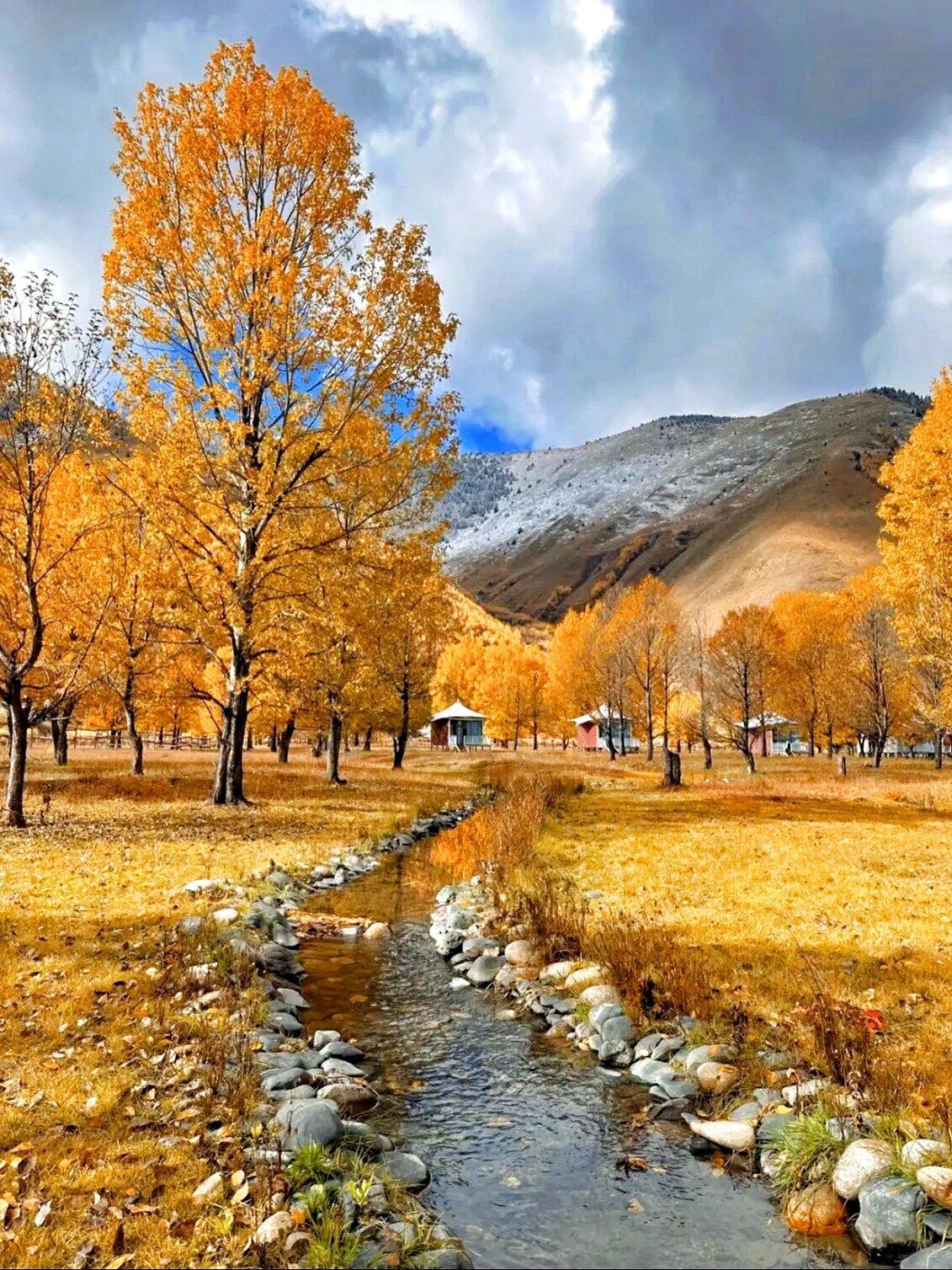
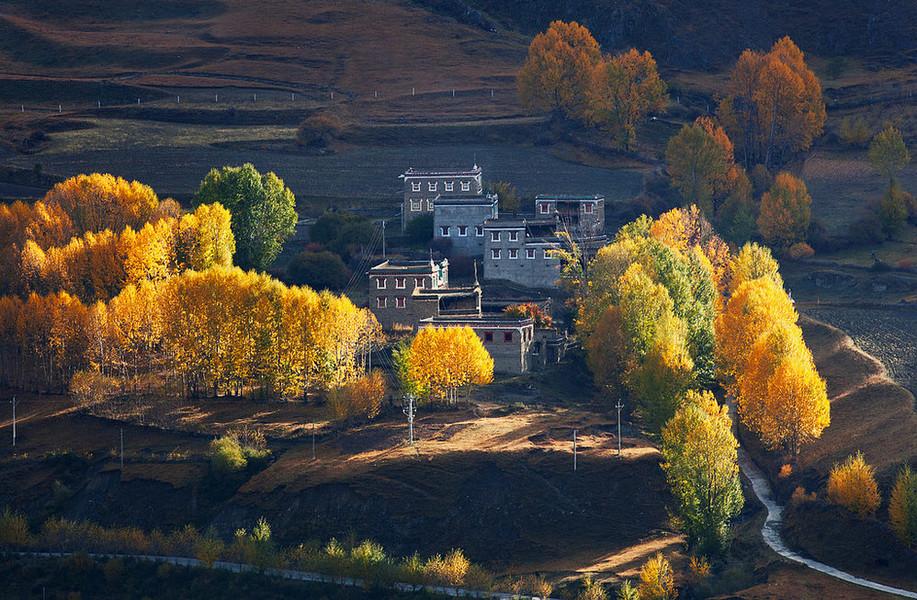
Xinduqiao is widely associated with photography in western Sichuan and is located at an elevation of around 3,460 meters in the town area.
The landscape around Xinduqiao is characterized by mountain valleys, Tibetan-style homes, roads and stands of trees. In autumn, the golden poplar trees can become one of the most attractive features of the area.
On a clear morning, low clouds or mist can sometimes appear around the valleys, while sunlight filters through the golden trees.
Overnight: Xinduqiao
Day 3: Xinduqiao → Gedilamu → Mugecuo → Chengdu
The final day combines another highland viewpoint with an alpine lake before the long drive back to Chengdu.
Gedilamu: Snow Mountains, Swings and Wooden Cabins
The first stop is Gedilamu.
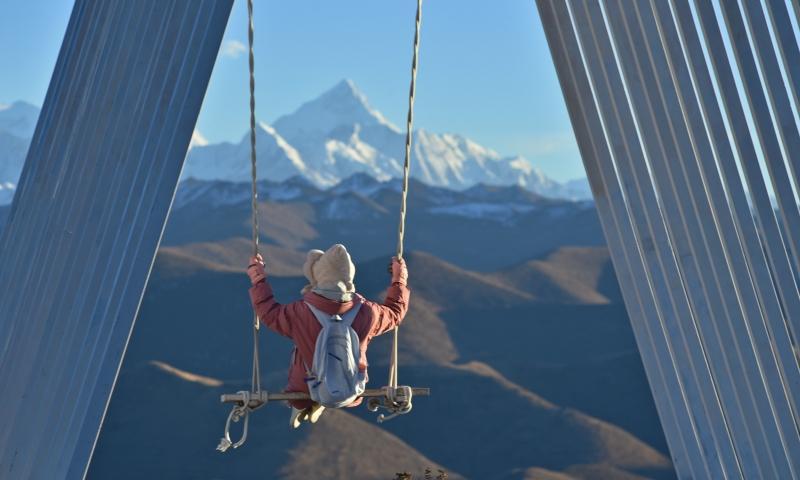
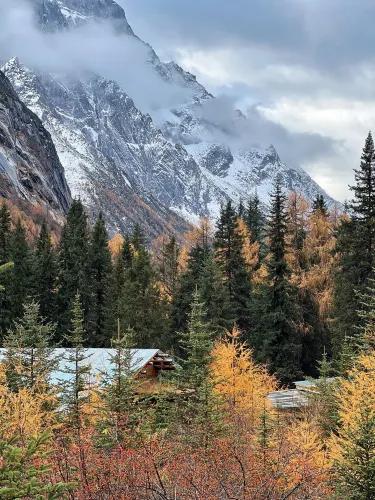
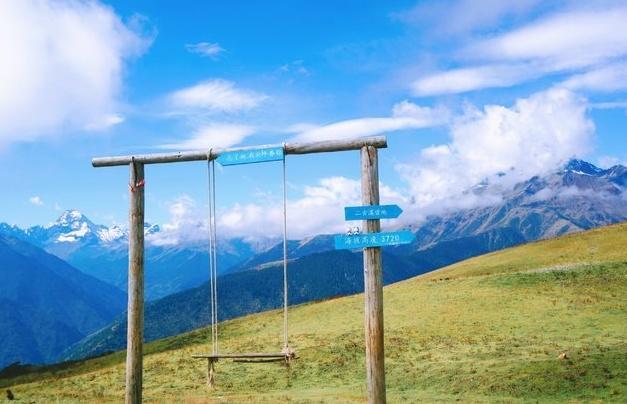
The attraction has become known for its highland scenery and simple photographic elements, including swings, a carousel and small wooden cabins.
The combination of these man-made elements with snow mountains and autumn scenery creates a distinctive visual style.
For photography, the swing with a mountain backdrop is one of the most recognizable compositions.
The wooden cabins and surrounding landscape can also provide quieter photographs away from the main viewpoint.
Mugecuo: Alpine Lake and Autumn Forests
The final major scenic stop is Mugecuo.
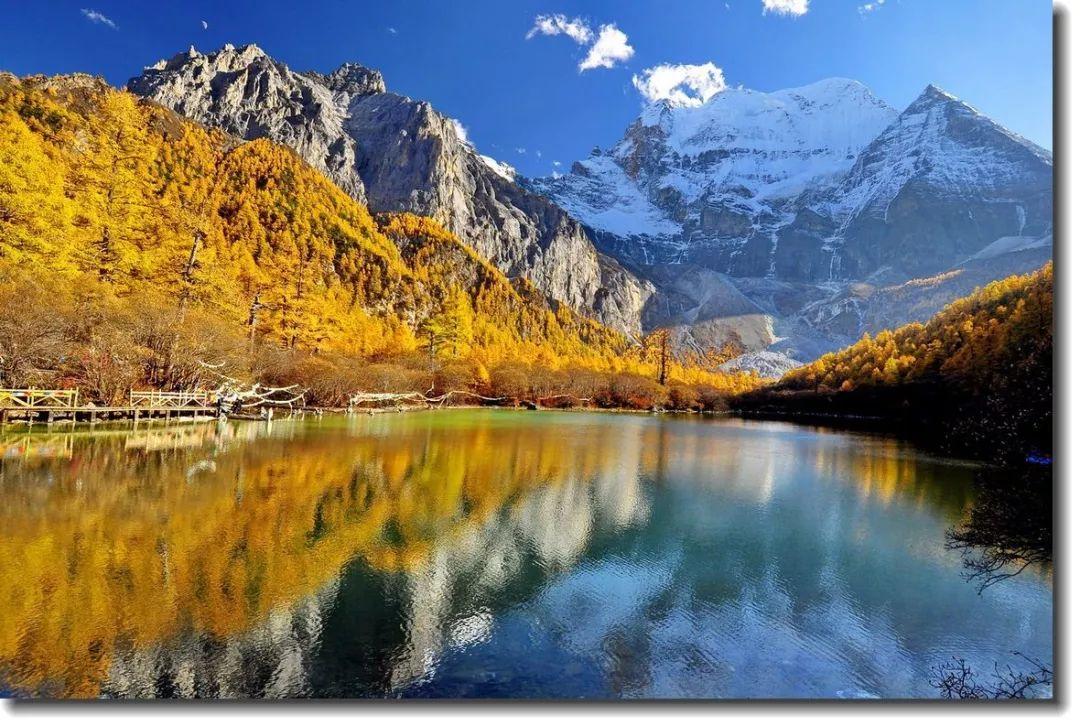
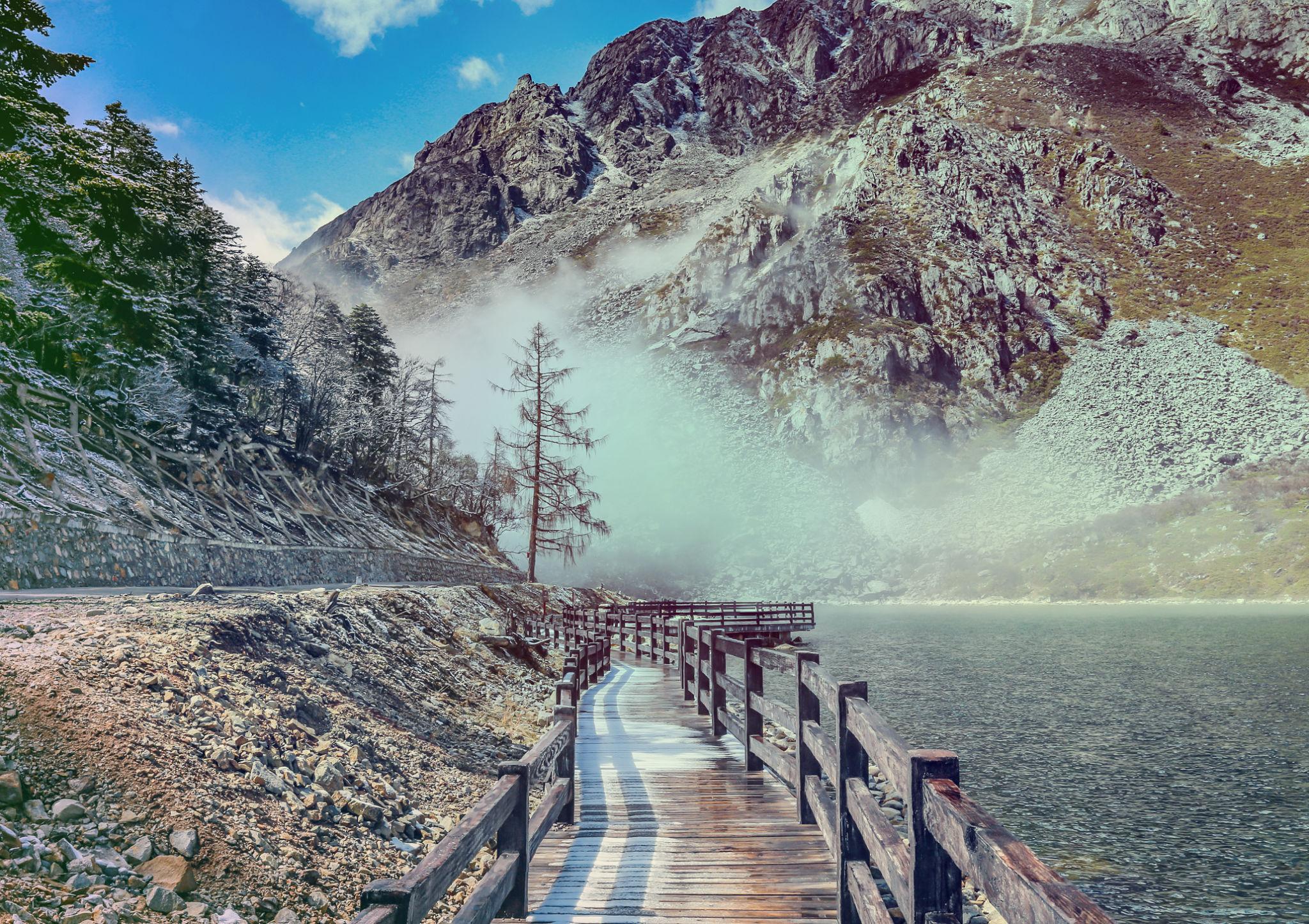
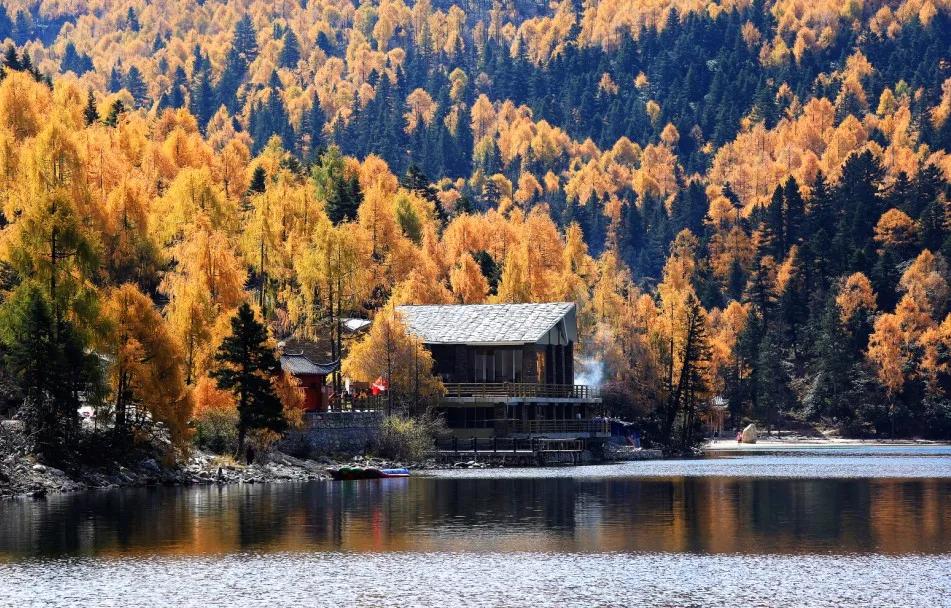
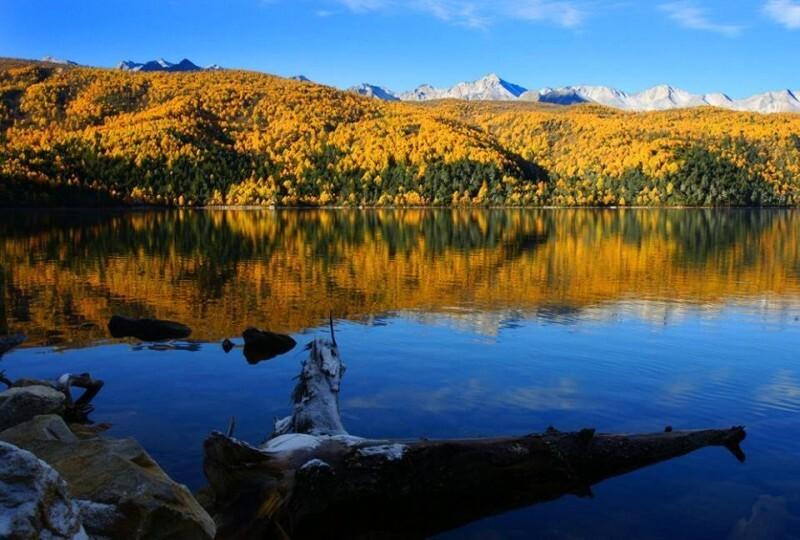
Here, the scenery changes again. Instead of focusing mainly on open mountain viewpoints, Mugecuo combines an alpine lake with forests, mountain scenery and walking paths.
In autumn, the surrounding forests can turn yellow and red, creating colorful reflections on the surface of the lake when weather conditions are calm.
The combination of:
- Snow-covered mountains
- Highland lakes
- Autumn forests
- Walking paths
- Reflections
makes Mugecuo a fitting final scenic stop on this three-day journey.
Mugecuo is also one of the important tourism resources around Kangding, together with Yala Snow Mountain and Xinduqiao.
After visiting Mugecuo, continue back toward Chengdu.
The Autumn Highlights of This Western Sichuan Route
1. Shuangqiao Valley: Golden Forests and Snow Mountains
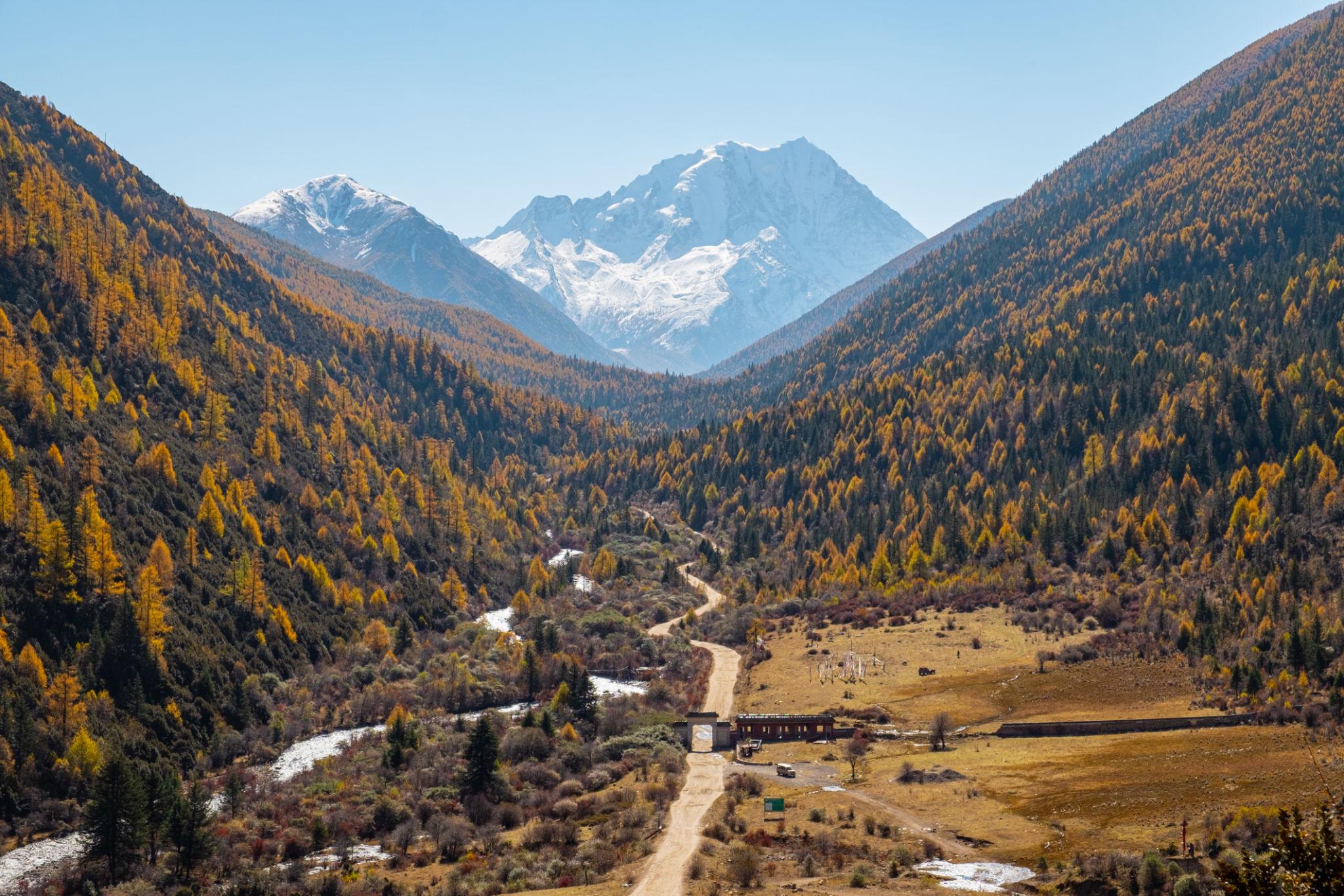
Shuangqiao Valley is one of the most visually impressive sections of the route.
The combination of colorful autumn forests and snow-covered peaks creates a classic western Sichuan landscape.
2. Xinduqiao: Golden Trees and Mountain Villages
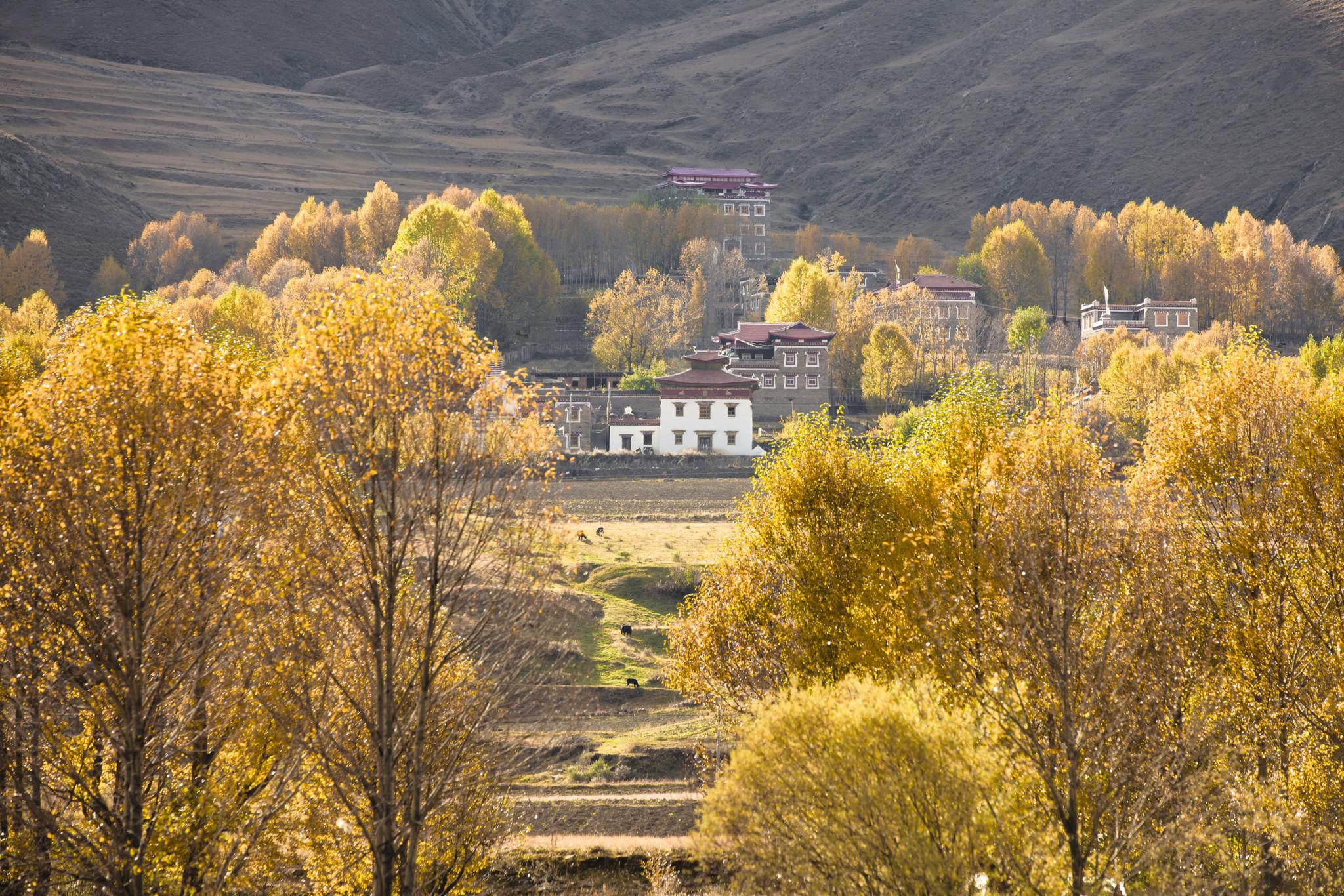
Xinduqiao is particularly attractive for photographers.
Golden trees, mountain valleys, Tibetan-style homes and morning mist can create the quiet atmosphere that western Sichuan is famous for.
3. Yuzixi: Snow Mountains and Golden Light
Yuzixi is the place to watch the mountains change color as the sun moves lower in the sky.
If the weather cooperates, the sunset can illuminate the snow-covered peaks with warm golden light.
4. Gedilamu: A More Playful Mountain Landscape
The swings, carousel and small wooden cabins give Gedilamu a different visual character.
Instead of only photographing the landscape, you can use these elements to create more interesting compositions with the mountains in the background.
5. Mugecuo: Autumn Forests Around an Alpine Lake
Mugecuo provides a quieter combination of water, forests and mountains.
In autumn, colorful vegetation around the lake can create beautiful reflections and add another type of scenery to the journey.
Western Sichuan Autumn Weather and What to Pack
Autumn weather in western Sichuan can change significantly depending on altitude and local conditions.
As a rough reference, daytime temperatures in some areas during September and October may be around 10–15°C, while early mornings and evenings can fall to around 0–5°C. Higher mountain areas can be considerably colder, and snow is possible.
For this reason, dressing in layers is more practical than relying on a single heavy jacket.
Recommended packing list
- Sweater or fleece
- Windproof jacket
- Light down jacket for colder conditions
- Hat
- Sunglasses
- Comfortable, grippy hiking shoes
- Sunscreen
- Water
- Basic personal medication
The combination of strong sunlight, cold wind and high altitude can make the weather feel colder than the temperature suggests.
Travel Tip: Always check the local weather forecast shortly before visiting high-altitude scenic areas. Mountain weather can change much faster than conditions in Chengdu.
Altitude and Travel Tips
Several destinations on this route are located at high elevations, especially around Yuzixi and the higher mountain areas.
If you are traveling from a low-altitude city such as Chengdu, give your body time to adjust. Gradual acclimatization is one of the most important ways to reduce the risk of altitude illness.
During the first couple of days at altitude:
- Avoid pushing yourself physically too hard.
- Avoid alcohol during the first 48 hours at high altitude.
- Stay normally hydrated, but do not force yourself to drink excessive amounts of water.
- Pay attention to symptoms such as headache, dizziness, nausea or unusual fatigue.
- Do not continue ascending if you are developing significant altitude-illness symptoms.
- If symptoms become severe or continue to worsen, descend and seek medical attention.
Traditional tips such as drinking glucose products or avoiding washing your hair should not be treated as reliable medical prevention for altitude illness. Proper acclimatization and recognizing symptoms are much more important.
Is This 3-Day Western Sichuan Loop Right for You?
This itinerary is ideal for travelers who want to experience several of western Sichuan’s most recognizable autumn landscapes within a short trip.
You will see:
Autumn forests → snow mountains → Tibetan villages → unusual rock formations → highland grasslands → sunset mountains → alpine lakes
The trade-off is that the itinerary is fairly fast-paced, with considerable driving on mountain roads.
If your priority is to see as much scenery as possible in three days, this route provides a compact autumn journey through western Sichuan.
If you prefer a slower travel style, the same route can be experienced at a more relaxed pace by adding extra time.
Frequently Asked Questions
Is three days enough for western Sichuan?
Three days is enough for a concentrated introduction to western Sichuan, especially if your main goal is scenery and photography. This itinerary covers several major scenic areas, but the schedule is relatively intensive.
When is the best time to see autumn colors in western Sichuan?
Autumn scenery generally develops from September into November, but the exact timing varies between locations because of differences in altitude, weather and yearly conditions. Higher areas may change color earlier than lower valleys.
Can I see snow during an autumn trip?
Yes. Snow is possible in the higher mountain areas during autumn, especially as temperatures drop later in the season. However, whether you actually see fresh snow depends on weather conditions during your visit.
What should I wear in western Sichuan in autumn?
Layered clothing is the safest approach. Bring a sweater or fleece, a windproof jacket and a light down jacket for colder conditions. A hat, sunglasses and comfortable shoes are also useful.
Is altitude sickness a concern on this route?
Some sections of the route reach high elevations, so altitude illness is a consideration, particularly for travelers who are not acclimatized. Gradual ascent, avoiding excessive exertion and recognizing early symptoms are important.
What is the most photogenic part of the route?
Different locations offer different styles of photography. Shuangqiao Valley is particularly suited to autumn forests and snow mountains, Xinduqiao to golden trees and village landscapes, Yuzixi to sunset and snow mountains, and Mugecuo to lakes and autumn reflections.
Final Thoughts
Western Sichuan in autumn is all about contrast.
Golden forests stand beneath snow-covered mountains. Tibetan villages sit quietly in mountain valleys. Dark stone formations create an almost otherworldly landscape, while highland lakes reflect the colors of autumn.
This three-day loop from Chengdu brings many of these landscapes together in a single journey.
If you are traveling to Sichuan during the autumn season and want to combine snow mountains, colorful forests, Tibetan villages, sunset views and alpine lakes, this western Sichuan loop is a scenic route worth considering.
Panda Vlog Travel Tip: The mountains are the star of this journey, so leave some flexibility for weather. Clear skies can completely change the experience—and the photographs.