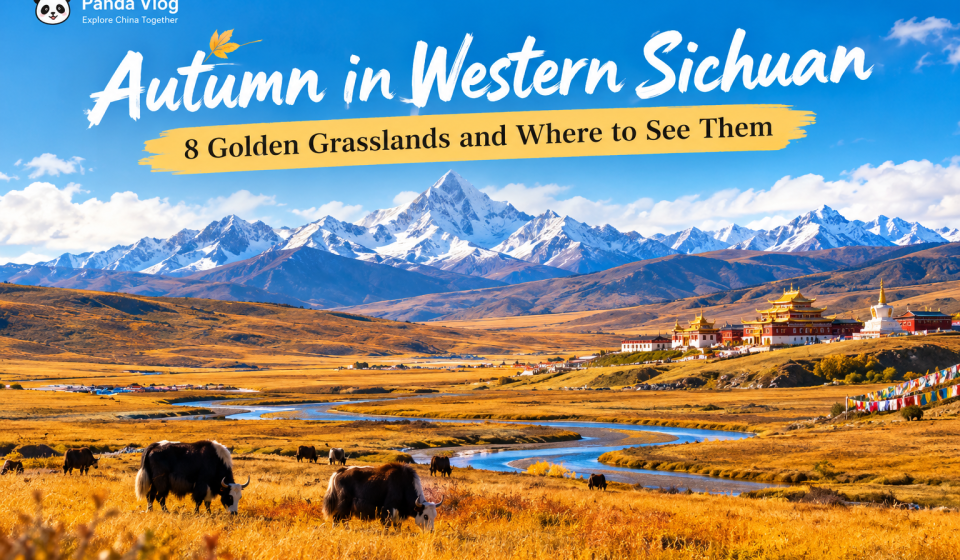

Autumn in Western Sichuan: 8 Golden Grasslands and Where to See Them
When autumn arrives in western Sichuan, the highlands begin to change color.
The green grasslands gradually turn golden, snow-covered mountains become sharper against the blue sky, and herds of yaks and horses move slowly across vast open valleys.
For travelers looking for wide-open landscapes, snow mountains, Tibetan culture, and fewer urban distractions, autumn is one of the most atmospheric times to explore western Sichuan.
But there is one important thing to know: autumn does not arrive everywhere in western Sichuan at exactly the same time.
Because of the region’s huge differences in altitude and geography, high-elevation grasslands can begin turning yellow earlier, while forests and lower valleys may reach their autumn colors later. In general, September to October is an important autumn travel period, but the exact timing varies from place to place and from year to year.
Here are eight grasslands worth considering if you want to experience the golden landscapes of western Sichuan.
1. Tagong Grassland: Snow Mountains and Golden Meadows
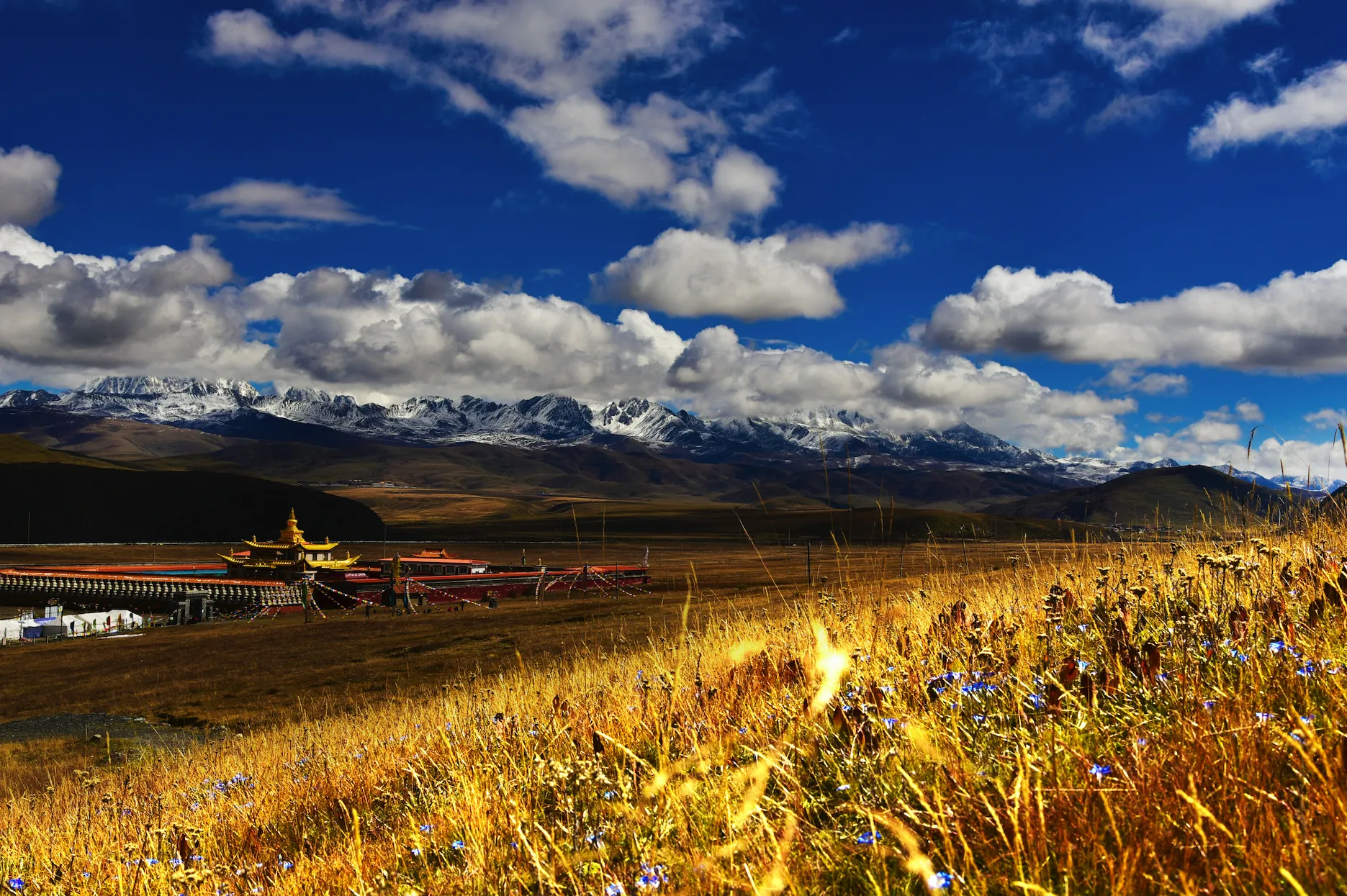
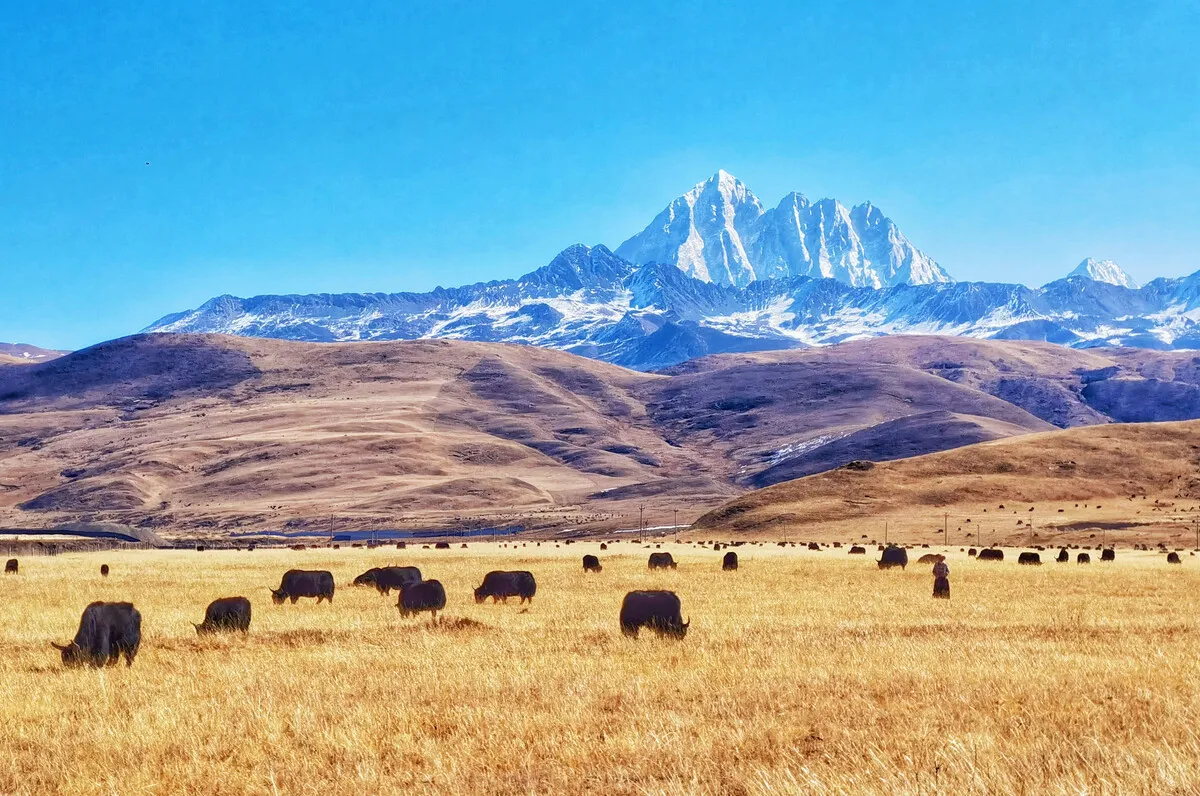
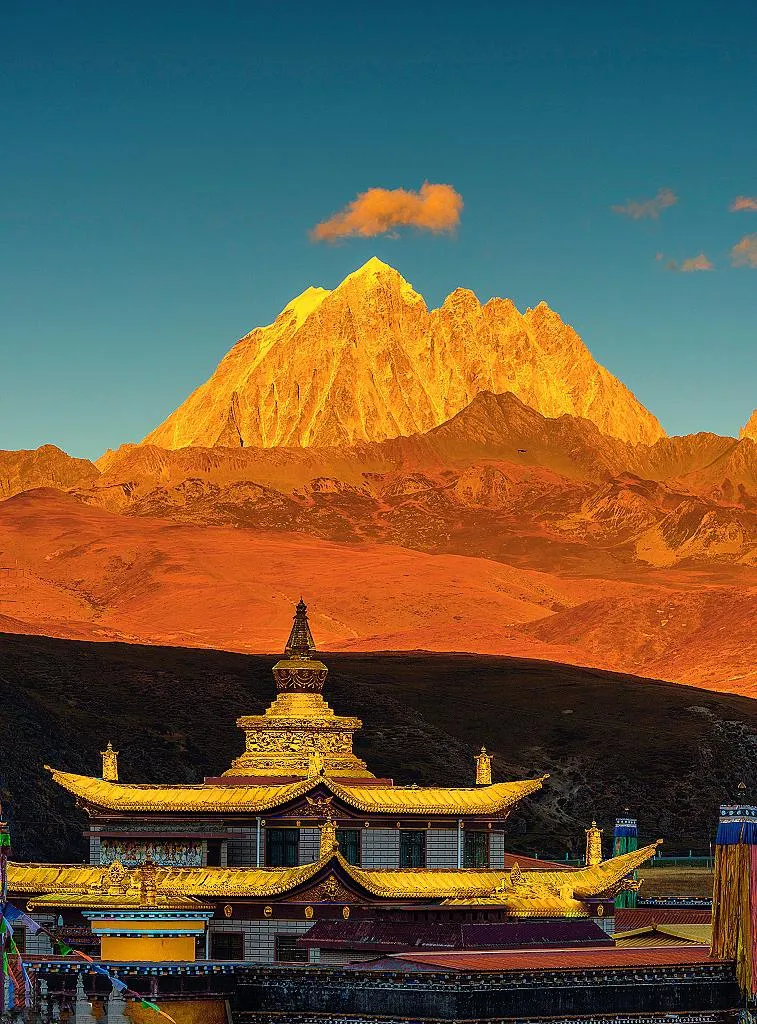
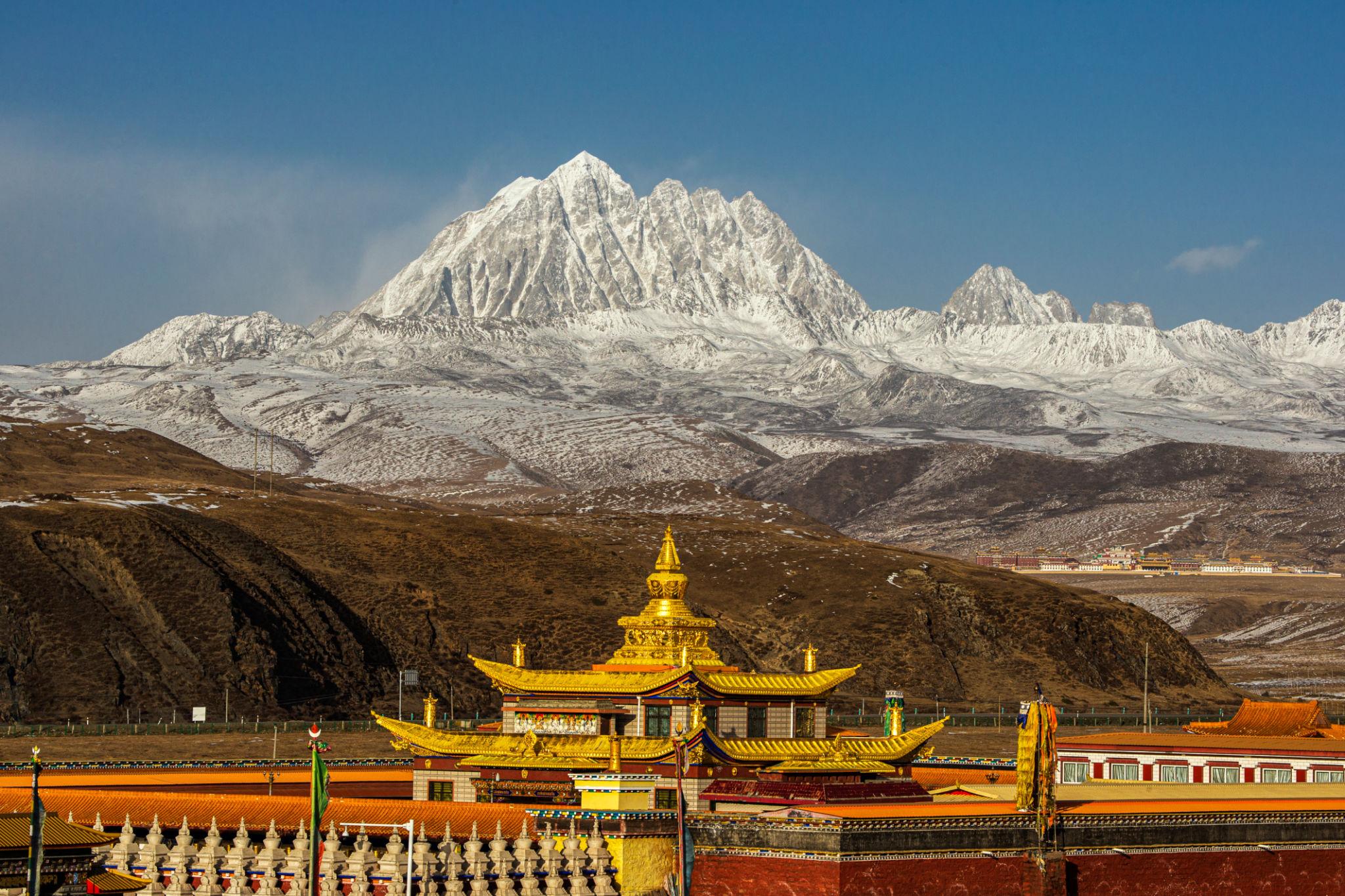
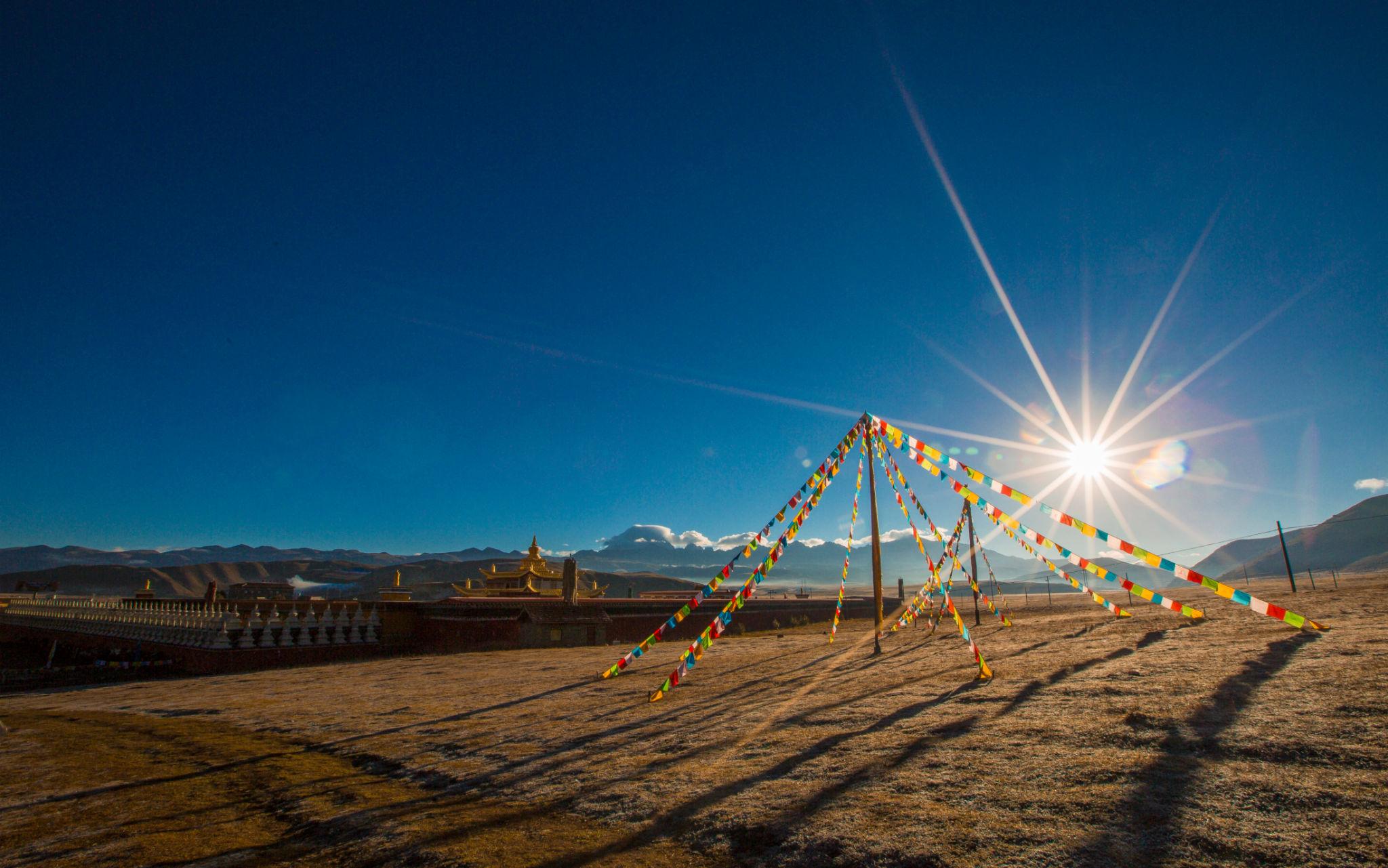
Tagong Grassland (塔公草原) is one of the most recognizable grassland landscapes along the western Sichuan plateau.
In autumn, the grassland gradually changes from green to shades of yellow and gold. On clear days, Yala Snow Mountain rises dramatically in the distance, while Tagong Monastery and its golden roof add a strong Tibetan cultural element to the landscape.
The combination of snow mountains, grassland, prayer flags, temples, and open sky makes Tagong one of the easiest places to experience the classic western Sichuan landscape.
Why Visit
- Views of Yala Snow Mountain
- Open golden grasslands
- Tagong Monastery and Tibetan culture
- Easy access along popular western Sichuan routes
- Excellent landscape photography opportunities
Recommended Time
September to October is generally suitable for an autumn visit, although the exact color of the grassland varies with weather and elevation. Recent travel references also identify September and October as the period when Tagong takes on a more golden appearance.
Photography Tip
Try visiting around sunrise or late afternoon when the low-angle sunlight creates more texture across the grassland and mountains.
2. Maoya Grassland: The Endless Wilderness Along Highway G318
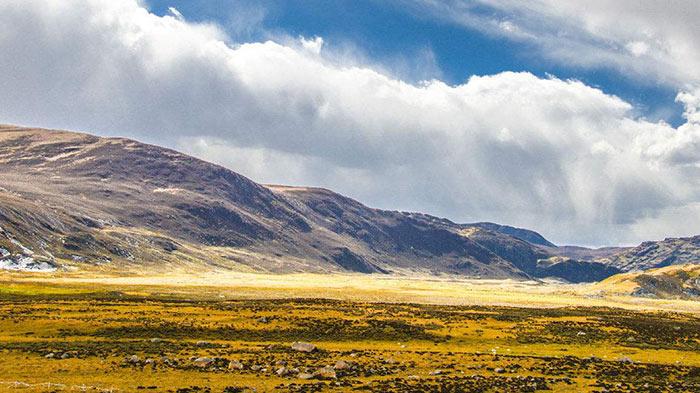
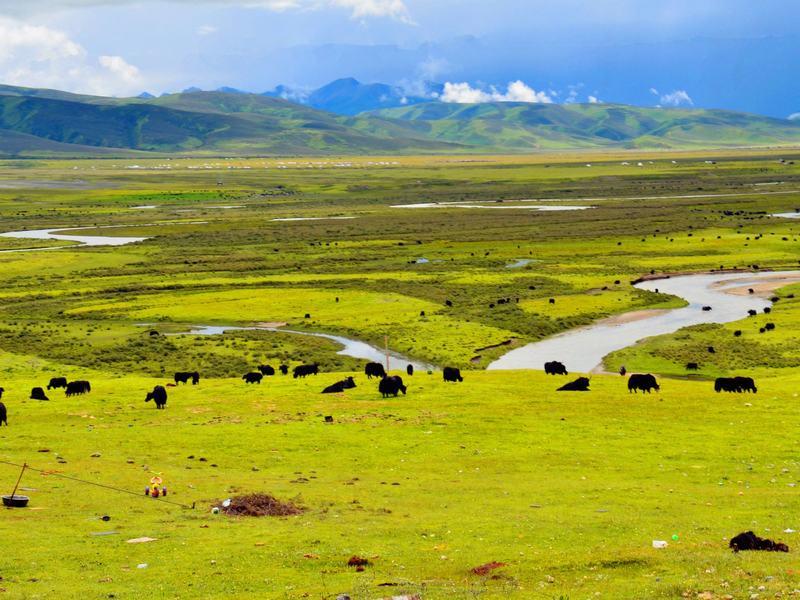
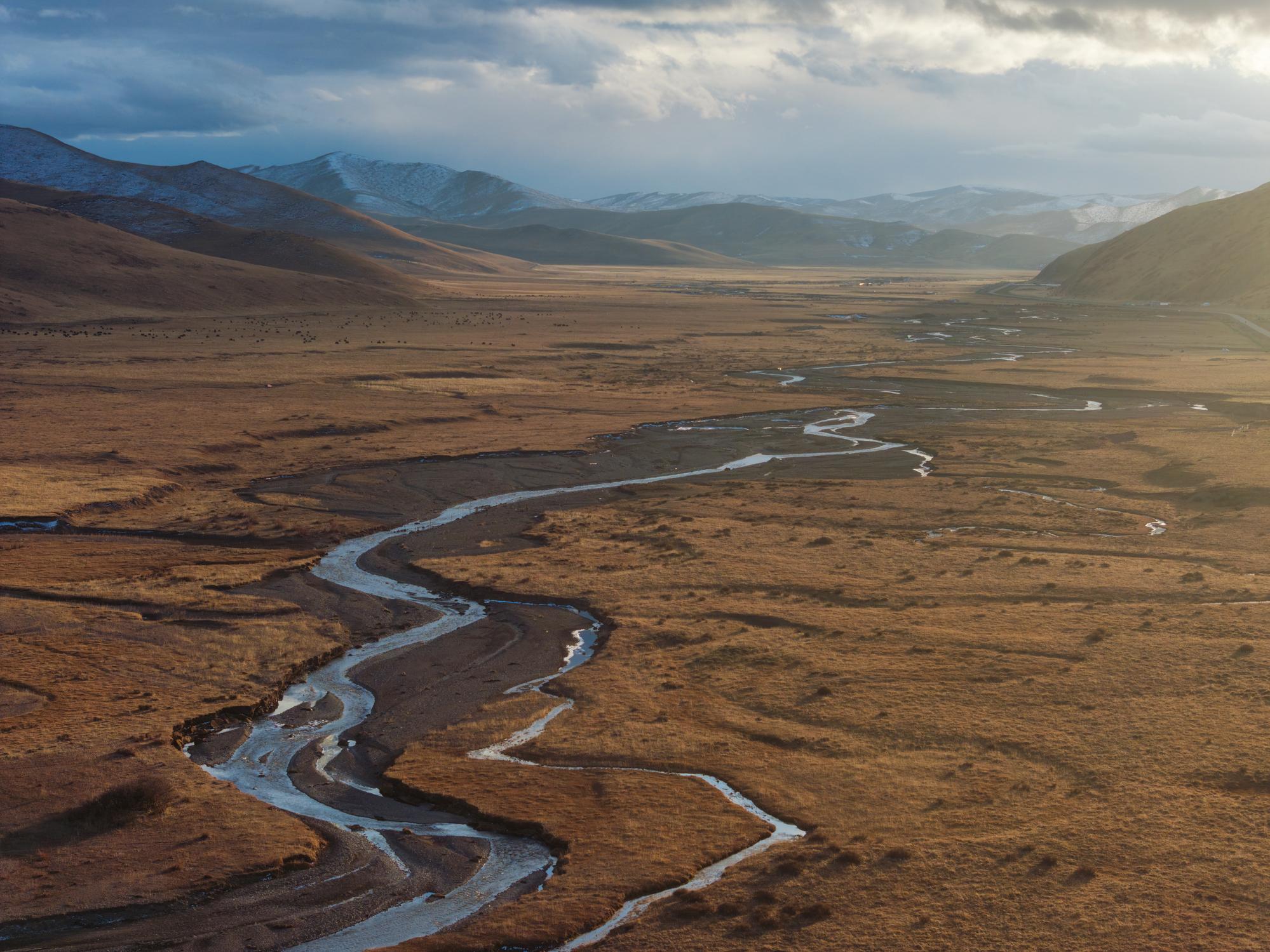
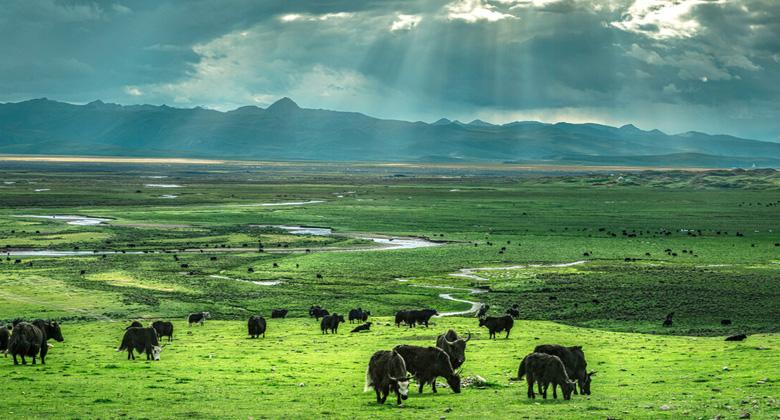
Located near Litang, Maoya Grassland (毛垭大草原) is one of the most expansive grassland landscapes in western Sichuan.
The landscape is defined by its enormous scale.
Instead of a collection of small scenic viewpoints, Maoya feels like one continuous highland wilderness. Roads cross broad valleys while rivers and streams wind through the grassland.
In autumn, the green landscape gradually takes on golden and brown tones, creating a completely different atmosphere from the summer months.
Why Visit
- Huge open landscapes
- Classic G318 road-trip scenery
- Golden plateau grasslands
- Snow mountains in the distance
- Excellent location for wide-angle landscape photography
Recommended Time
Early autumn can bring a mixture of green and golden tones, while later autumn generally produces a more muted golden-brown landscape.
Because Maoya sits at high elevation, temperatures can drop quickly after sunset.
Travel Tip
Do not rush through this section of G318.
The attraction of Maoya is not one single viewpoint. Stop at safe roadside locations, walk a short distance away from the road, and give yourself time to appreciate the scale of the landscape.
3. Hongyuan Grassland: A Softer Side of Autumn
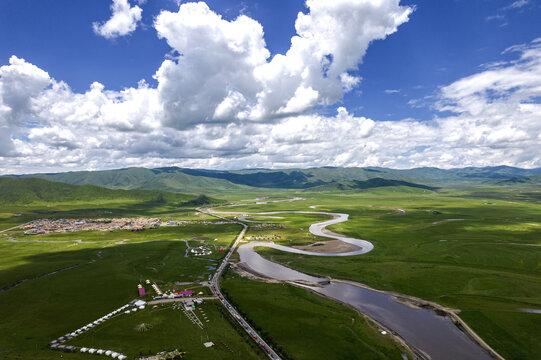
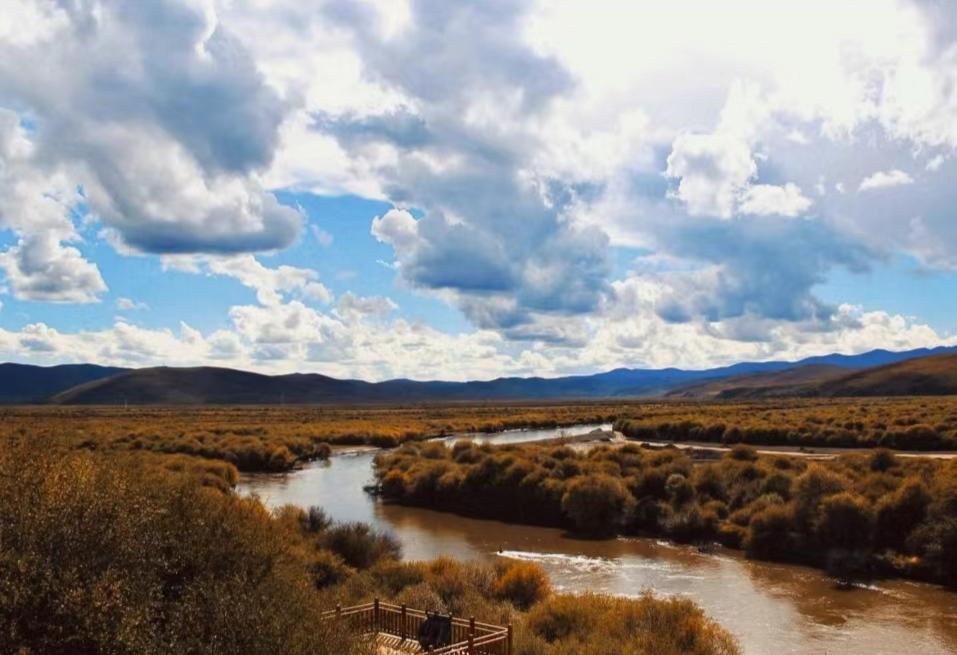
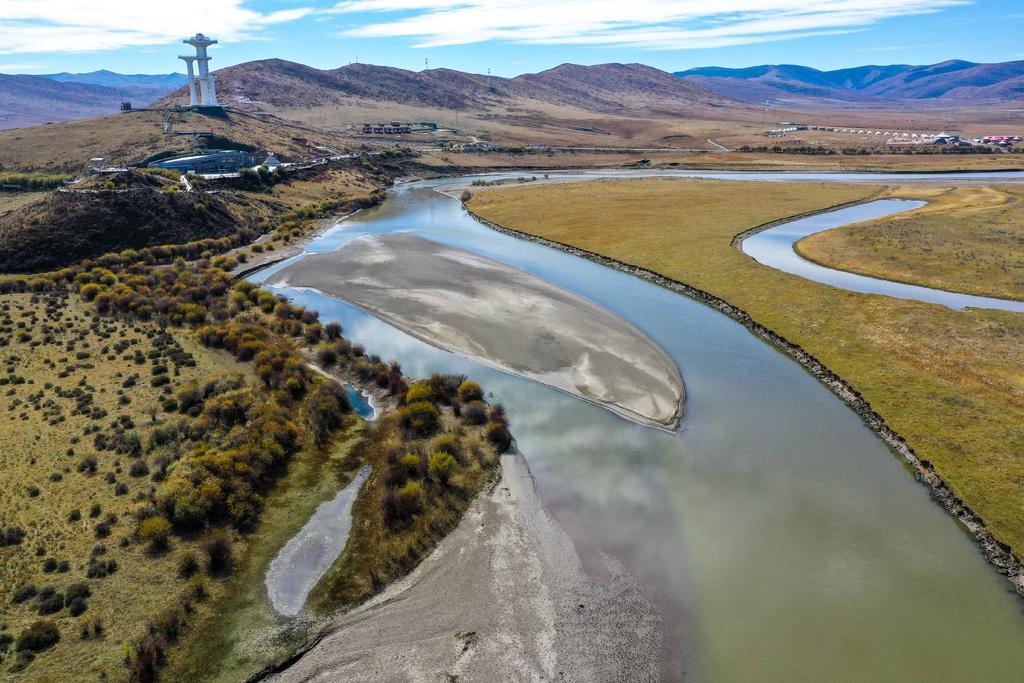
Hongyuan Grassland (红原大草原) in northern Sichuan offers a different autumn experience.
The landscape is closely connected with rivers, wetlands, grasslands, and the broad valleys of the plateau.
One of the best-known landscapes in the area is Moon Bay, where the river curves through the grassland in a series of sweeping bends.
In autumn, the grassland gradually turns golden, while the winding river creates natural lines through the landscape.
Why Visit
- Wetland and grassland scenery
- Wide open plateau landscapes
- Moon Bay
- Golden autumn colors
- Slower-paced travel atmosphere
Recommended Time
September and October are generally good months to look for the transition from green to golden grassland. However, the exact timing depends on the year’s temperatures and weather.
Photography Tip
Moon Bay is particularly attractive from an elevated viewpoint because the curves of the river become much more visible from above.
4. Zoergai Grassland: One of the Largest Highland Grasslands in Sichuan
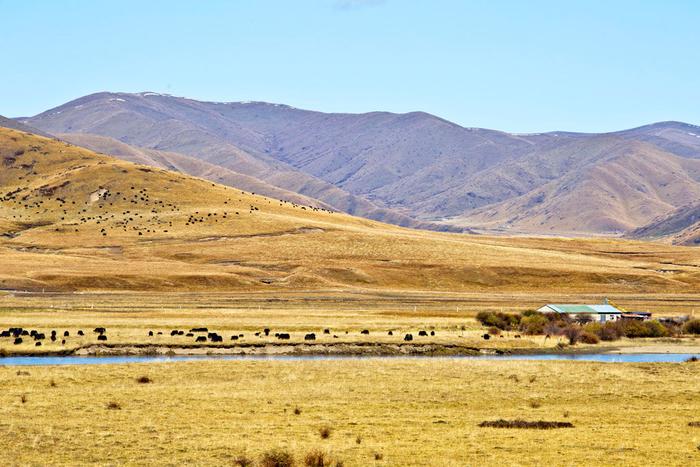
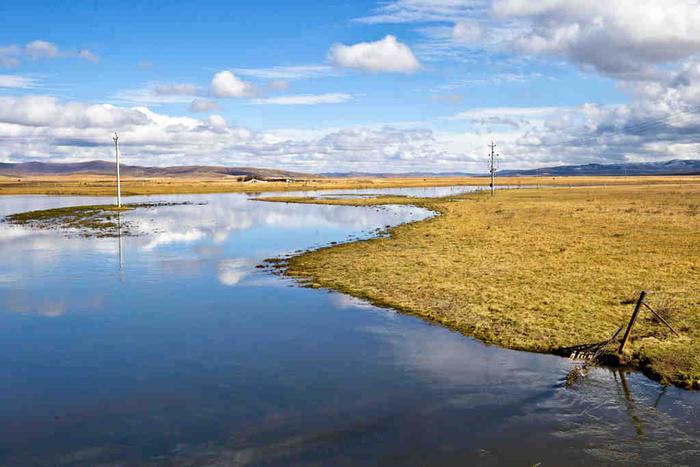
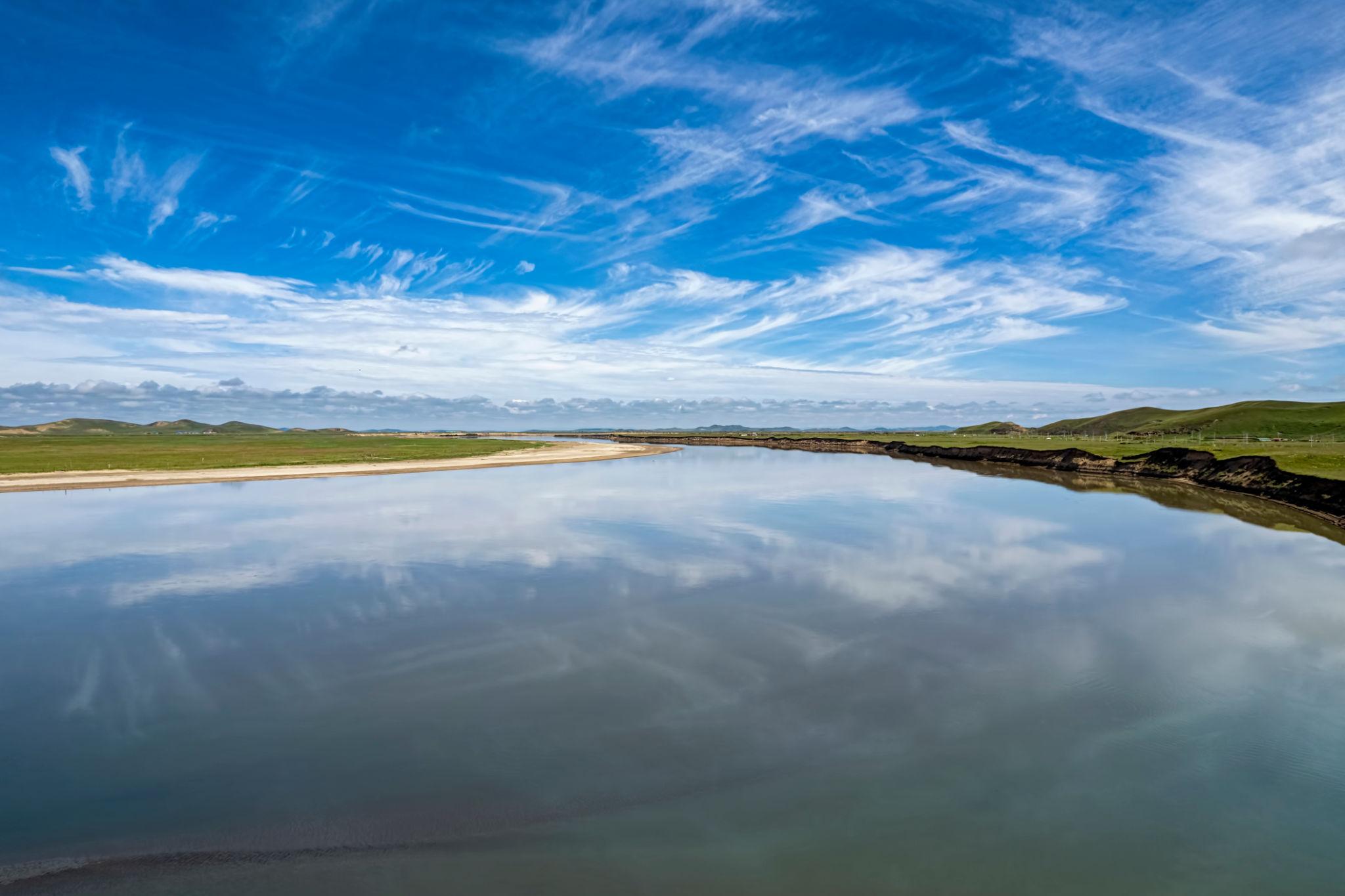
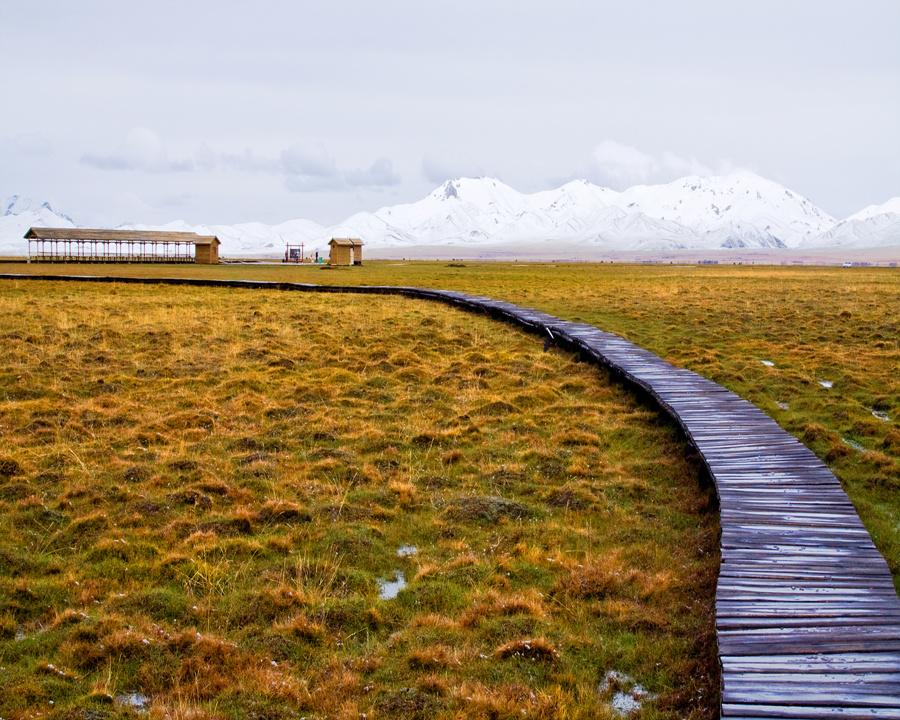
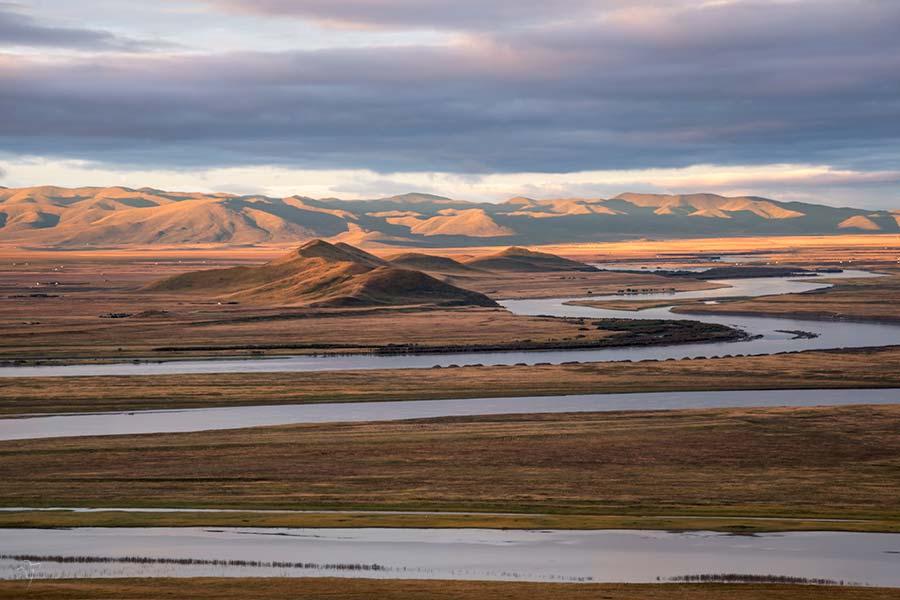
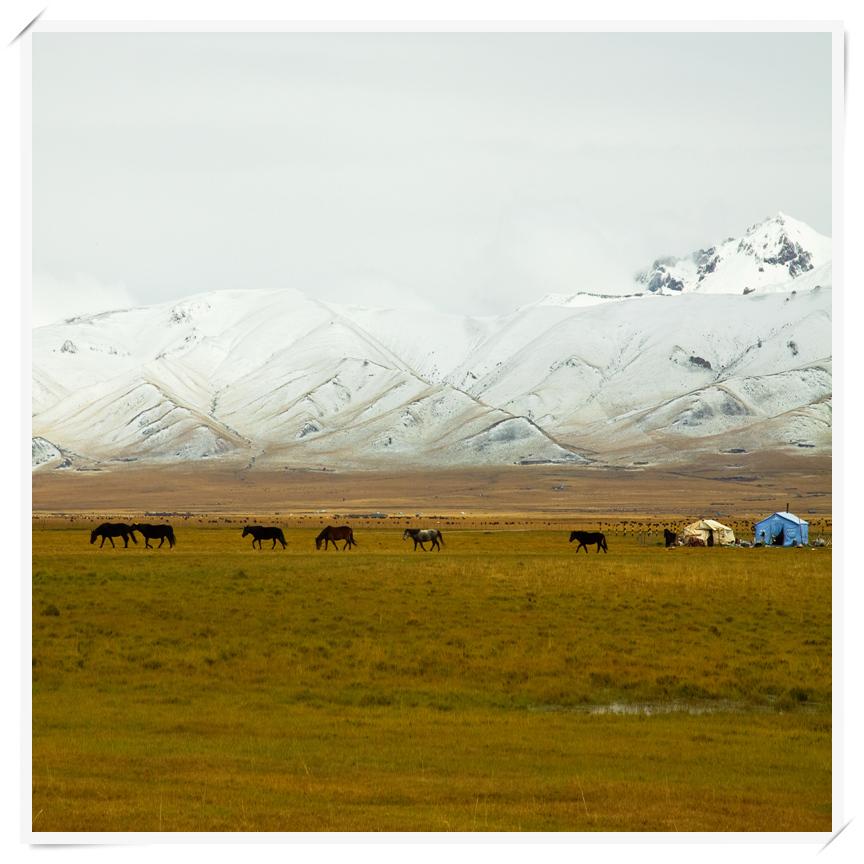
Zoergai Grassland (若尔盖草原) lies in northern Sichuan and forms part of one of China’s important highland wetland regions.
During summer, the area is known for its green grasslands and flowers.
By autumn, the scenery becomes more subdued.
The grass turns golden and the open landscape feels even larger beneath the highland sky. The vastness of the grassland is one of its defining characteristics.
Why Visit
- Vast highland grasslands
- Wetlands and rivers
- Open horizons
- Golden autumn scenery
- Opportunities to combine grassland landscapes with northern Sichuan cultural sites
Recommended Time
The grassland can begin changing color relatively early because of its high elevation. September is often already an autumn transition period, while later September and October can bring increasingly golden scenery.
Travel Tip
If your main goal is to see flowers, summer is more suitable.
If you want a quieter golden landscape, autumn offers a completely different visual experience.
5. Bamei Grassland: A Small-Scale Highland Landscape
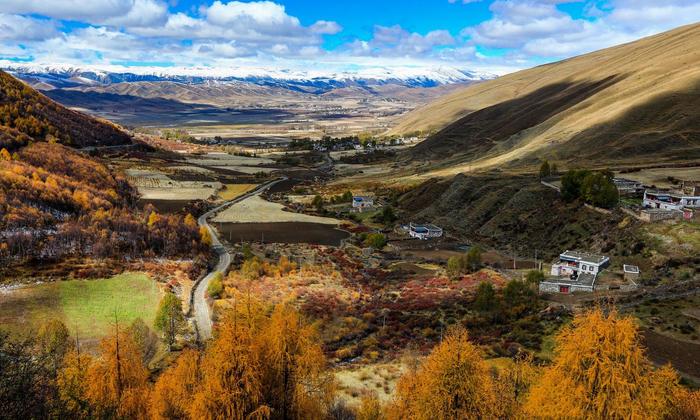
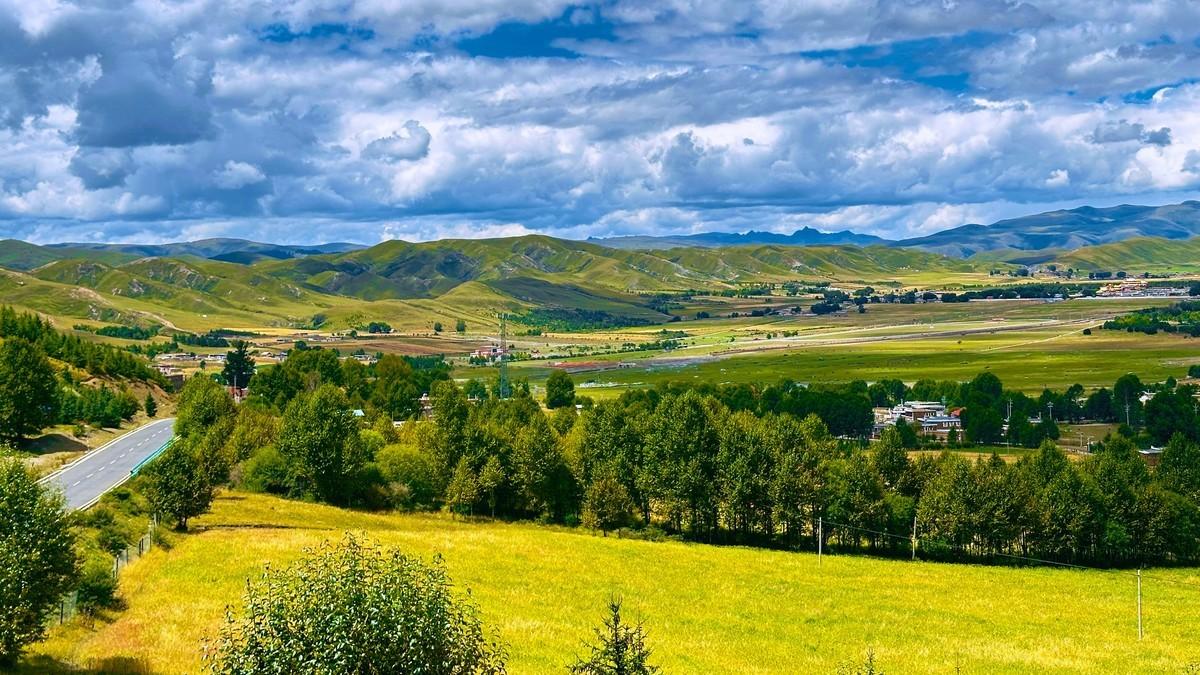
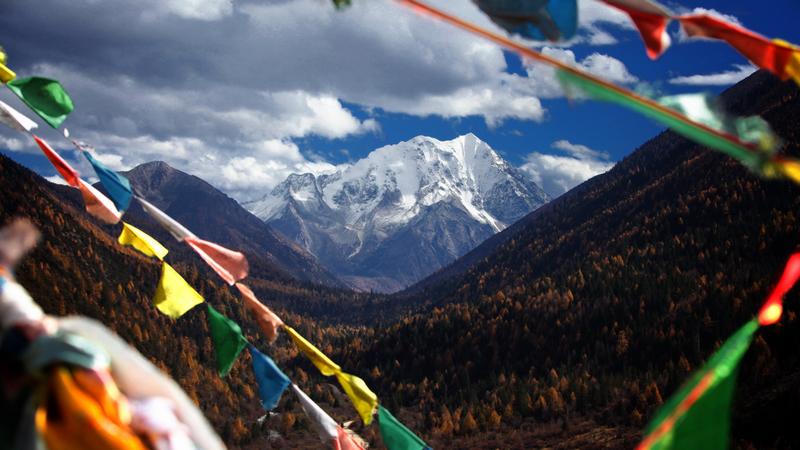
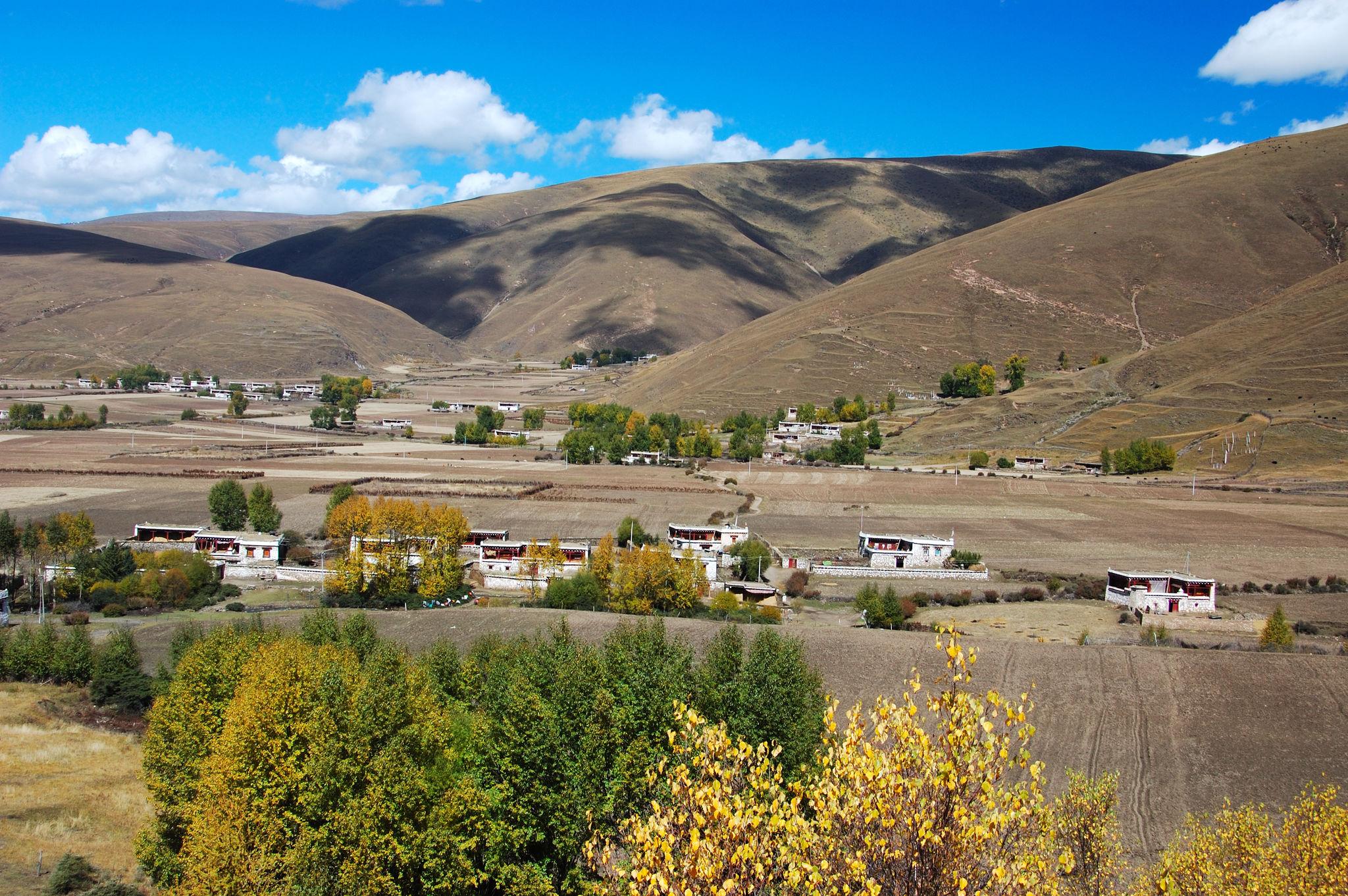
Bamei (八美) is located between Danba and Tagong and is often encountered as part of a western Sichuan road trip rather than as a standalone destination.
Compared with the enormous Maoya and Zoergai grasslands, the scenery around Bamei feels more intimate.
Golden grasslands, surrounding mountains, Tibetan villages, roads, and distant snow peaks create a layered landscape that works particularly well for road-trip photography.
Why Visit
- Convenient stop between Danba and Tagong
- Grasslands and mountain scenery
- Tibetan villages
- More intimate landscape scale
- Excellent roadside photography
Recommended Time
September and October are suitable for experiencing the transition into autumn, although the exact colors vary depending on elevation and weather.
Photography Tip
Do not focus only on the grassland.
Look for compositions combining road + grassland + village + mountain. These layered scenes often communicate the character of western Sichuan better than a simple grassland panorama.
6. Longdeng Grassland: A Quieter Plateau Landscape
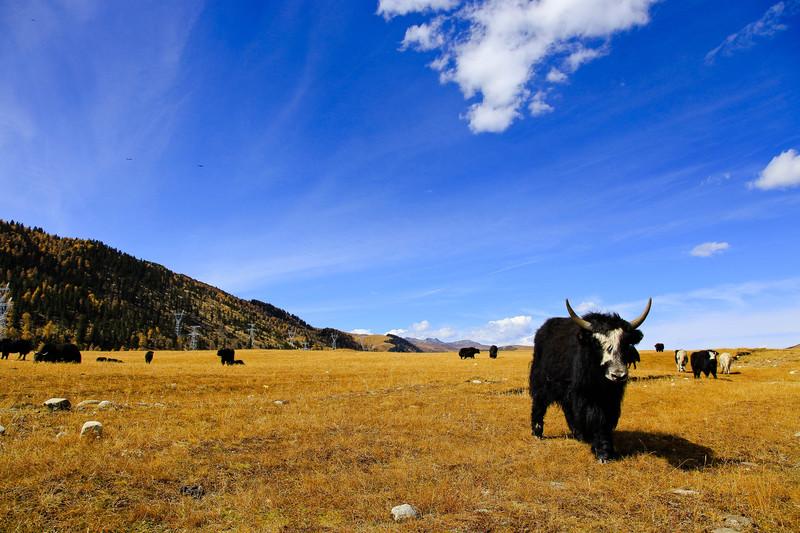
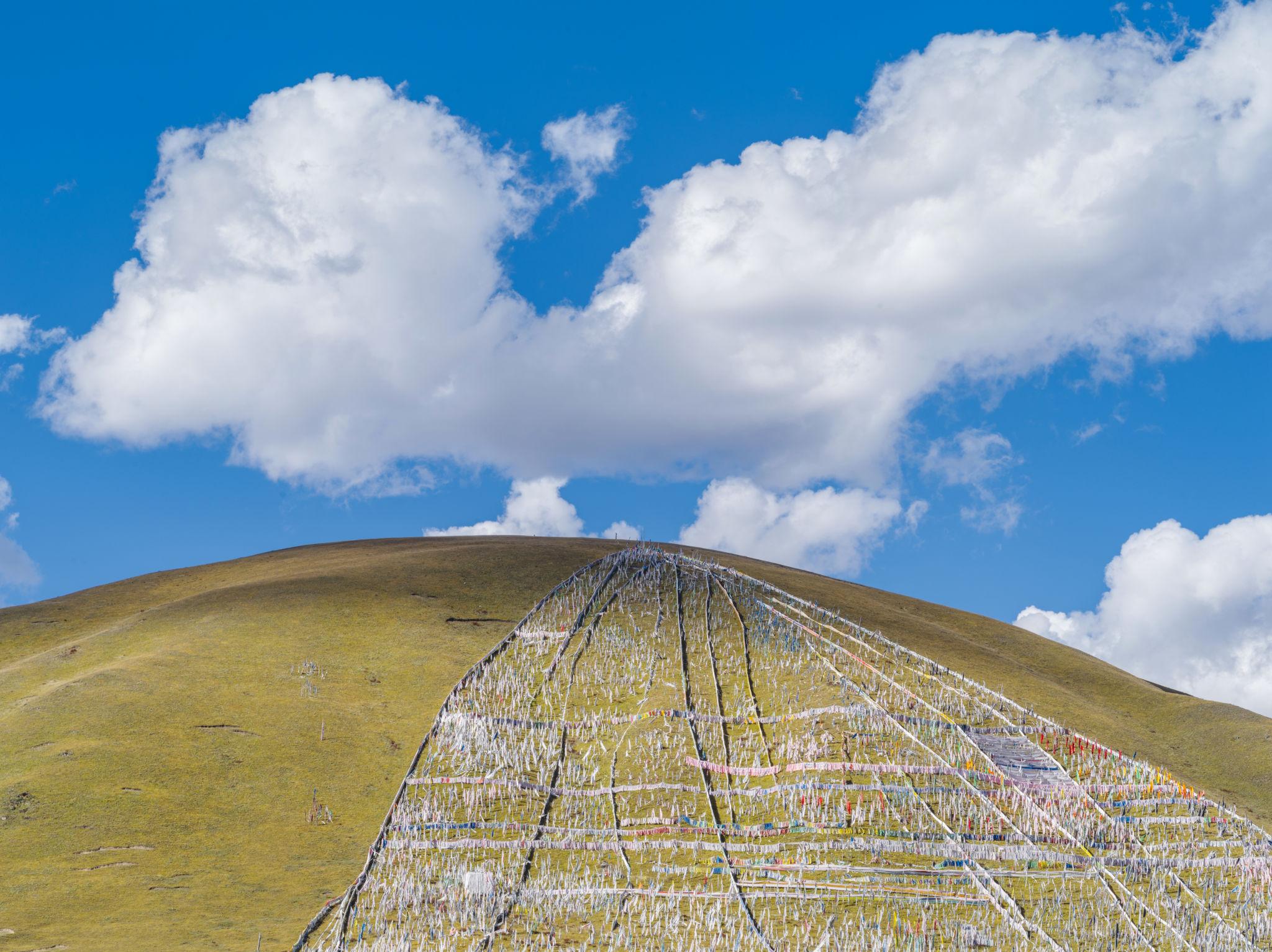
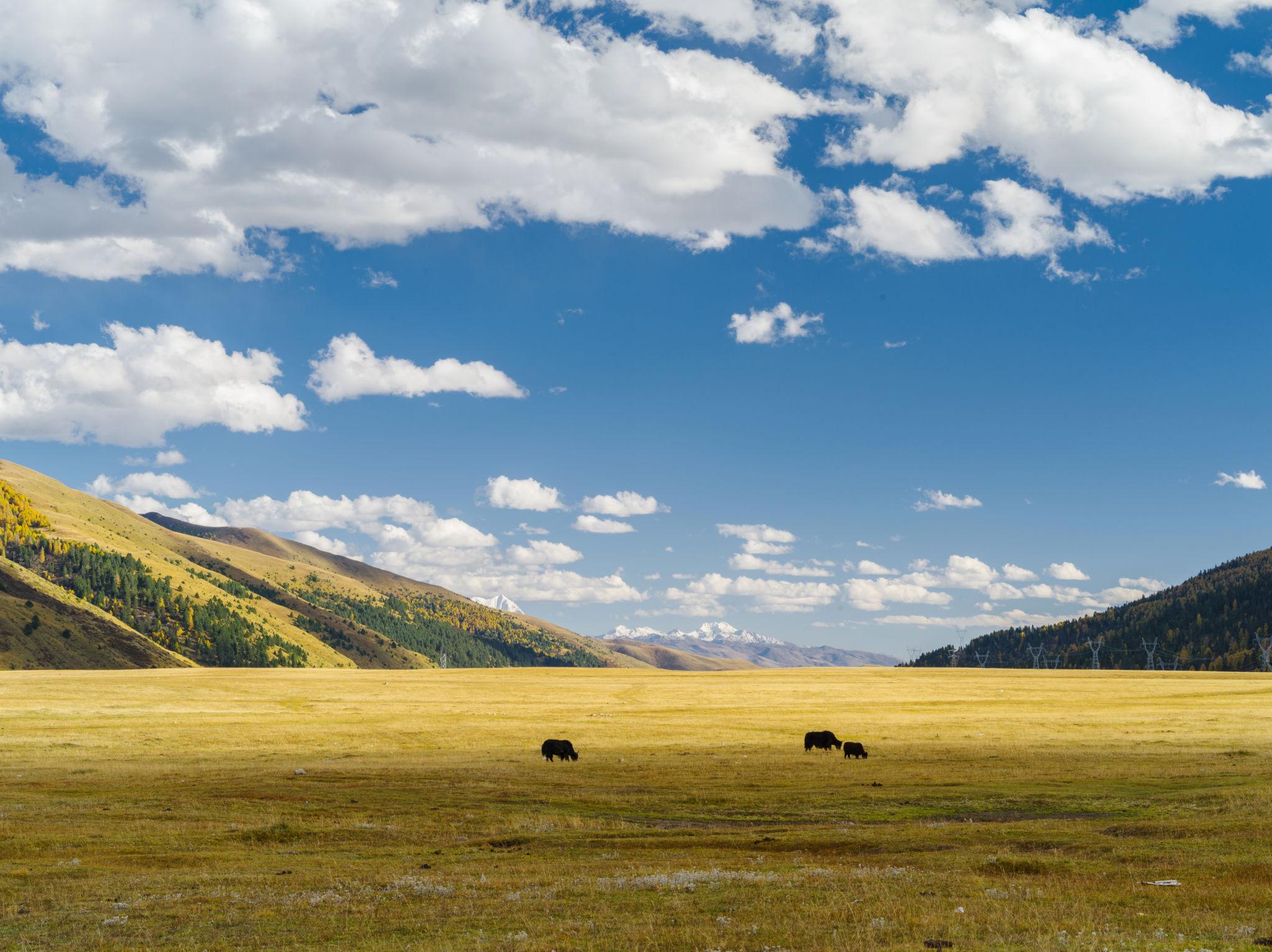
Located in Daofu County, Longdeng Grassland (龙灯草原) is less internationally known than Tagong or Zoergai.
That is part of its appeal.
The landscape is relatively open and peaceful, with broad grasslands, distant mountains, and traditional Tibetan cultural elements such as prayer flags and prayer structures.
Autumn brings warmer golden tones to the grassland and a quieter atmosphere.
Why Visit
- Less-developed atmosphere
- Open plateau scenery
- Tibetan cultural elements
- Golden autumn grassland
- Suitable for travelers looking beyond the most famous stops
Recommended Time
Early to mid-autumn is a reasonable period to look for changing grassland colors, but conditions can vary considerably from year to year.
Travel Tip
This is the kind of place where flexibility is useful.
Instead of planning your entire day around one exact viewpoint, treat the surrounding landscape as part of the experience.
7. Zhangde Grassland: A Remote Highland Meadow
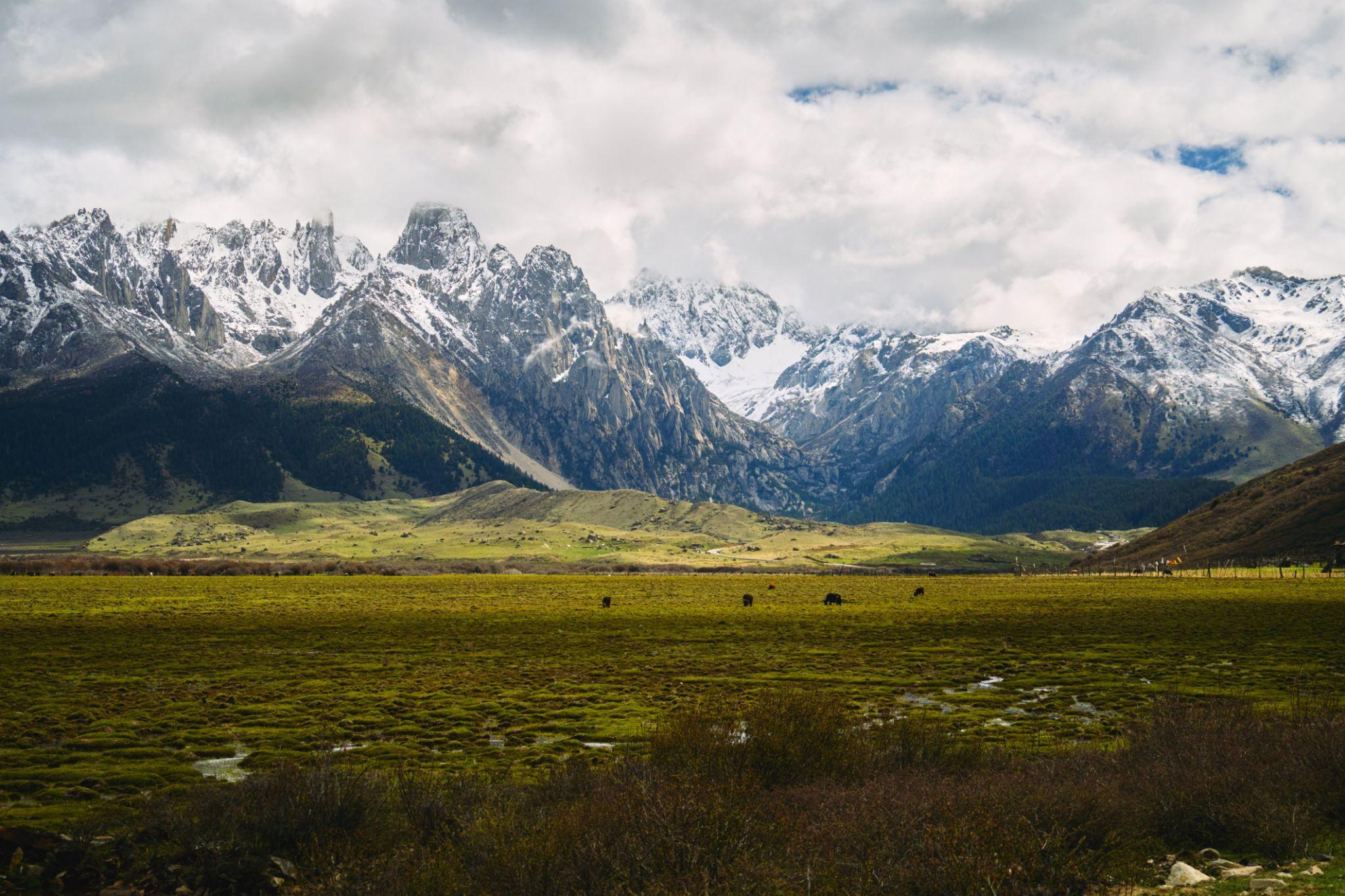
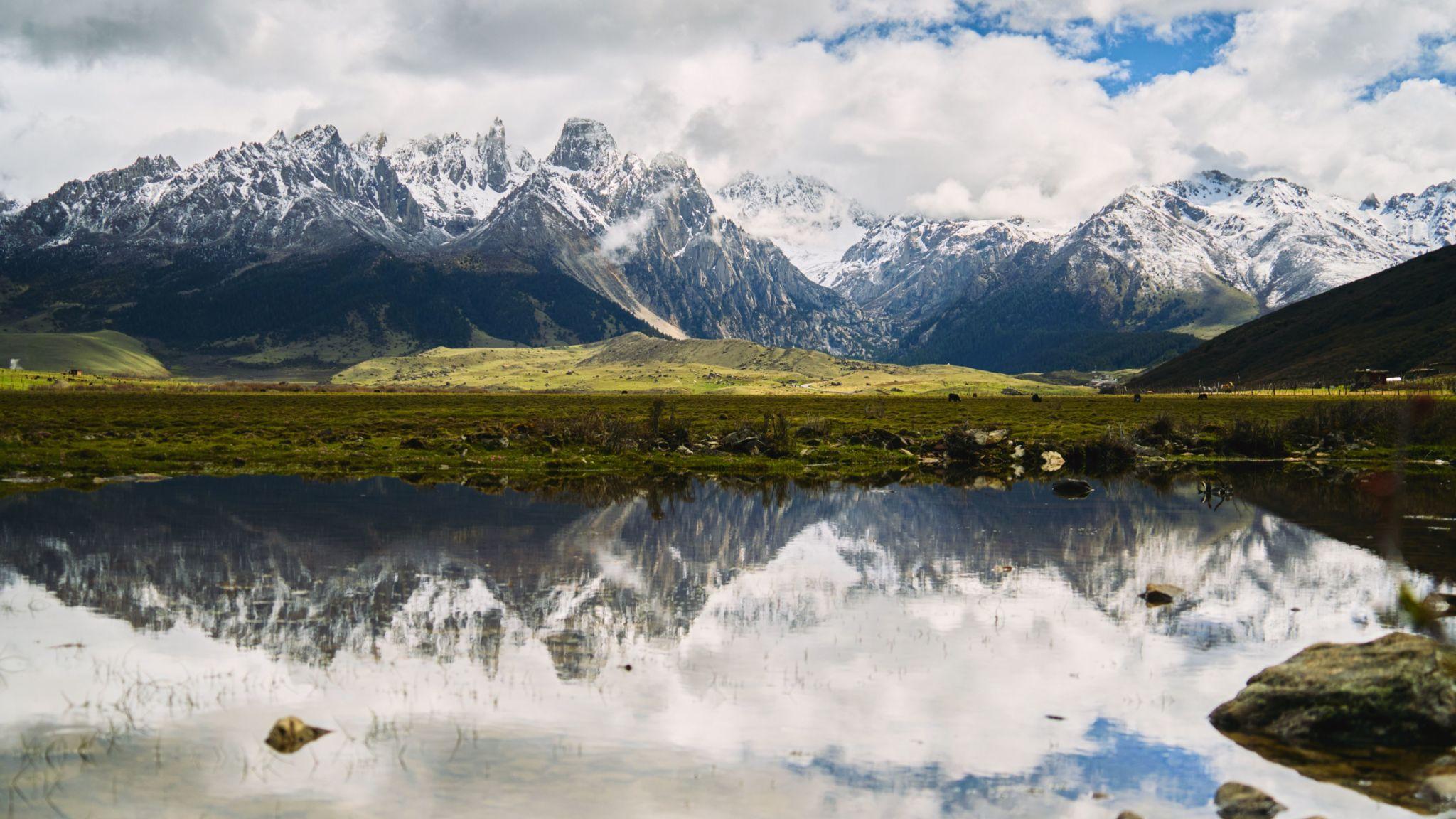
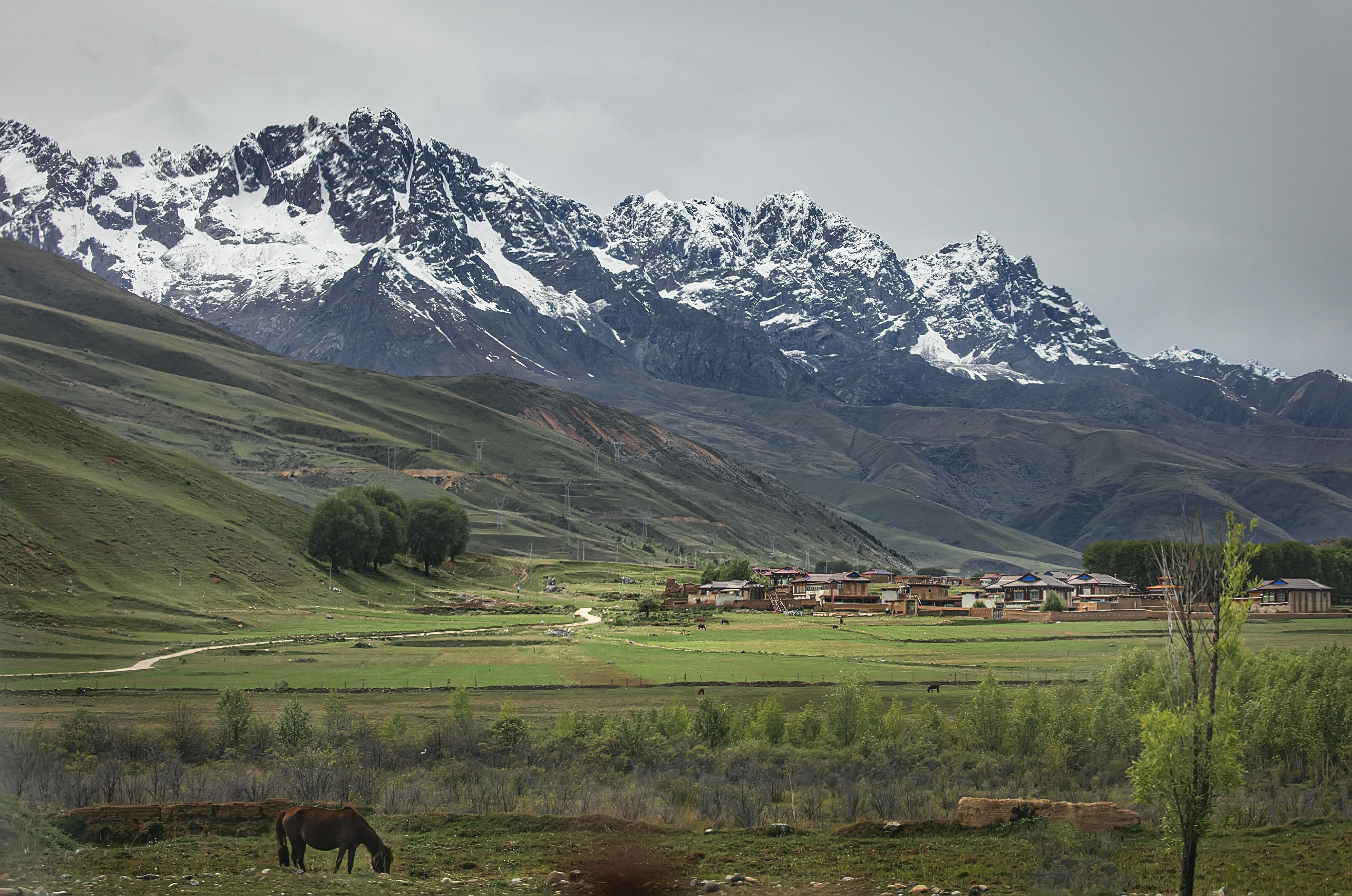
Zhangde Grassland (章德草原) is a more remote-looking highland landscape in Batang County.
Compared with the more frequently visited grasslands along major western Sichuan routes, the area can feel much quieter and more isolated.
The scenery is characterized by broad meadows surrounded by mountains, with golden grassland creating a strong contrast against darker slopes and distant snow peaks.
Why Visit
- Remote highland atmosphere
- Snow mountains and open meadows
- Fewer conventional tourist facilities
- Strong sense of wilderness
Recommended Time
Autumn can bring golden tones to the meadow, but visitors should avoid treating a specific date as guaranteed. Highland weather can change quickly, and seasonal color varies each year.
Travel Tip
Remote areas require more preparation.
Check road conditions, fuel availability, accommodation, and weather before setting out. Mobile coverage and services can also be less reliable than around major tourist towns.
8. Yuke Grassland: Grassland, Forest and Snow Mountains
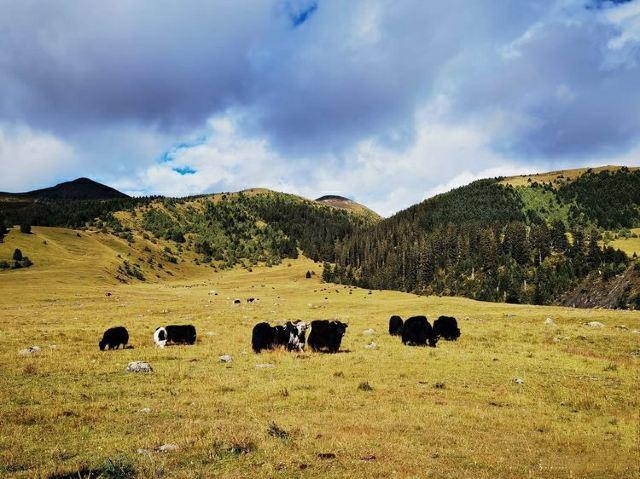
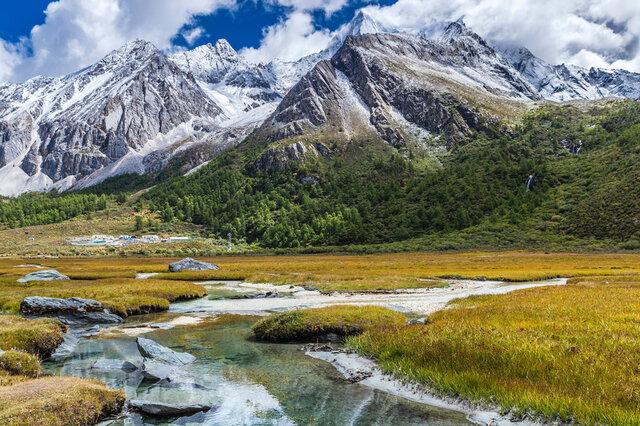
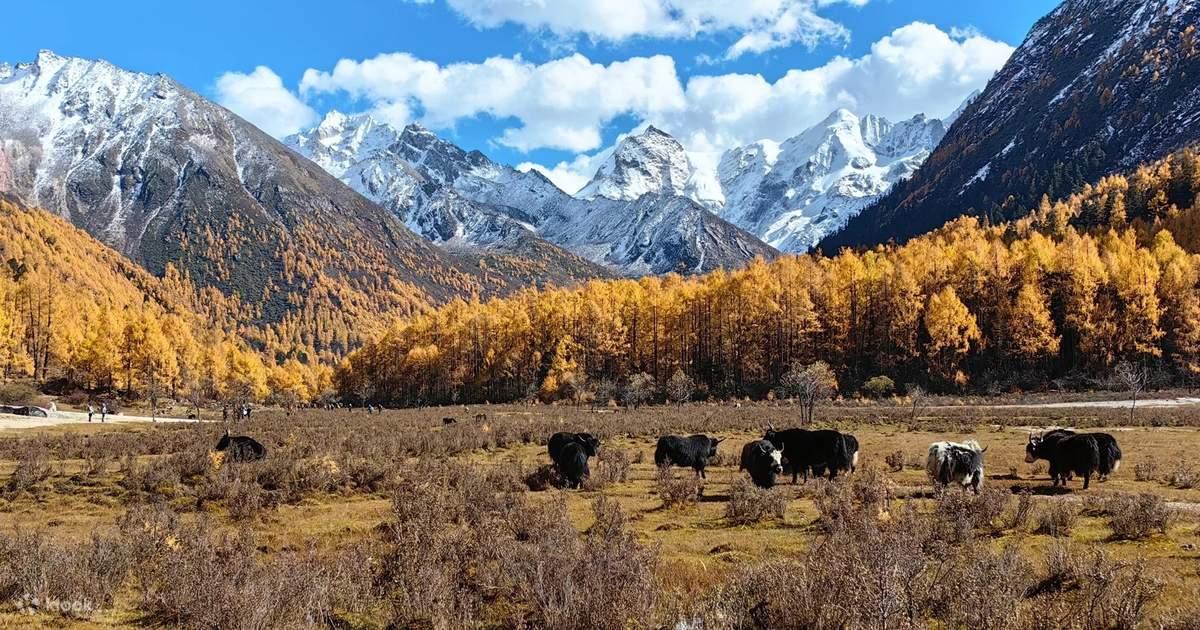
Yuke Grassland (玉科草原) in Daofu County offers one of the most diverse combinations of autumn scenery on this list.
Here, the landscape is not simply grassland.
Meadows, streams, forests, mountains, and snow peaks appear together, creating several layers of color and texture.
As autumn progresses, the grassland becomes golden while surrounding forests develop yellow, orange, and reddish tones.
Why Visit
- Grassland and forest in one landscape
- Streams and mountain valleys
- Snow mountains
- Rich autumn colors
- Excellent landscape photography
Recommended Time
Autumn is particularly attractive because the grassland and surrounding forests can change at different rates, creating a layered landscape.
For travelers specifically interested in autumn foliage rather than only golden grasslands, Yuke can be an interesting addition to a Daofu-area itinerary.
When Is the Best Time to See Autumn Grasslands in Western Sichuan?
There is no single date when all of western Sichuan turns golden.
This is one of the most important things to understand when planning an autumn trip.
Because western Sichuan contains large differences in altitude, autumn color generally progresses in stages. High-elevation grasslands can begin changing earlier, while forests and lower valleys may reach peak autumn color later.
A simple way to think about the season is:
| Period | What You May See |
|---|---|
| Early September | First signs of autumn at higher elevations |
| Mid to late September | Increasingly golden highland grasslands |
| Early October | Golden grasslands and changing mountain vegetation |
| Mid to late October | Strong autumn colors in many areas, although timing varies |
| Late October–November | Lower-elevation forests may continue their autumn transition |
These dates are general seasonal references, not guarantees. Weather, temperature, altitude, and rainfall can shift the timing from one year to another.
For travelers planning a trip specifically around autumn scenery, checking recent local conditions shortly before departure is more reliable than following a fixed calendar.
Which Western Sichuan Grassland Should You Visit?
Rather than choosing one destination as the “best,” think about what type of landscape you want to see.
| Grassland | Best For | Landscape Character |
|---|---|---|
| Tagong | First-time visitors | Snow mountain + monastery + grassland |
| Maoya | Road trips | Vast open wilderness |
| Hongyuan | Wetlands | River + grassland |
| Zoergai | Huge landscapes | Grassland + wetlands |
| Bamei | Road-trip stops | Grassland + villages + mountains |
| Longdeng | Quiet travel | Open and peaceful plateau |
| Zhangde | Remote scenery | Mountain-surrounded meadow |
| Yuke | Autumn photography | Grassland + forest + streams + snow mountains |
This approach is more useful for international travelers than simply asking which destination is the most beautiful.
Practical Tips for an Autumn Trip to Western Sichuan
1. Prepare for Large Temperature Changes
High-altitude destinations can be warm in direct sunlight but cold in the morning, evening, and after sunset.
Pack layers rather than relying on one heavy jacket.
Recommended items include:
- Windproof jacket
- Lightweight down jacket
- Warm base layers
- Comfortable walking shoes
- Sunglasses
- Sunscreen
- Hat or cap
- Gloves for colder mornings
2. Do Not Assume Every Day Will Be Sunny
Autumn is generally a popular season for clearer highland scenery, but mountain weather remains unpredictable.
Clouds can appear quickly, and conditions can change significantly during the same day.
If snow mountains are your priority, allow some flexibility in your itinerary rather than planning a single “must-see” photography moment.
3. Give Yourself Time to Adjust to the Altitude
Many western Sichuan destinations are located at elevations of several thousand meters.
Travelers arriving from low-altitude areas may need time to adjust.
Avoid planning an extremely demanding hiking schedule immediately after reaching high elevation, especially if you are not accustomed to altitude.
If you experience significant or worsening symptoms, seek medical assistance rather than simply assuming they are part of normal travel fatigue.
4. Avoid Treating the Grassland Like a Theme Park
Some of the most beautiful scenes are not located behind a ticket gate.
Roadside valleys, distant mountains, villages, rivers, and grazing animals can create some of the best photographs.
However, always stop in safe locations and respect local land, livestock, religious sites, and private property.
5. National Day Holiday Can Be Busy
China’s National Day holiday runs from October 1 to October 7 and is one of the busiest travel periods of the year.
Popular western Sichuan routes can become significantly busier during this period.
If your schedule is flexible, consider traveling before or after the holiday.
A Different Kind of Autumn
Autumn in western Sichuan is not simply about seeing yellow grass.
It is about the combination of landscapes.
A snow-covered mountain rises behind a golden meadow.
A river winds through an empty valley.
Prayer flags move in the wind.
Yaks and horses graze beneath an enormous blue sky.
A Tibetan village appears at the edge of the grassland.
And as the afternoon light changes, the entire landscape can look completely different from an hour earlier.
That is what makes autumn in western Sichuan so memorable.
The grasslands are only one part of the story.
The real attraction is the combination of golden meadows, snow mountains, Tibetan culture, wide-open skies, and the feeling of space that is difficult to find elsewhere.
Panda Vlog Travel Tip
If you are planning a western Sichuan trip specifically for autumn colors, do not choose your destination only by month. Check the altitude, recent weather, current road conditions, and recent local reports before departure. Autumn arrives at different times across the plateau.
Frequently Asked Questions
When is autumn in western Sichuan?
September to October is generally an important autumn travel period across many highland areas of western Sichuan. However, autumn color does not appear everywhere at the same time. Higher grasslands can change earlier, while forests and lower valleys may change later.
Is September a good time to visit western Sichuan?
Yes, September can be a good period for travelers interested in highland grasslands and the beginning of autumn. Some high-elevation areas may already be turning golden, while other locations remain partly green.
Is October better than September?
It depends on what you want to see.
September can offer a mixture of green and golden landscapes, while October generally provides more mature autumn colors in many areas. However, weather and seasonal timing vary from year to year.
Is western Sichuan suitable for a first-time China traveler?
Western Sichuan can be more challenging than major cities such as Beijing, Shanghai, or Chengdu because of its high altitude, long driving distances, mountainous roads, and changing weather.
Travelers should plan transportation and accommodation carefully and allow enough time for altitude adjustment.
What should I wear in western Sichuan in autumn?
Use layers.
A combination of a warm base layer, fleece or sweater, and windproof or down jacket is more practical than relying on a single thick coat. Temperatures can change significantly between sunny daytime conditions and early morning or evening.
Final Travel Note
Western Sichuan in autumn is not one single destination.
It is a huge landscape that changes gradually with altitude, weather, and season.
If you have only a few days, Tagong and the surrounding areas can provide an accessible introduction to the classic snow mountain and grassland scenery.
If you have more time, destinations such as Maoya, Hongyuan, Zoergai, Daofu, and Yuke can take you deeper into the highland landscapes.
Plan around the season, but leave room for the weather.
That flexibility is often when western Sichuan reveals its most beautiful moments.