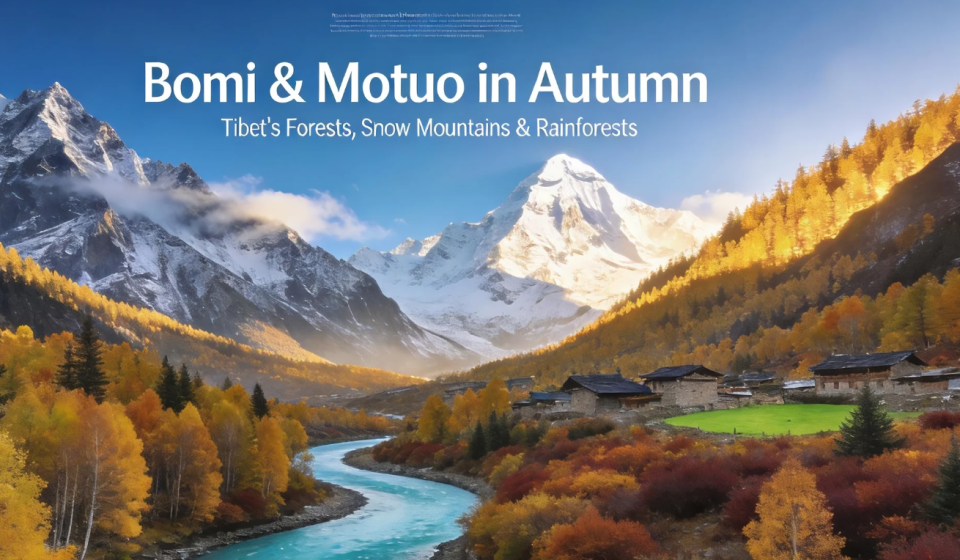
Bomi and Motuo in Autumn: A Journey Through Tibet’s Forests, Snow Mountains and Rainforests

As autumn arrives across China, the mountains of southeastern Tibet begin to change.
For travelers heading to Bomi (波密) and Motuo (墨脱), autumn is one of the most beautiful times of the year. The summer rains gradually give way to clearer skies, colorful forests and distant snow-covered peaks.
Bomi can feel like a landscape painting in motion. Forests turn shades of red, orange and gold, while snow mountains regain their bright white crowns. The Palong Tsangpo River winds through the valleys, reflecting the changing colors of the surrounding landscape.
Further south, the scenery changes dramatically.
In Motuo, evergreen forests, banana plants, deep valleys and humid mountain landscapes create an almost subtropical world. The contrast between high-altitude snow mountains and lush rainforest is one of the most remarkable features of southeastern Tibet.
An autumn journey from Nyingchi to Bomi and Motuo offers an opportunity to experience several completely different landscapes in one trip—from alpine forests and glaciers to rivers, villages and subtropical rainforest.
Why Visit Bomi and Motuo in Autumn?
Autumn brings a particularly striking combination of landscapes to southeastern Tibet.
The forests around Bomi and Nyingchi begin to take on warm autumn colors, while the higher mountains remain covered with snow. On clear days, the sky can appear exceptionally deep and blue, creating strong contrasts between the forests, rivers and mountains.
Among the highlights are:
- Snow-covered peaks around Bomi and Nyingchi
- Colorful autumn forests
- The Palong Tsangpo River
- Namcha Barwa and its surrounding valleys
- Lulang’s mountain meadows and forests
- Gangyun Fir Forest
- Zuxi Glacier
- The dramatic road into Motuo
- The Yarlung Tsangpo River and its great bends
- The unique forests and villages of Motuo
The scenery changes considerably as the road descends toward Motuo, making this journey more than a simple autumn foliage trip.
1. See Namcha Barwa in Autumn
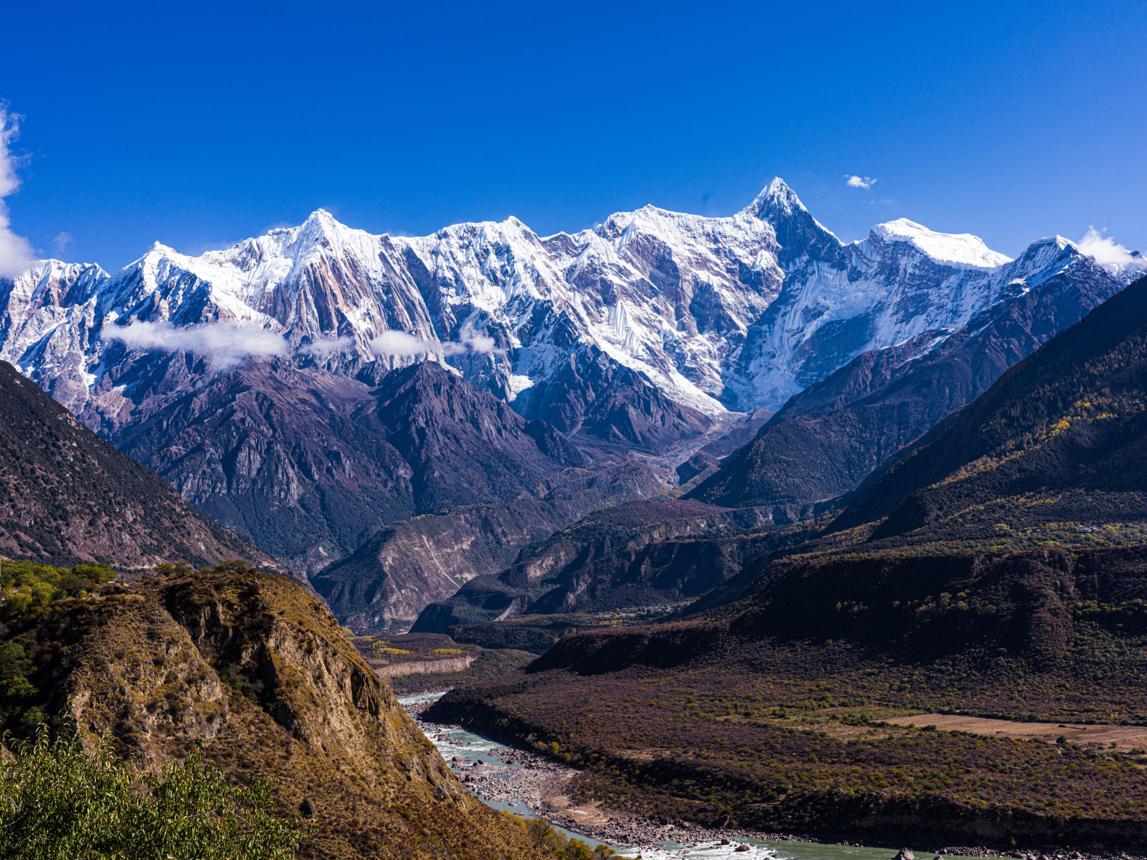
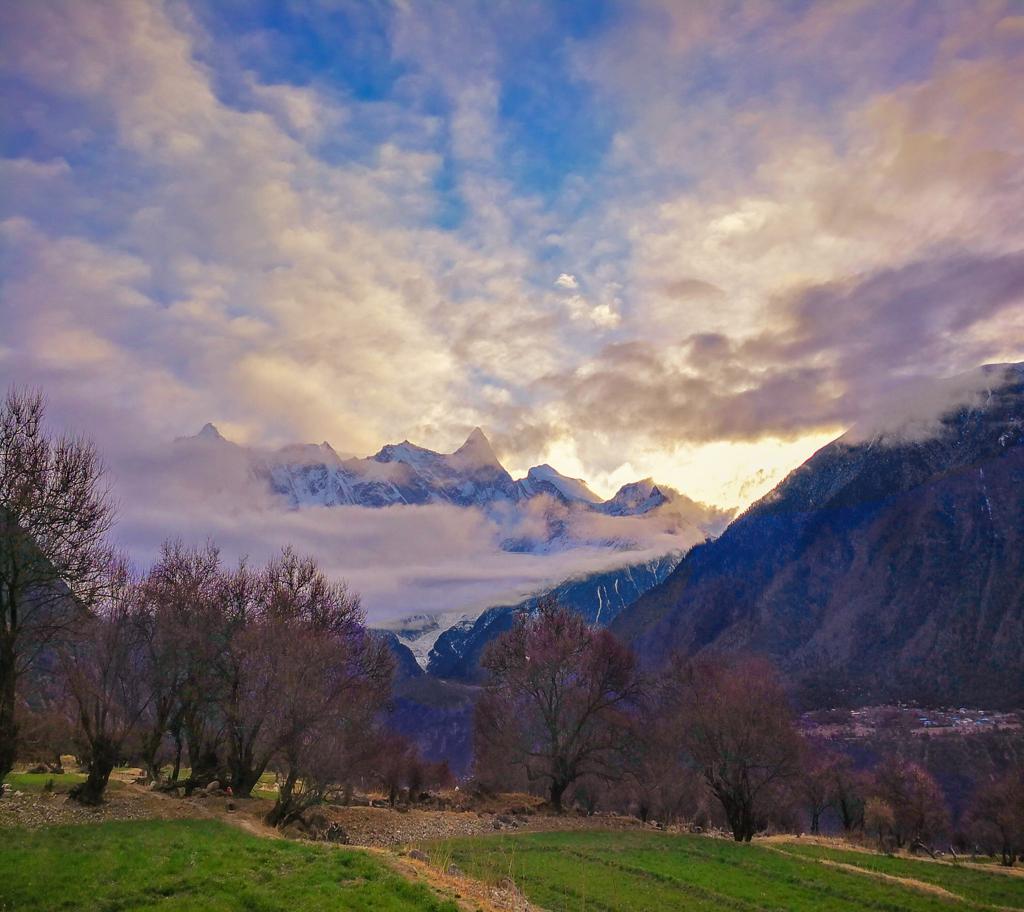
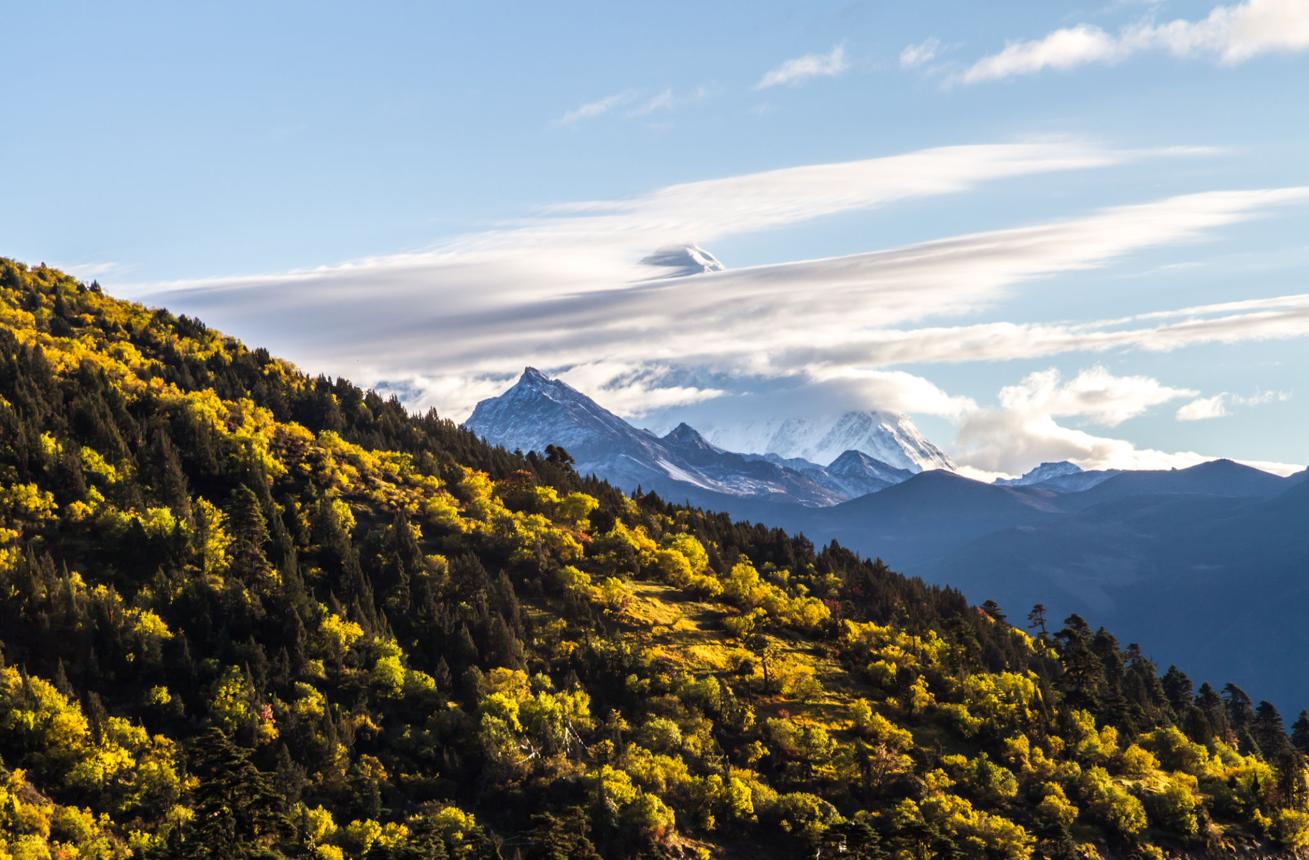
At 7,782 meters, Namcha Barwa (南迦巴瓦峰) is one of the most spectacular peaks in southeastern Tibet.
Its name is commonly interpreted as meaning something like “the burning thunder and lightning” or “the spear that shoots into the sky,” depending on the translation. The mountain rises dramatically above the surrounding valleys and is one of the defining landmarks of the Nyingchi region.
Namcha Barwa is also famous for its unpredictable weather. Clouds frequently gather around the summit, sometimes hiding the mountain completely and sometimes revealing only part of its massive face.
Autumn can bring clearer conditions, although there is never a guarantee of a perfect view.
For travelers, one of the most rewarding experiences is simply spending time in the valleys around the mountain rather than relying on a single viewpoint.
Walking through nearby villages and fields provides a different perspective: traditional Tibetan homes, prayer flags, autumn vegetation and the enormous snow-covered peak can all become part of the same landscape.
What to Look For
- Namcha Barwa rising above the forest
- Autumn-colored valleys
- Tibetan villages around the mountain
- Snow-covered peaks after fresh snowfall
- Morning and late-afternoon light
2. Explore the Colorful Autumn Landscapes of Lulang
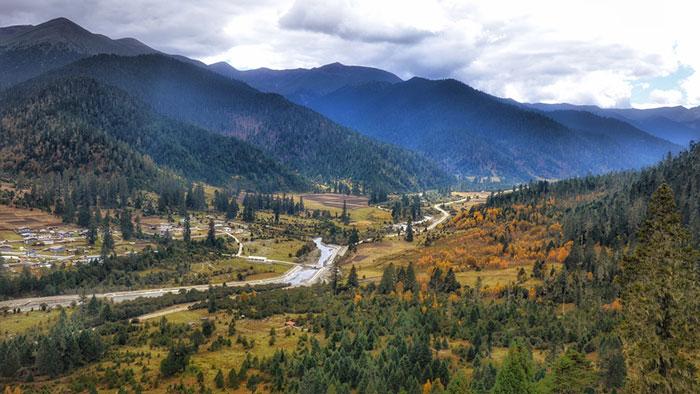
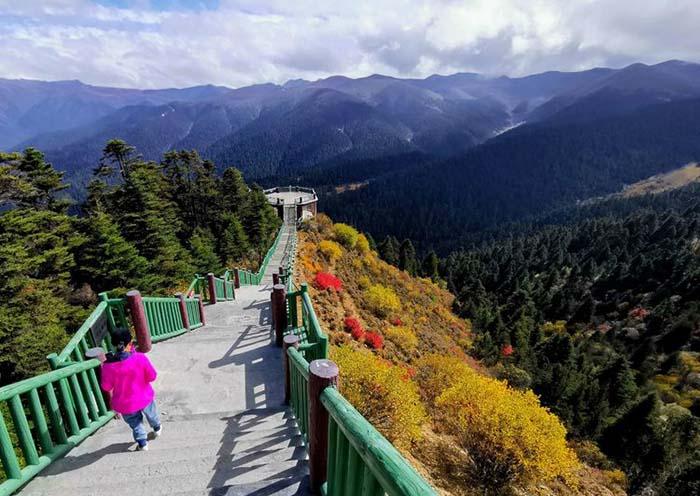
Lulang (鲁朗) is often described in China as the “Switzerland of Tibet”, a nickname inspired by its combination of forests, meadows, mountains and villages.
Autumn is particularly attractive here.
The forests gradually change from green to shades of yellow, orange and red, while the surrounding mountains provide a dramatic backdrop.
The Lulang Grassland is another highlight. During autumn, the meadow takes on warmer golden tones and contrasts beautifully with the surrounding evergreen and deciduous forests.
If the weather is clear, walking through the grassland is one of the simplest ways to appreciate the scale of the landscape.
Rather than rushing from one viewpoint to another, allow some time to walk, take photographs and simply enjoy the mountain scenery.
3. Walk Through Gangyun Fir Forest
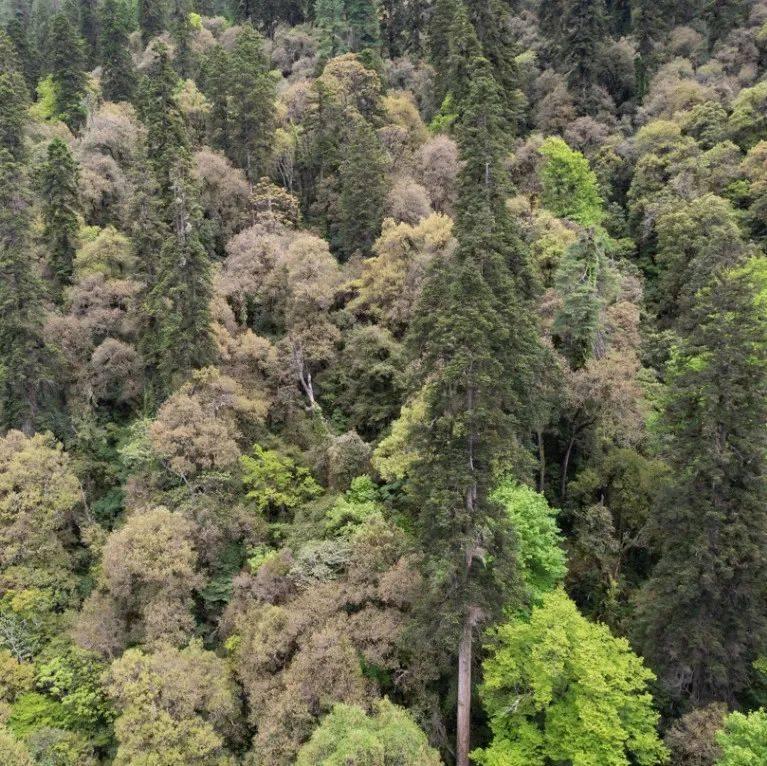
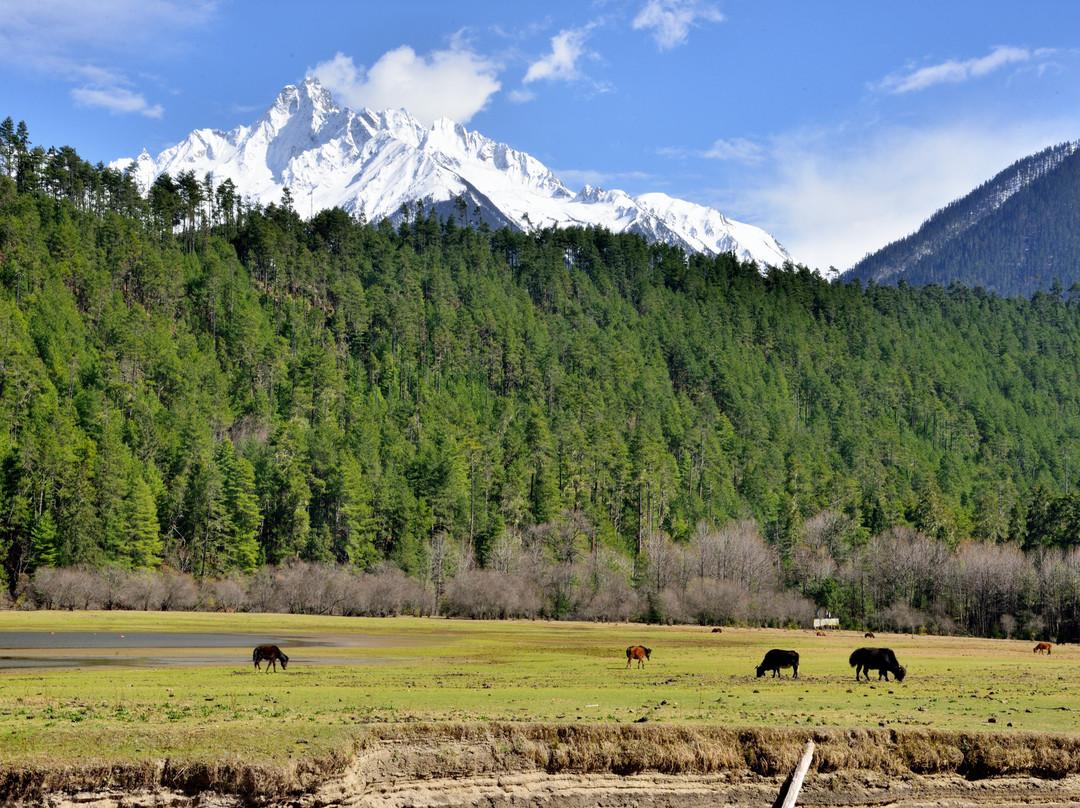
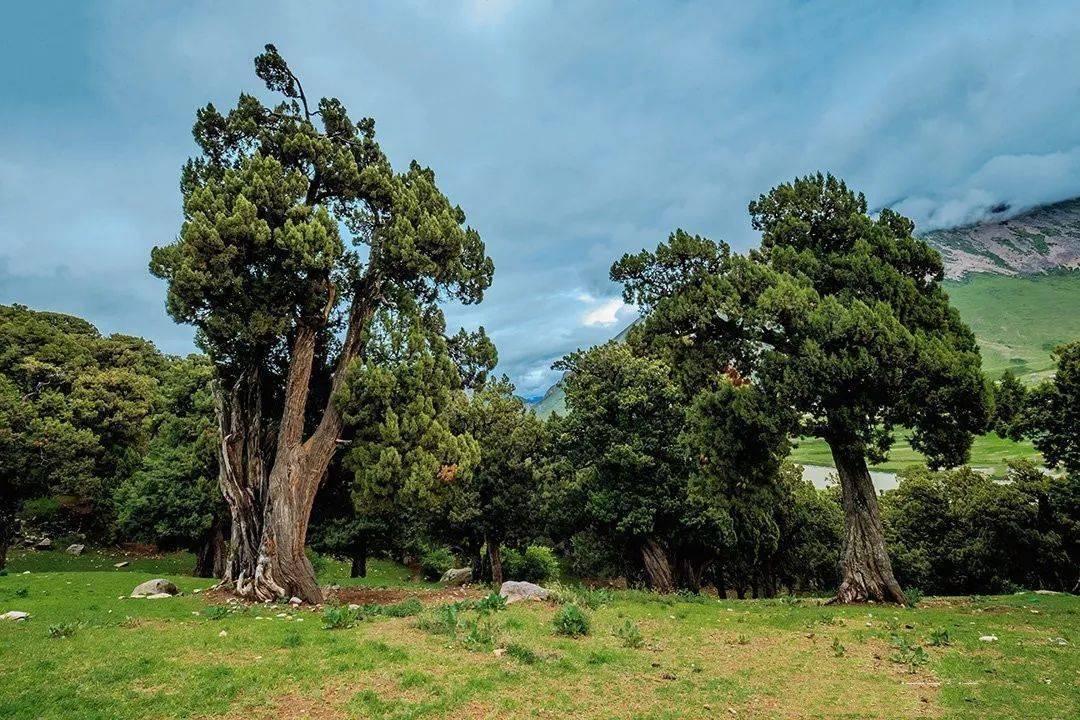
For travelers who enjoy forests and easy hikes, Gangyun Fir Forest (岗云杉林) offers a completely different experience.
Tall fir trees create a dense forest environment, with open meadows and small lakes appearing between the trees. On clear days, snow-covered mountains can be seen beyond the forest.
The atmosphere here is very different from the open mountain viewpoints around Namcha Barwa.
Instead of vast panoramic views, the experience is about walking beneath ancient trees, listening to streams and wind, and observing the details of the forest.
For photographers, the combination of tall trees, grassland, water and distant mountains provides plenty of natural compositions.
Hiking Tip
Conditions can change quickly in the mountains. Wear shoes with good grip and bring a waterproof outer layer even when the weather forecast looks favorable.
4. Follow the Niyang River Through the Tibetan Countryside
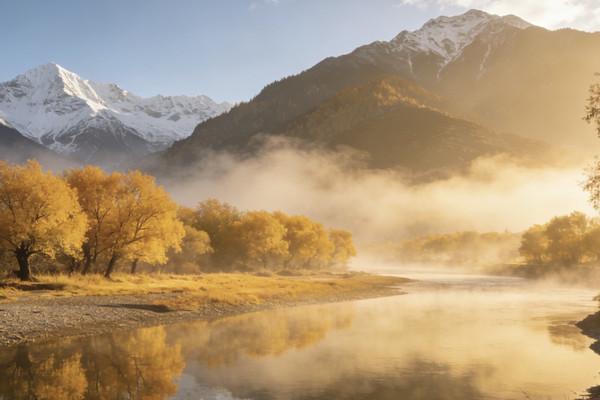
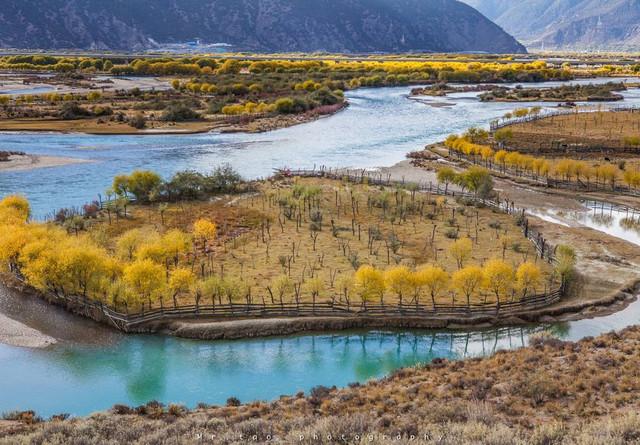
The Niyang River (尼洋河) is one of the major rivers around Nyingchi and plays an important role in the landscape of southeastern Tibet.
Following the river by road provides a slower and more peaceful side of the region.
Instead of focusing only on famous peaks, look for the smaller details along the river: cultivated fields, villages, forests, braided river channels and mountain slopes changing color with the season.
The contrast between the blue-green water and the autumn vegetation can be particularly beautiful on clear days.
This is also an excellent part of the journey for travelers who enjoy landscape photography without needing a demanding hike.
5. Discover Zuxi Glacier
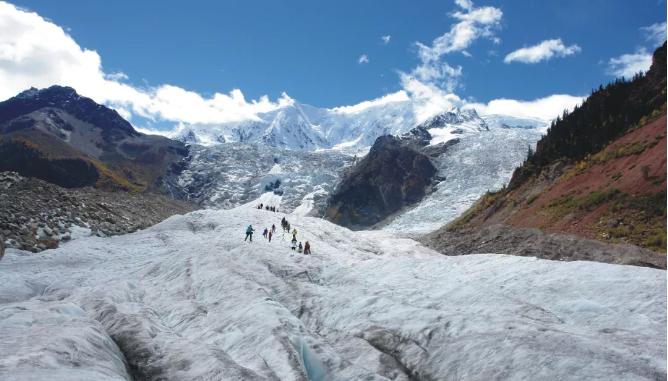
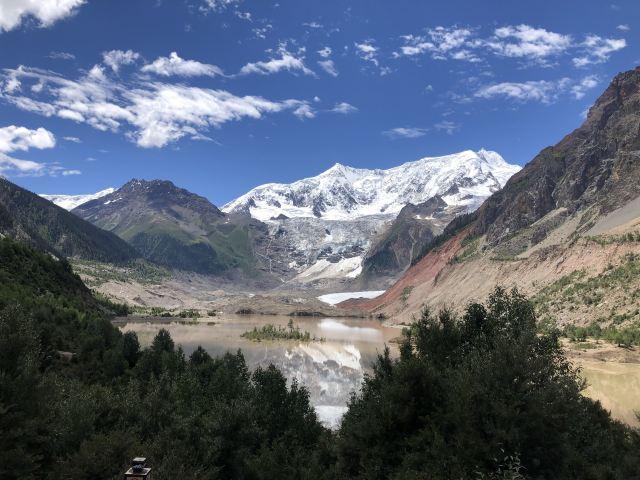
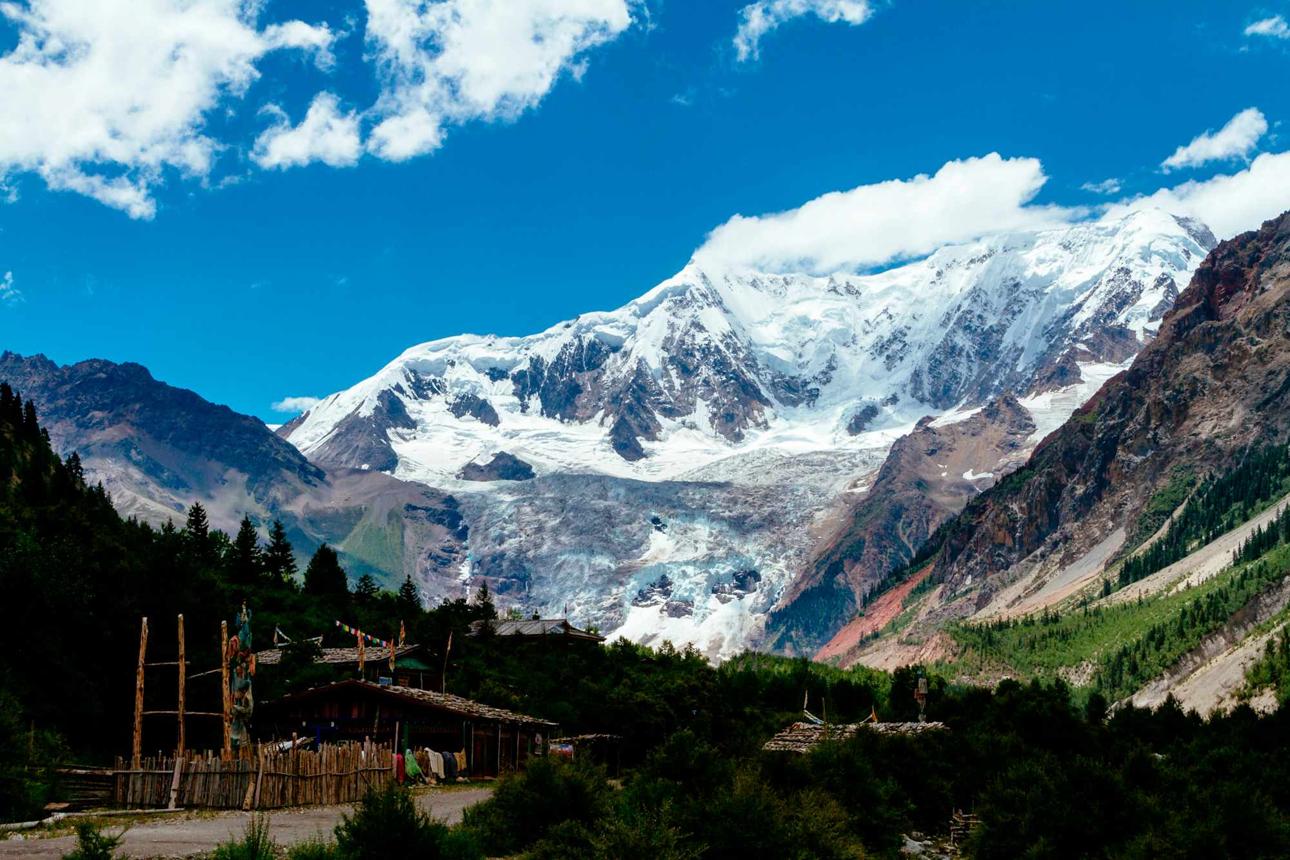
One of the less familiar landscapes around Bomi is Zuxi Glacier (朱西冰川).
The approach itself is part of the experience. After traveling through winding mountain roads, the landscape gradually opens toward the massive glacier and surrounding mountains.
What makes the area particularly interesting is the combination of landscapes.
Glacier-covered mountains stand above forests, streams, villages and agricultural land, creating a striking transition between the high mountains and the settled valleys below.
For visitors interested in Tibet beyond the classic monastery-and-mountain itinerary, places such as Zuxi Glacier provide a different perspective on the region.
6. Travel Into the Hidden World of Motuo
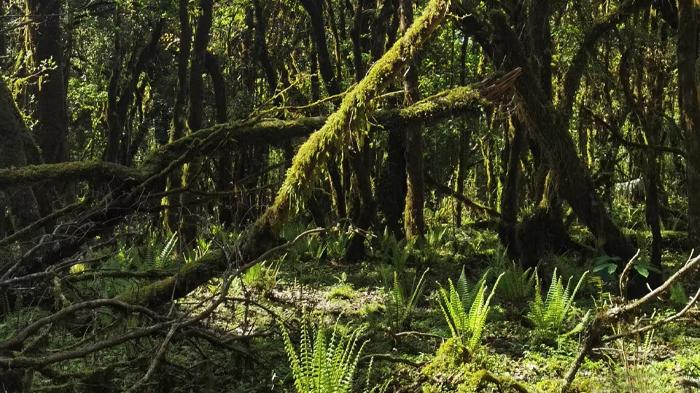
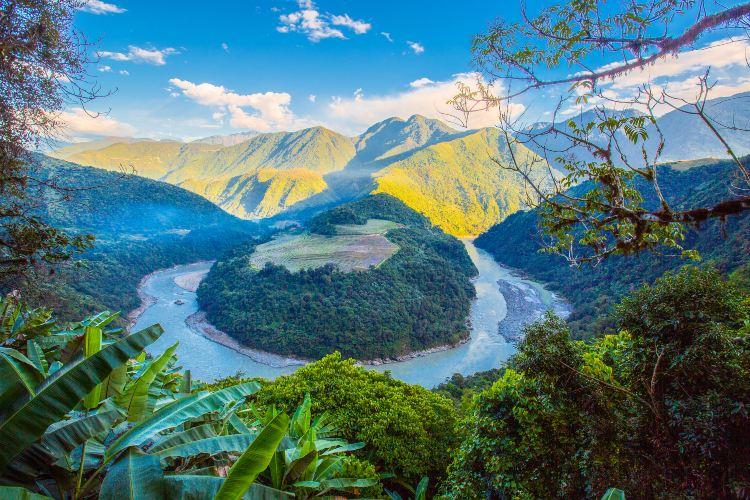
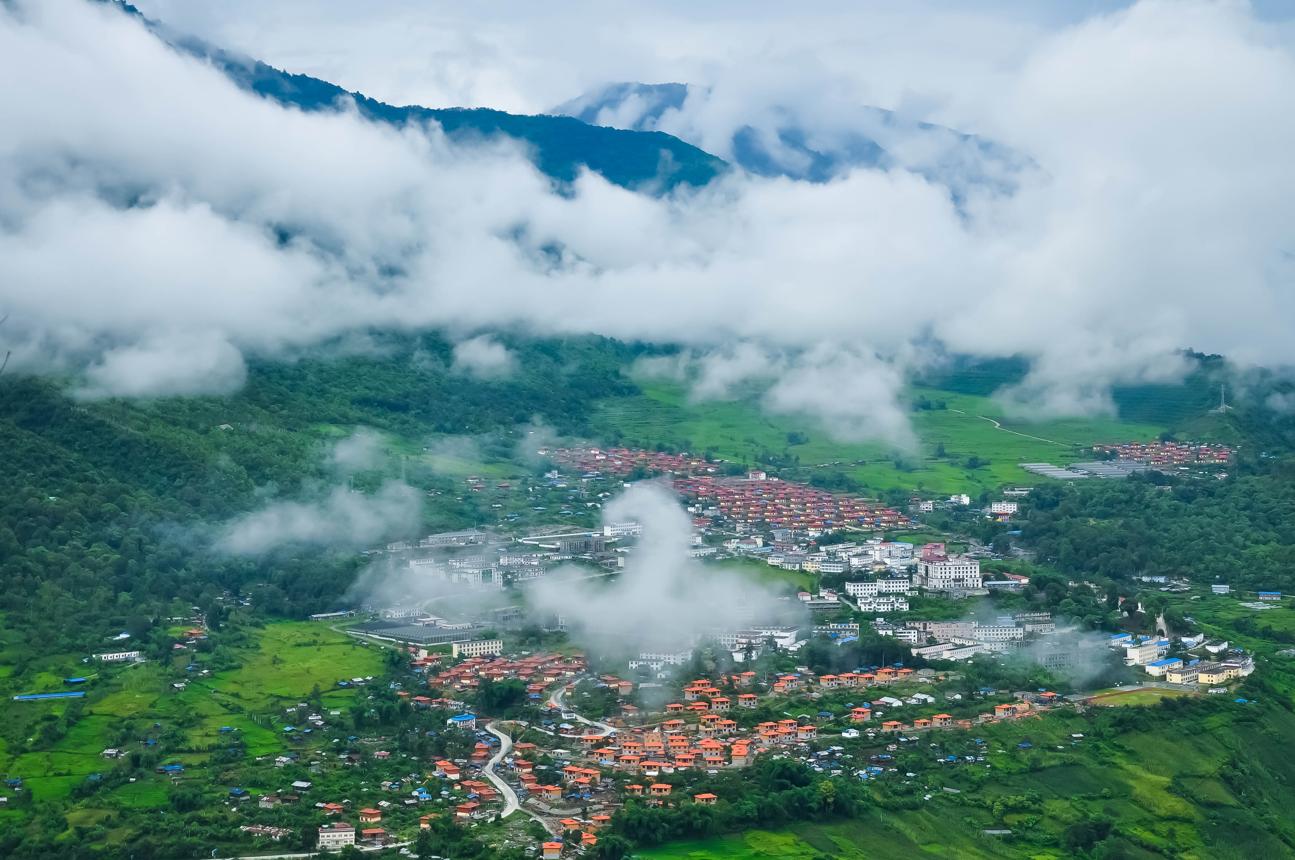
South of Bomi lies Motuo (墨脱), one of the most distinctive destinations in southeastern Tibet.
Motuo is located in the lower reaches of the Yarlung Tsangpo River and is surrounded by extremely varied terrain.
Snow mountains and glaciers dominate the higher elevations, while lower valleys become much warmer and wetter, supporting dense forests and subtropical vegetation.
This dramatic change in altitude is one of Motuo’s defining characteristics.
A journey toward Motuo can take travelers through landscapes ranging from:
Snow and glaciers → coniferous forests → broadleaf forests → subtropical vegetation → rainforest
Few places in Tibet offer such a dramatic change over a relatively short journey.
7. Cross the Galongla Tunnel and Zhamo Highway
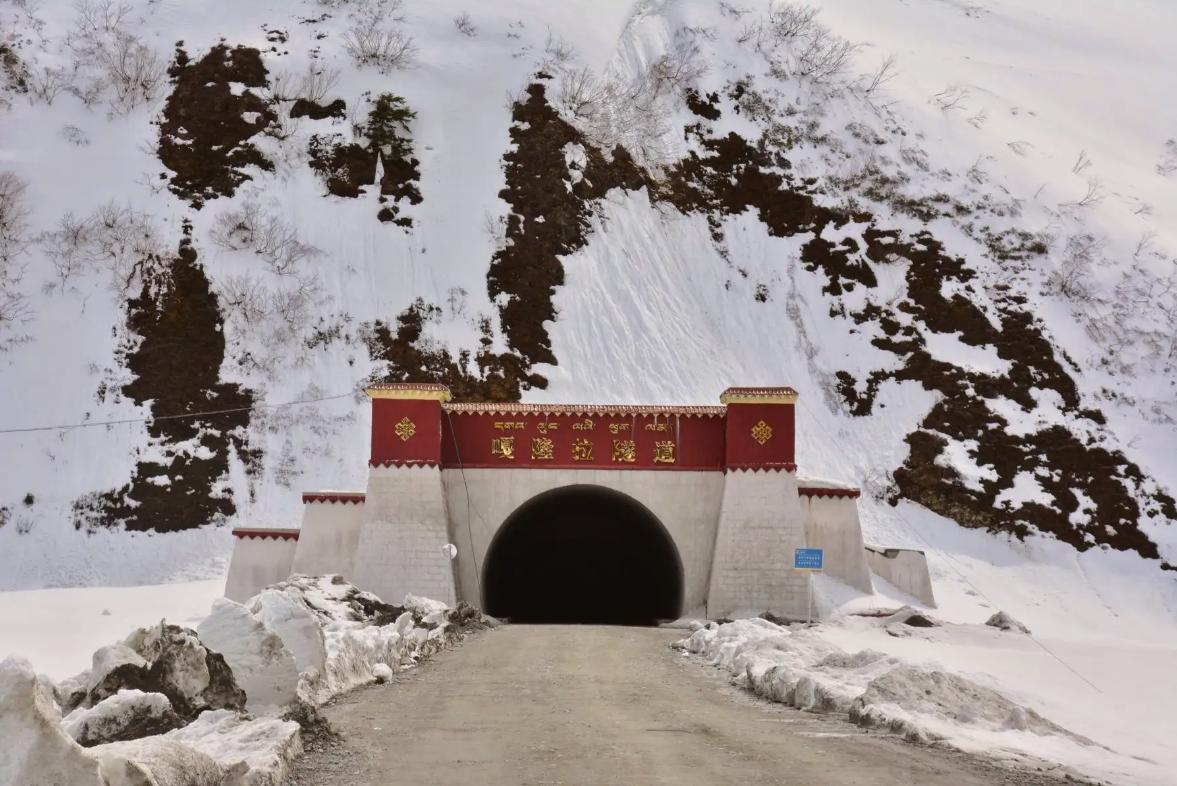
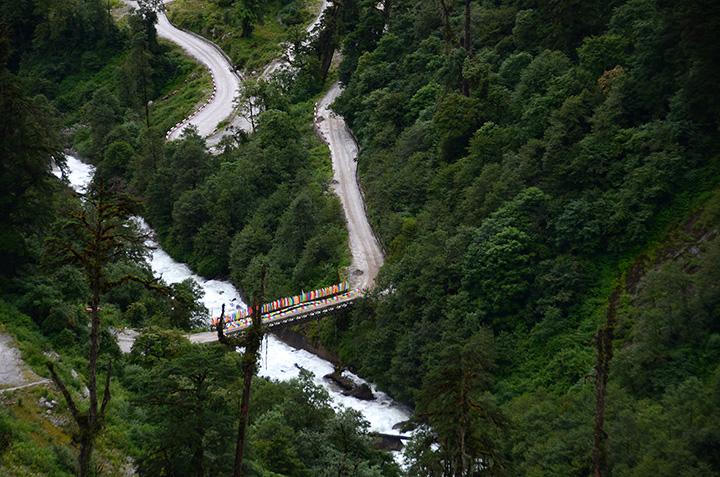
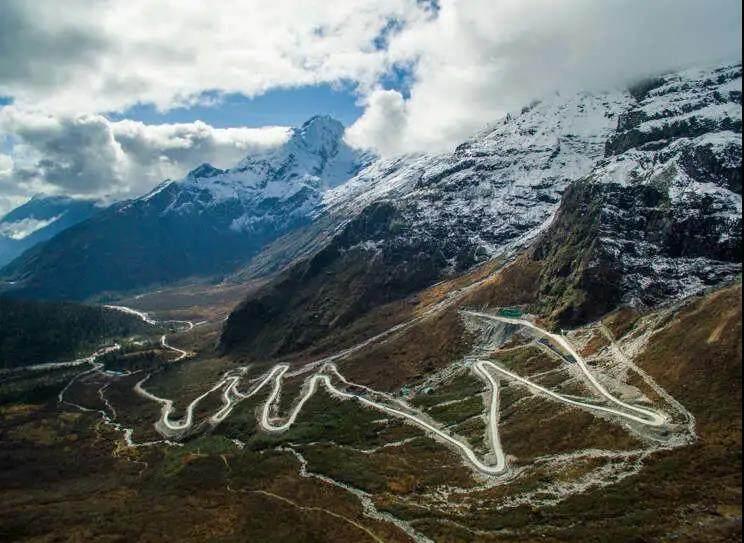
Reaching Motuo is an adventure in itself.
The route from Bomi passes through the Galongla Tunnel (嘎隆拉隧道) before continuing along the Zhamo Highway (扎墨公路).
The road crosses a dramatic mountain environment where elevation, vegetation and weather can change rapidly.
The Zhamo Highway is particularly famous among road-trip enthusiasts because of the dramatic change in scenery along the route.
Travelers can move from high-altitude mountain landscapes into much greener and more humid valleys.
The road is also an important reminder that this is not a conventional sightseeing route. Mountain roads can be affected by weather, landslides and other conditions, so travelers should check local road information before setting out.
8. Learn About Motuo at the Menluo Historical and Cultural Heritage Museum
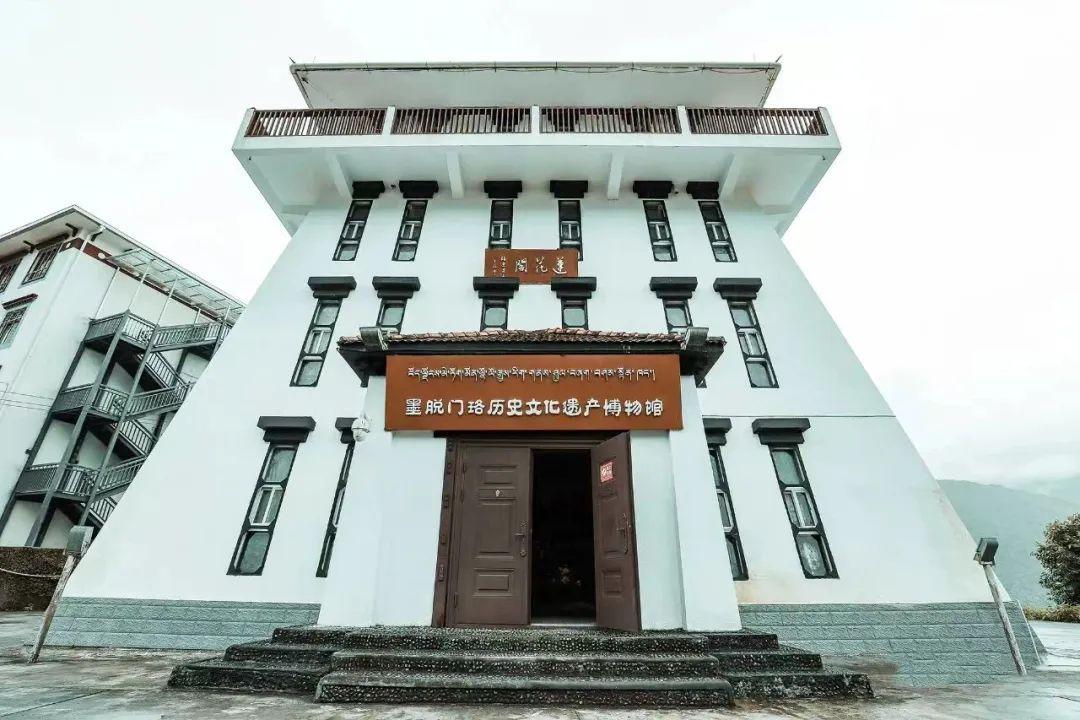
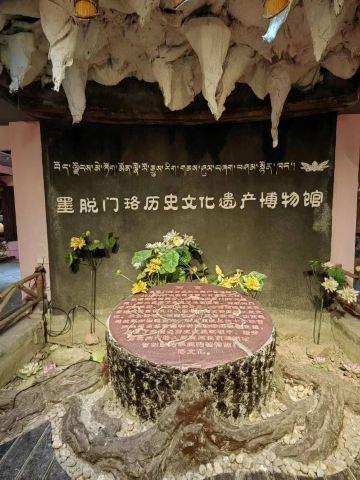
Before exploring the surrounding valleys, it can be useful to learn something about Motuo’s local history and cultures.
The Menluo Historical and Cultural Heritage Museum is one place where visitors can learn more about the region.
The museum introduces aspects of local history, traditional life and the cultures of the Monpa and Lhoba peoples, two ethnic groups associated with southeastern Tibet.
Although the museum is relatively small, it provides useful context for understanding Motuo beyond its natural scenery.
For international visitors, this kind of cultural stop can add depth to a journey that might otherwise focus almost entirely on landscapes.
9. Look Over Motuo and the Yarlung Tsangpo River
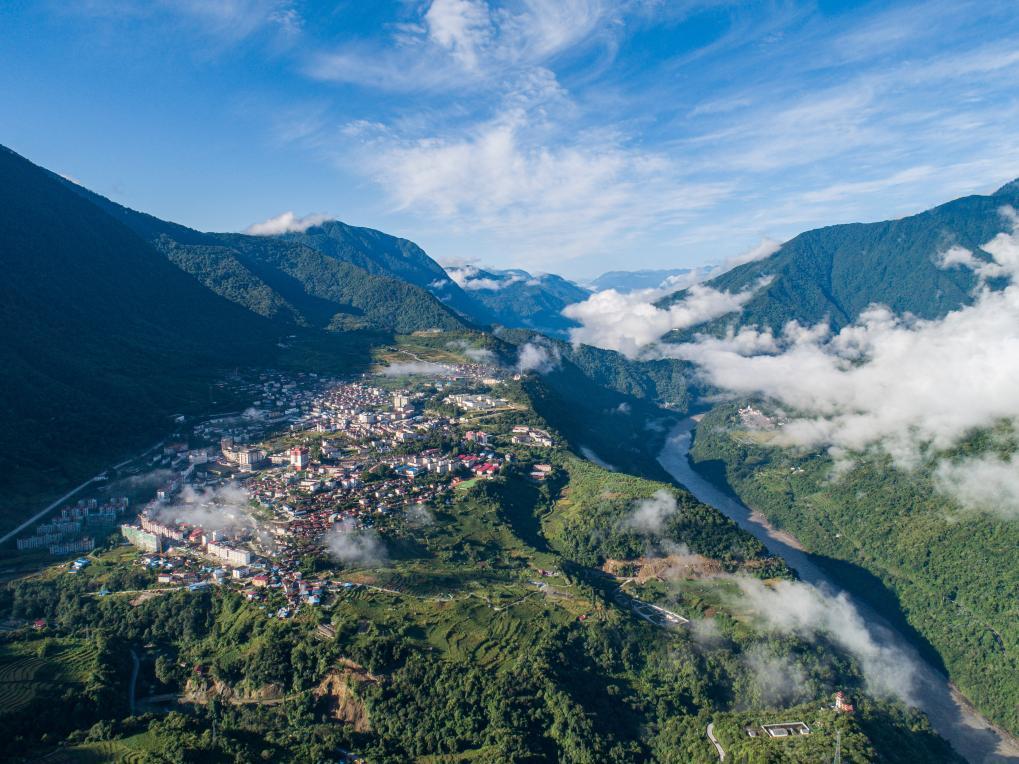
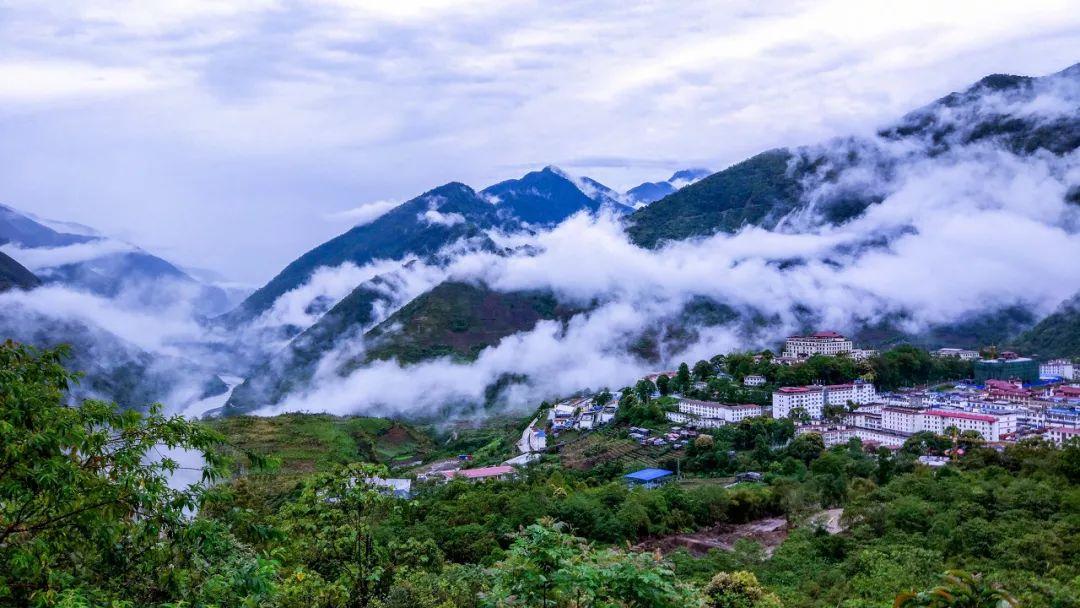
One of the most impressive ways to understand Motuo is to see the town from above.
The settlement stretches along the river valley, surrounded by steep mountains and dense vegetation.
From higher viewpoints, the Yarlung Tsangpo River can be seen curving through the valley, while forests and cultivated land create layers of green around the town.
On clear days, distant snow-covered peaks may appear beyond the lower valleys.
The scene illustrates one of Motuo’s most fascinating characteristics: a high-altitude Himalayan environment gradually transforming into a much warmer and greener landscape.
10. Visit Geling Village and Its Misty Tea Gardens
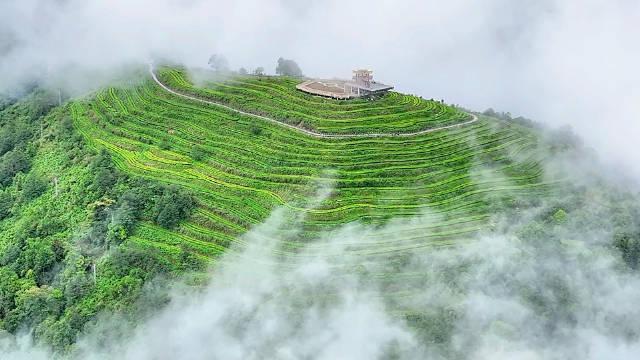
Geling Village (格林村) offers another unusual side of Motuo.
The region’s humid climate allows tea plantations and lush vegetation to thrive. Mist frequently moves through the valleys, creating a constantly changing atmosphere around the tea gardens.
Walking through the plantations, visitors may see layers of tea plants, forests and mountains disappearing into the mist.
The combination of tea gardens, clouds, forests and distant Himalayan peaks creates a landscape that feels very different from the dry, high-altitude scenery commonly associated with Tibet.
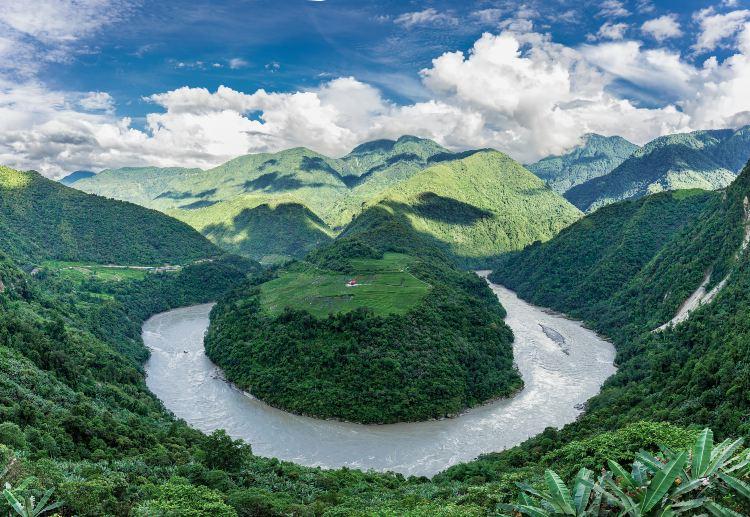
11. See the Great Bend of the Yarlung Tsangpo at Guoguo Tang
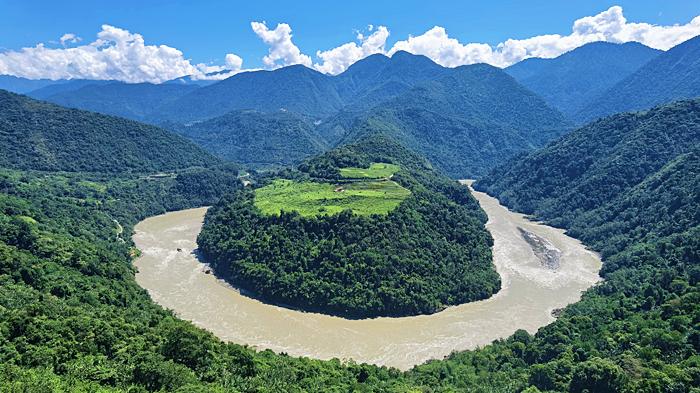
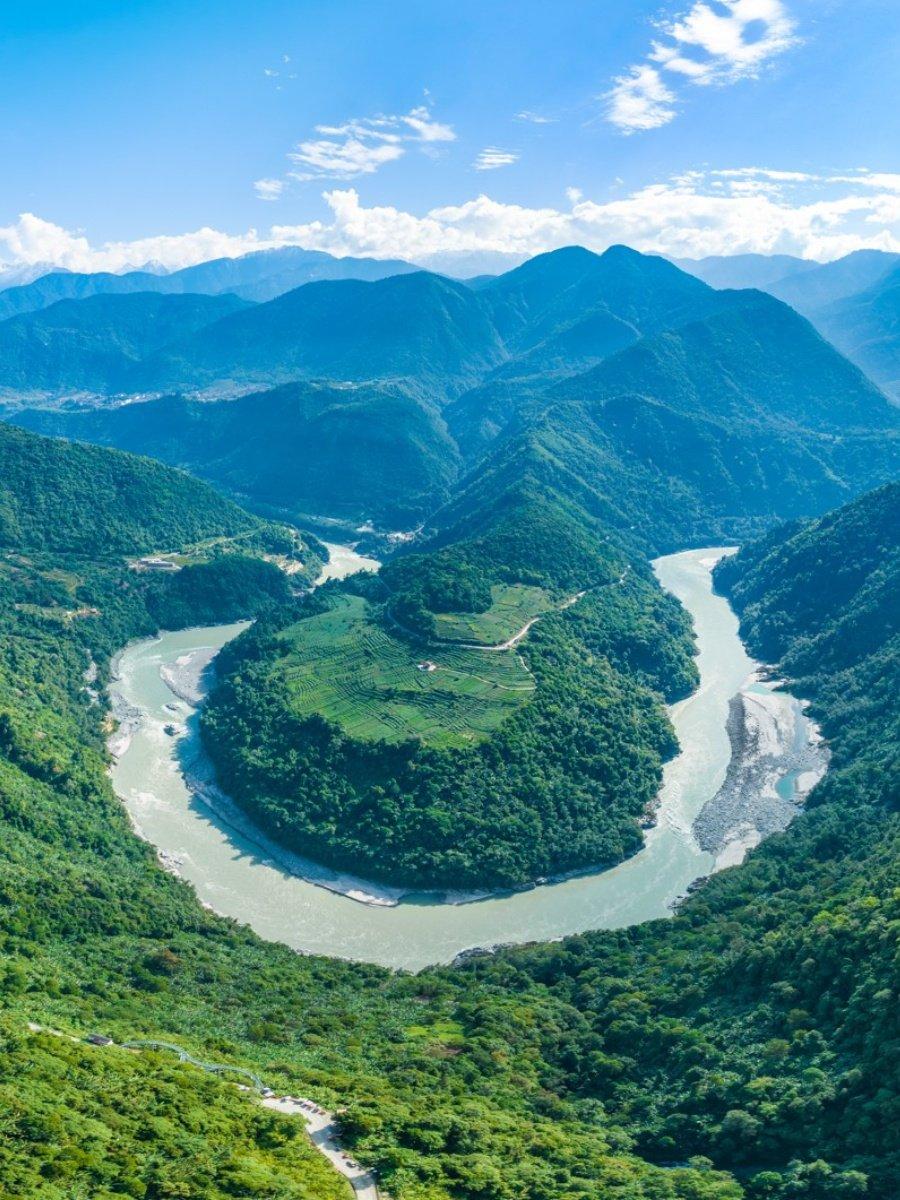
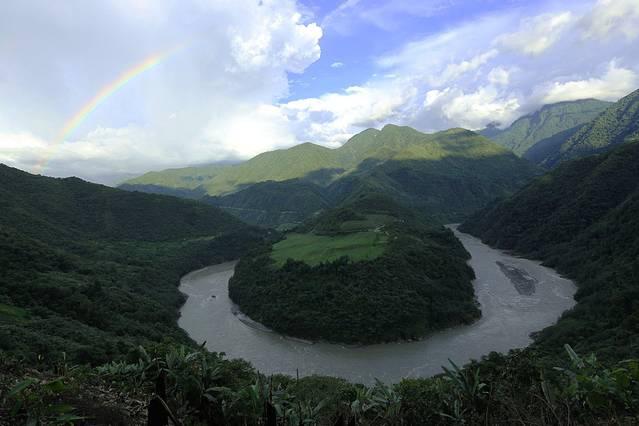
The Guoguo Tang Great Bend (果果塘大拐弯) is another spectacular feature of the Motuo landscape.
Here, the Yarlung Tsangpo River makes a dramatic turn as it encounters the surrounding mountains.
From an elevated viewpoint, the river forms a striking curved shape surrounded by dense green mountains.
The combination of the river, steep valley walls and lush vegetation makes this one of the memorable viewpoints along the Motuo journey.
It is also a good example of why traveling through southeastern Tibet is about more than visiting individual attractions—the roads connecting them are often part of the experience themselves.
Bomi to Motuo: A Journey Through Several Worlds
What makes this route particularly special is the enormous variety of landscapes encountered along the way.
Starting around Nyingchi and Bomi, travelers can experience:
- Alpine snow mountains
- Autumn-colored forests
- Meadows and grasslands
- Ancient fir forests
- Glaciers
- Deep river valleys
- Tibetan villages
- Subtropical forests
- Tea plantations
- Rainforest landscapes
The transition is gradual but dramatic.
In one journey, the landscape can shift from a cold Himalayan environment to a much warmer and greener valley.
That contrast is one of the strongest reasons to consider southeastern Tibet for an autumn trip.
When Is the Best Time to Visit Bomi and Motuo?
For Bomi and the Nyingchi region, autumn is generally associated with colorful forests and clearer mountain views.
The exact timing of peak foliage varies from year to year depending on elevation, temperature and weather conditions. Higher elevations normally change earlier, while lower valleys may remain green for longer.
Motuo is different.
Because of its warmer and wetter climate, much of the vegetation remains green even when autumn colors dominate the higher areas around Bomi and Nyingchi.
This means that an autumn journey can offer two very different seasonal experiences:
Bomi and Nyingchi: autumn forests, golden grasslands and snow mountains
Motuo: lush green forests, rivers, tea gardens and subtropical vegetation
Important: Travel Requirements for Foreign Visitors
If you are traveling to Tibet on a foreign passport, there is an important difference between visiting Tibet and traveling elsewhere in China.
Foreign visitors generally cannot travel independently in Tibet. Tibet travel must be arranged through an authorized travel agency, which organizes the itinerary and handles the required travel permits and related procedures. Official Chinese government information states that foreign tourist groups traveling to areas that are not open to foreigners must have their travel arrangements submitted by a travel agency for the required approval procedures.
You will need a Tibet Travel Permit
Before traveling to Tibet, foreign visitors should arrange the required Tibet Travel Permit (入藏旅游批准函) through their travel agency.
The travel agency normally handles the application using your passport and China visa information, together with your planned itinerary. Once the necessary approval has been obtained, the agency will provide the documents required for your Tibet journey. Official information from the Tibet-related authorities states that foreign passport holders need to obtain the relevant Tibet travel approval through a travel agency.
Do not assume that having a valid Chinese visa is enough to enter Tibet. A Chinese visa and the Tibet Travel Permit are separate requirements.
What this means for a Bomi–Motuo trip
For an international traveler planning a Bomi and Motuo autumn trip, you should arrange the following before departure:
| What you need | Who normally handles it? |
|---|---|
| Chinese visa, if required | Traveler / visa service |
| Tibet Travel Permit | Tibet travel agency |
| Tibet itinerary | Travel agency |
| Transportation within Tibet | Travel agency |
| Guide and required travel arrangements | Travel agency |
| Additional permits for restricted or border areas, if required | Travel agency |
Important: Motuo is in a remote part of southeastern Tibet, and some routes or areas may have additional access or permit requirements. Travel regulations, road conditions and access restrictions can change, so confirm the requirements with your Tibet travel agency before booking flights or other non-refundable transportation.
Can foreign travelers join a private tour?
Yes. “Organized travel” does not necessarily mean that you must join a large bus tour.
Depending on the current regulations and the agency’s arrangements, international visitors can ask a qualified Tibet travel agency about a private tour with their own vehicle, driver and guide. The key point is that the trip must be arranged through the appropriate travel agency and the required permits must be obtained in advance.
For travelers who want to explore Bomi, Motuo, Nyingchi and other remote areas, a private itinerary can also make it easier to adjust the pace around weather, road conditions and photography stops.
Travel Tip: Do not book a non-refundable flight or start your Tibet journey until your travel agency confirms that the required Tibet travel documents have been approved and that your planned Bomi–Motuo route is currently open to foreign visitors.
🇨🇳 Travel Tip for International Visitors
Traveling to Tibet is different from traveling to most other parts of China. Foreign passport holders generally need to arrange their Tibet trip through an authorized travel agency and obtain the required Tibet Travel Permit before entering the region. If you are planning to visit Bomi or Motuo, check the latest permit and route requirements with your travel agency before making final travel arrangements.
How to Plan a Bomi–Motuo Journey
This is not a destination where travelers should rely on a simple point-to-point driving itinerary.
Road conditions, weather and local regulations can change, particularly on routes leading toward Motuo.
Before traveling, check:
- Current road conditions
- Weather forecasts
- Local travel restrictions
- Scenic-area opening information
- Accommodation availability
- Transportation requirements
- Altitude and acclimatization considerations
A local driver or experienced travel operator can also be useful, particularly for travelers unfamiliar with mountain roads in Tibet.
Final Thoughts
An autumn journey through Nyingchi, Bomi and Motuo offers a side of Tibet that is very different from the image many first-time visitors have in mind.
There are snow-covered Himalayan peaks, but also colorful forests.
There are high mountain valleys, but also warm and humid rainforest.
There are glaciers, rivers and grasslands, as well as villages and tea plantations.
The journey from Bomi toward Motuo is therefore less about checking off a list of attractions and more about watching the landscape transform as you travel.
If you are looking for a quieter and more nature-focused side of Tibet, the road from Nyingchi to Bomi and Motuo deserves a place on your China travel list.
FAQ
Can foreign tourists travel to Bomi and Motuo independently?
Foreign visitors generally cannot travel independently in Tibet. Travel arrangements for foreign tourists must be made through an authorized travel agency, which can arrange the required itinerary and permits. Additional permits may also be required for certain restricted or border areas. Requirements can change, so travelers should confirm the latest regulations with their Tibet travel agency before departure.
Do foreign tourists need a Tibet Travel Permit?
Yes. Foreign visitors need the required Tibet travel approval before traveling to Tibet. The travel agency normally handles the application and related arrangements based on the traveler’s passport, visa status and itinerary.
Can foreign tourists visit Motuo?
Access to Motuo can involve additional travel and route requirements because of its remote location and sensitive geographic areas. Foreign visitors should have their travel agency confirm whether the planned route is currently open and whether additional permits are required.