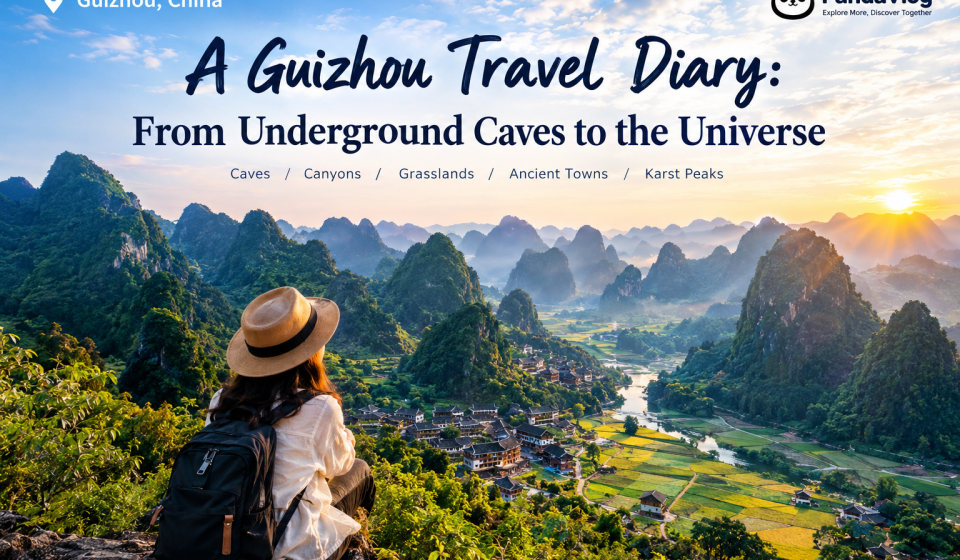

A Guizhou Travel Diary: From Underground Caves to the Universe
From Guiyang and Zhijin Cave to Jiudongtian, Wumeng Grassland, Maling River Canyon and Wanfenglin
Guizhou is a place where the landscape seems to change around every bend.
Deep limestone caves disappear beneath the mountains, rivers cut through enormous gorges, karst peaks rise from agricultural valleys, and traditional villages appear between the mountains.
This was a trip I had wanted to take for a long time. Rather than following a conventional tourist itinerary, I joined a loosely organized outdoor travel group and explored Guizhou by road over several days.
The journey combined some of Guizhou’s most dramatic landscapes with ordinary moments of travel: long-distance trains, local restaurants, rainy afternoons, simple hotels, unexpected changes of plan and plenty of time looking through a vehicle window at the mountains.
This is a travel diary rather than a traditional package-tour guide. The places, transportation, accommodation and experiences described here are based on what actually happened during the trip.
Trip Overview
| Item | Details |
|---|---|
| Destination | Guizhou, China |
| Trip style | Independent travel with a loosely organized outdoor group |
| Starting point | Xiamen |
| Main gateway | Guiyang |
| Transportation | Long-distance train, group vehicle, public transport, metro and taxis |
| Trip duration | 10 nights / 11 days planned |
| Travel period | July 24–August 3 |
| Total personal spending | About RMB 5,390 per person |
The Route
The planned route covered a large part of Guizhou:
Xiamen → Guiyang → Bijie → Liupanshui → Qianxinan → Anshun → Qiannan → Guiyang → Xiamen
The original itinerary included Zhijin Cave, Zhijin Grand Canyon, Jiudongtian, Wumeng Grassland, Panzhou, Maling River Canyon, Wanfenglin, Getu River, Dishuitan Waterfall, Huangguoshu Waterfall, Xiaoqikong, Xijiang Qianhu Miao Village and the FAST Telescope in Pingtang.
The detailed travel diary in the source material provided for this article covers the journey through Day 6, including Maling River Canyon and Wanfenglin.
How the Trip Was Organized
This trip came about rather unexpectedly.
I came across a Guizhou route shared in an outdoor travel group. Apart from Huangguoshu Waterfall, most of the destinations were places I had never visited before.
The organizer handled the main vehicle and arranged accommodation. Participants were responsible for their own entrance tickets, meals and other personal expenses.
The arrangement felt somewhere between traveling independently with friends and joining a conventional tour. It solved the biggest transportation problem while still leaving some room for personal choices.
The group arrangement was convenient, but it also had limitations. Some hotels were located far from the center of town, and several decisions were made collectively, meaning that not every activity or restaurant could suit everyone.
Transportation
For the long-distance journey, I chose a traditional overnight train from Xiamen to Guiyang and flew back from Guiyang.
Within Guizhou, the trip mainly relied on the group’s vehicle, with buses, metro trains and taxis used when exploring Guiyang.
Accommodation
Because this was an independently organized outdoor group rather than a conventional commercial tour, accommodation varied considerably.
Some hotels were comfortable and well located, while others were relatively far from the city center or had limited dining options nearby.
Food Highlights
- Na Yong: Taolin Luoguo
- Guanling: Xianyang Lamb Hot Pot
- Pingtang: Zhang Ji Wooden-Bucket Fish
Trip Cost
Total personal spending was approximately RMB 5,390 per person.
This included the organized trip costs as well as transportation, entrance tickets, meals and other personal expenses.
Day 1: Xiamen to Guiyang by Overnight Train
The first day was spent on the train.
I actually enjoy traveling by train in China. Sitting beside the window and watching the landscape change is part of the experience itself.
The K946 train from Xiamen to Guiyang took approximately 28 hours and 37 minutes according to the original travel notes.
Getting a soft sleeper ticket was difficult because tickets were already on a waiting list when sales opened. In the end, we chose hard sleepers rather than waiting until the last moment.
There were several other members of the group traveling on the same train, although we were staying in different carriages and did not know each other beforehand.
After boarding, we visited one another’s carriages and gradually introduced ourselves.
One particularly unexpected moment came when I discovered that one of the travelers had actually been my high-school classmate. We had not seen each other for 45 years, and I did not recognize him when we first met on the train.
Day 2: Guiyang — Dongshan Park and Jiaxiu Tower
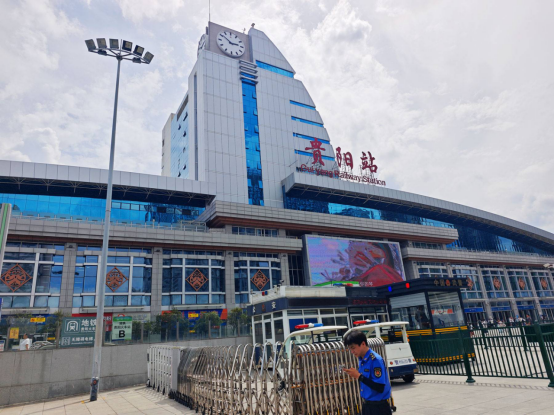
The K946 arrived in Guiyang on schedule.
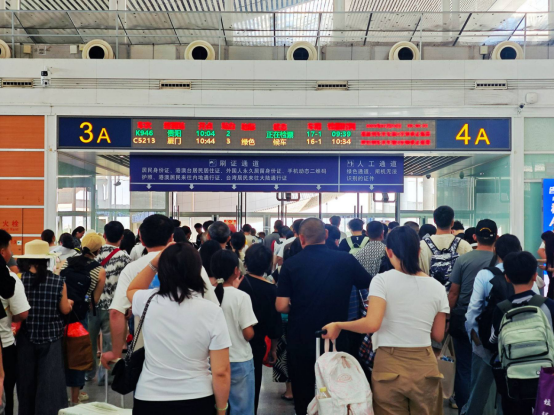
While still on the train, I had already prepared a Guiyang public-transport payment code. After arriving at the station, we caught bus 240 at around 2:58 p.m. to reach our hotel.
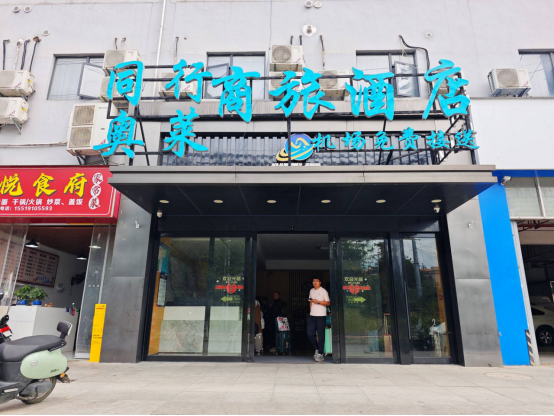
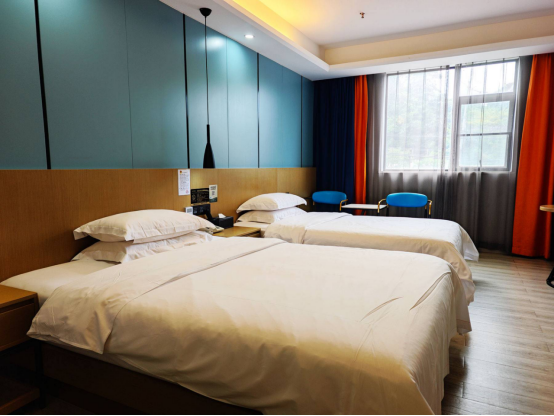
Our hotel was near Guiyang Longdongbao International Airport. It was convenient for airport access, although not particularly convenient for those arriving by train.
The hotel room was spacious and had central air conditioning, although breakfast was not included.
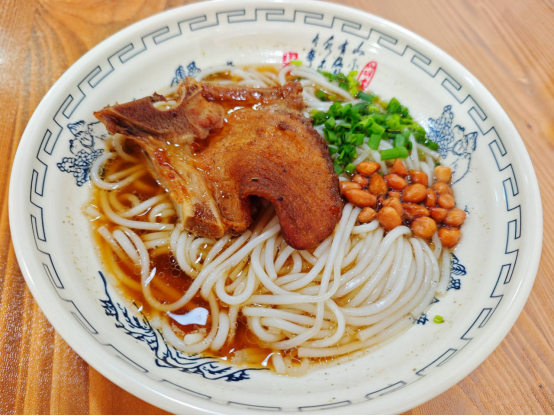
For our first meal in Guizhou, we ate at a restaurant near the hotel. We ordered pork-rib rice noodles and a vegetarian noodle dish.
Even after asking for a non-spicy version, the food still had noticeable heat. It was my first reminder that Guizhou food can be considerably stronger than visitors may expect.
A Change of Plan
At around 4 p.m., the sun was still very strong.
Some members suggested visiting Qianling Park to see the famous monkeys, but the park is large and quite far away. Going there that late would have left little time to explore it properly.
Instead, I suggested visiting Dongshan Park first to watch the sunset and then going to Jiaxiu Tower after dark.
The group eventually agreed with this plan.
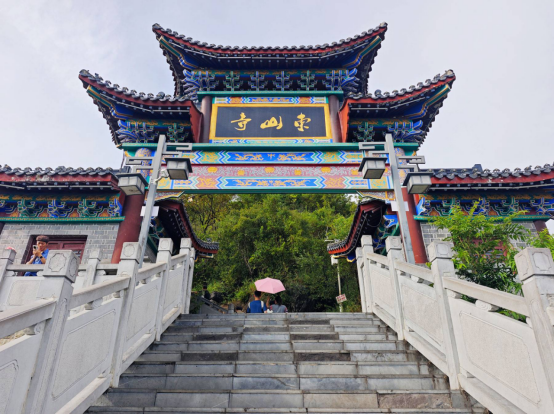
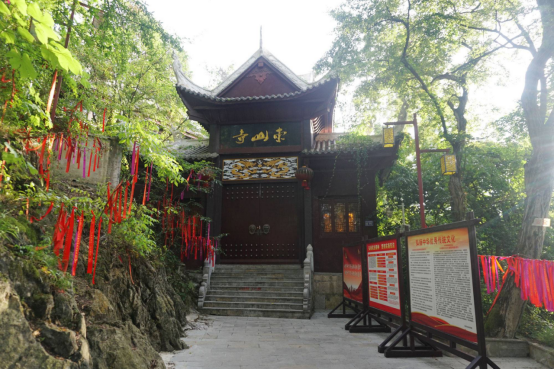
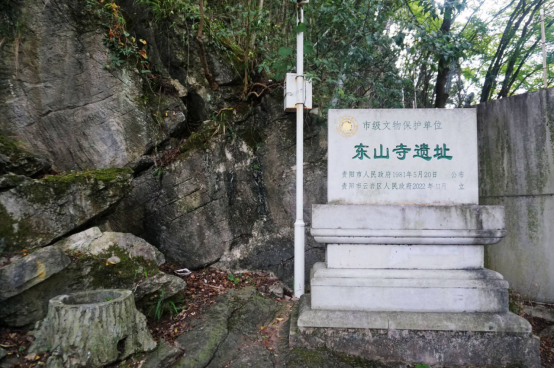
Dongshan Park and Dongshan Temple
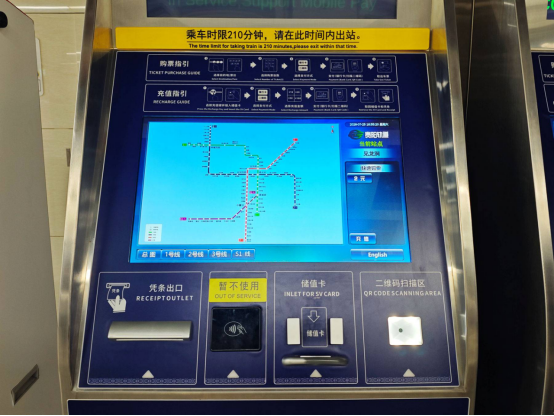
We took Guiyang Metro Line 2 from the area near the hotel to Provincial People’s Hospital Station.
One small practical lesson for international visitors is that local payment systems can sometimes work differently from what you expect. At the time of this trip, we found it easier to buy metro tickets directly at the station rather than relying on a prepaid balance.
From Exit C of Provincial People’s Hospital Station, it was about a five-minute walk to the entrance to Dongshan Park.
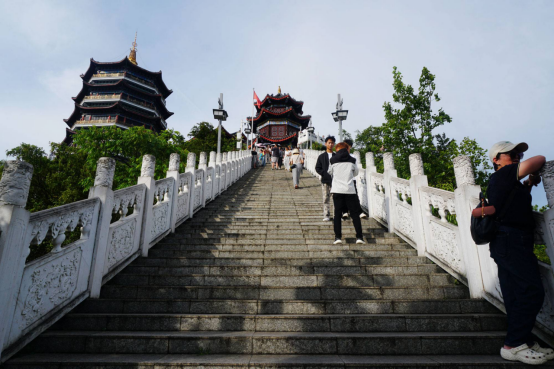
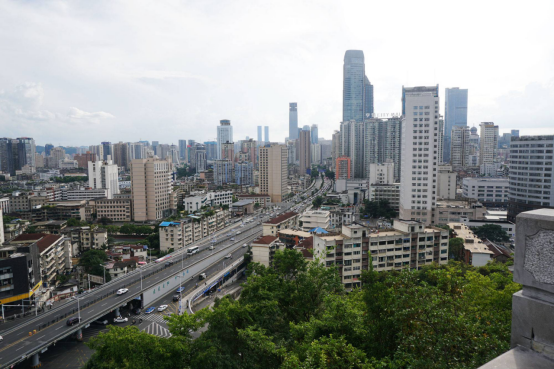
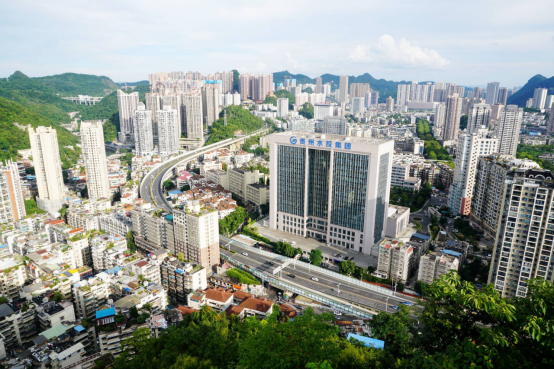
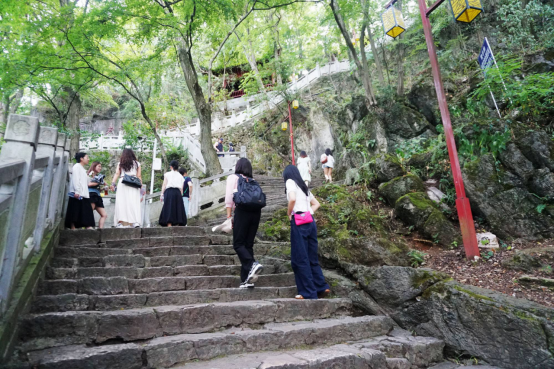
Dongshan Park sits on Dongshan, also known as Qixia Ridge, in central Guiyang. The summit is around 1,200 meters above sea level.
The climb to the top was manageable, and the viewpoint offered a wide view over Guiyang.
Dongshan is also a popular location for watching sunset and the city lights. We arrived more than an hour before sunset, however, so we decided not to wait and continued downhill.
Dongshan Temple and Dongshan Park are effectively part of the same historic area.
The temple dates back to the Ming dynasty. It was originally known as Sansheng Temple before receiving the name Dongshan Temple during the Jiajing period.
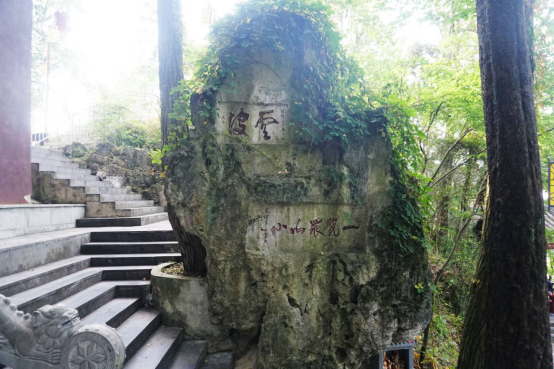
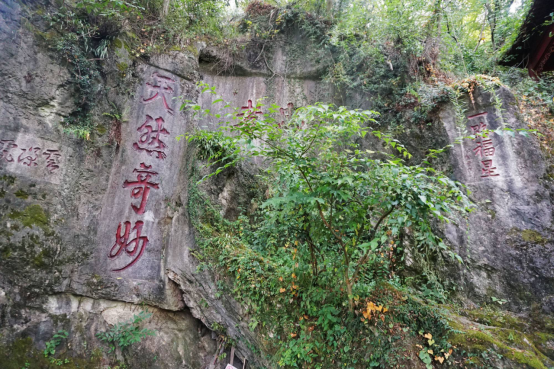
The temple complex was damaged during the 1960s and much of what visitors see today has been rebuilt. The park nevertheless preserves historic remains, buildings and cliff inscriptions.
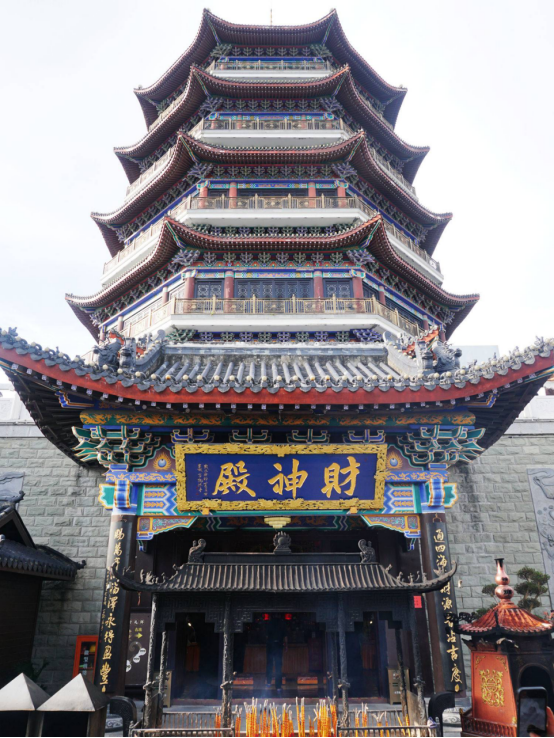
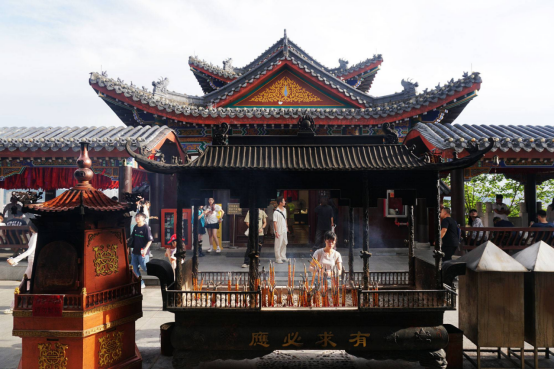
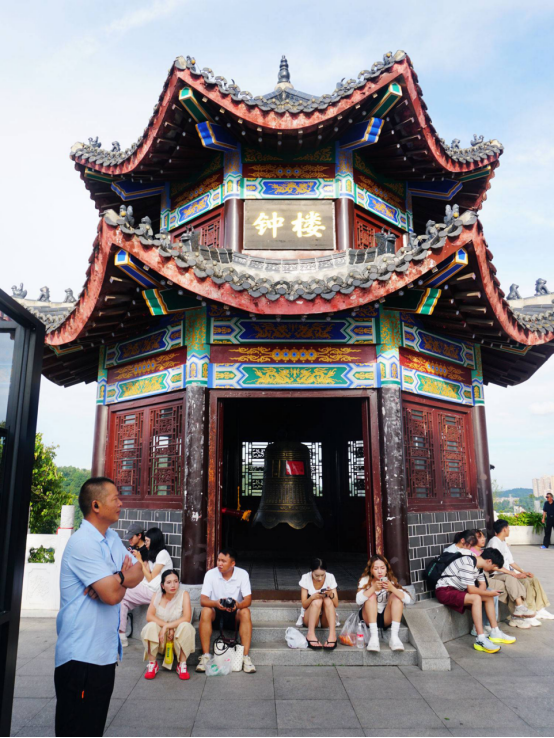
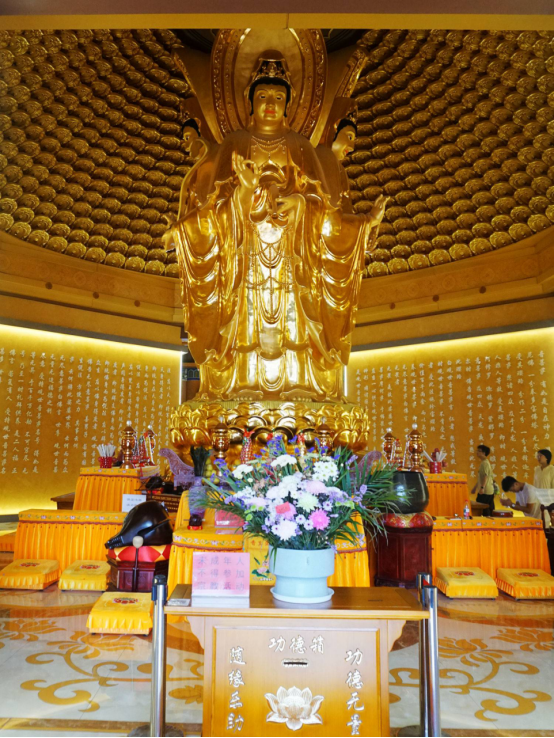
Jiaxiu Tower
Jiaxiu Tower is not far from Dongshan Park and can be reached on foot.
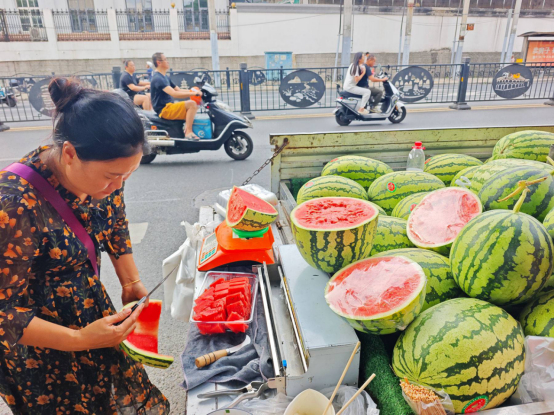
The weather was extremely hot, and watermelon stalls could be seen along the streets. We bought some watermelon to cool down before continuing toward the tower.
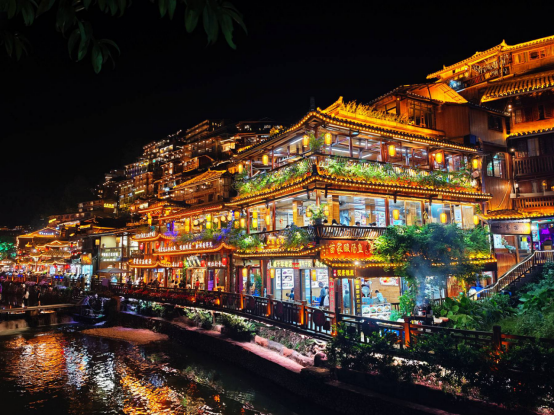
As we approached Jiaxiu Tower, the crowd on Fuyu Bridge was already extremely dense.
I had visited Jiaxiu Tower about ten years earlier and remembered it as a busy place. Ten years later, it seemed even busier.
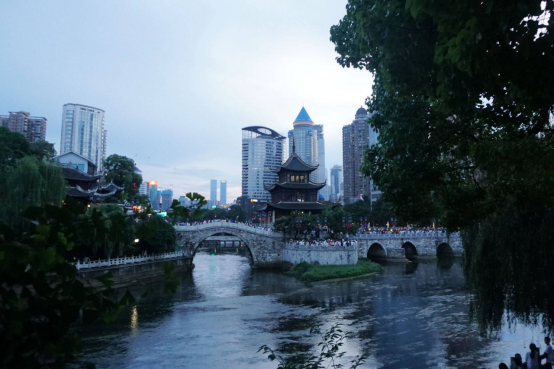
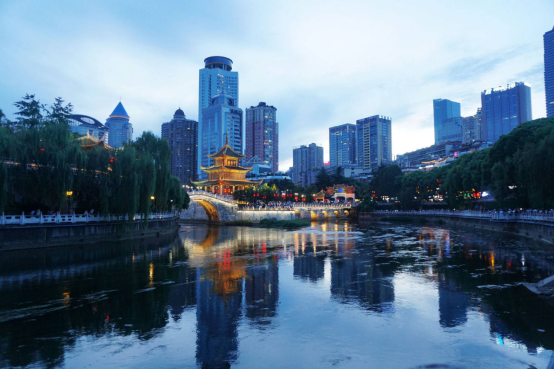
We arrived at almost exactly the right time. Shortly after we arrived, the lights came on.
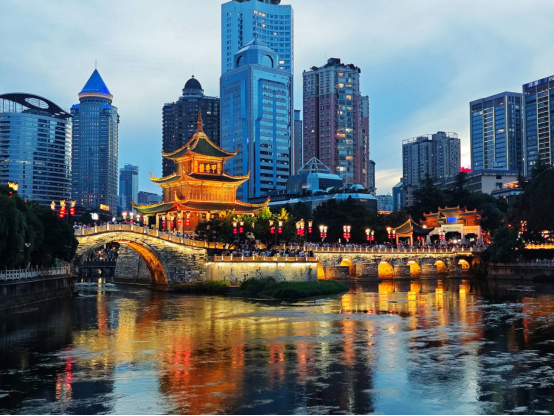
Jiaxiu Tower is one of Guiyang’s best-known landmarks. Built on a rock in the Nanming River, the tower dates back to the Ming dynasty.
The name “Jiaxiu” can be roughly understood as referring to outstanding achievement in education and scholarship. The tower was intended to symbolize the development of culture and learning.
The present structure was rebuilt in the early 1980s following the style of the late Qing dynasty.
The surrounding area includes Fuyu Bridge, Cuiwei Garden and Hanbi Pavilion.
For photography, the opposite bank of the Nanming River provides a good view of the entire tower and its reflection. Fuyu Bridge also offers a classic composition, although crowds can make photography difficult.
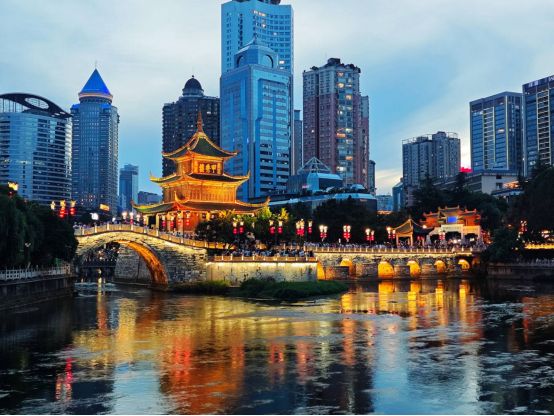
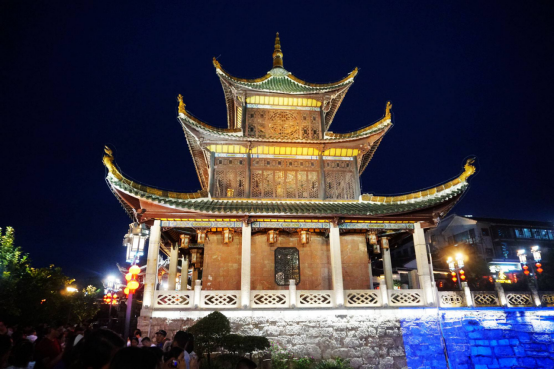
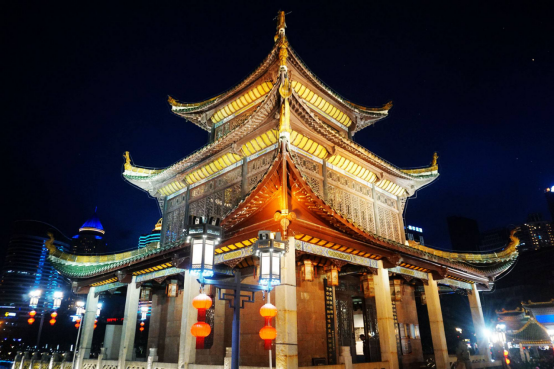
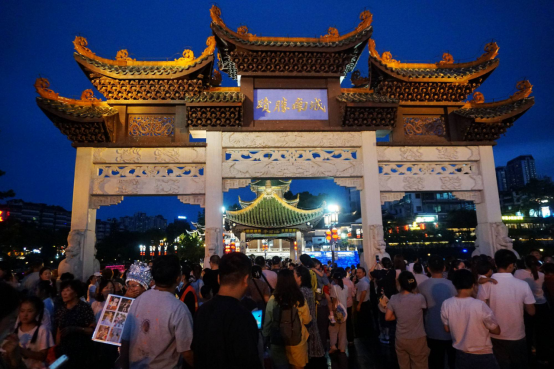
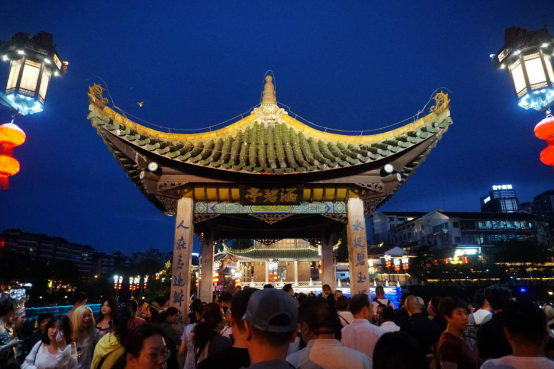
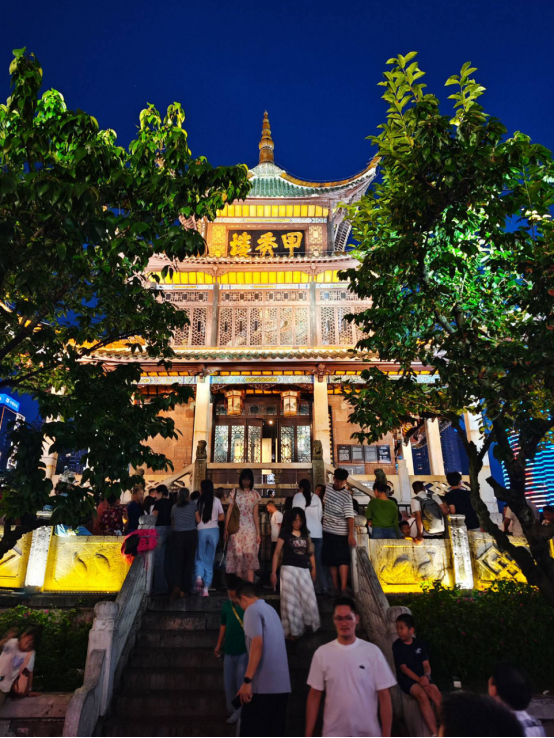
The crowds were intense. At one point it was almost impossible to move across Fuyu Bridge, and our group became separated.
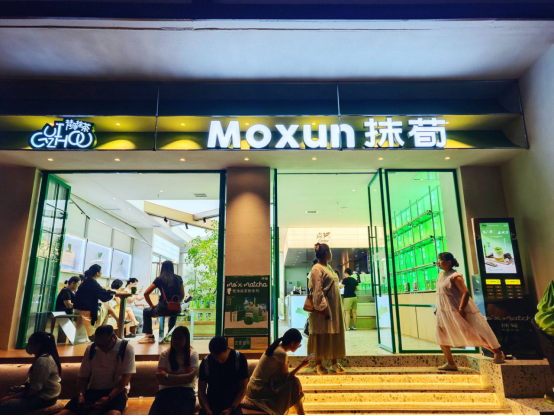
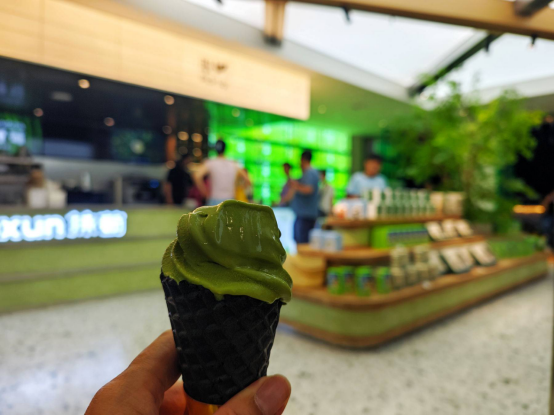
Later, we stopped at a matcha shop near Jiaxiu Tower for a matcha ice-cream cone before returning to the hotel by bus.
Day 3: Guiyang to Bijie — Zhijin Cave and Zhijin Grand Canyon
We had breakfast at the same restaurant as the previous day and left at 7:30 a.m.
Before leaving, the group organizer reminded everyone to purchase their own entrance tickets. We booked a combined ticket for Zhijin Cave and Zhijin Grand Canyon, including the relevant sightseeing transport, for RMB 198.
Zhijin Cave: An Underground World
I had deliberately skipped Zhijin Cave during an earlier trip to Guizhou. Having already visited several large caves in Guangxi, I assumed that another famous cave would feel similar.
That opinion changed after a friend in Guiyang told me that Zhijin Cave was essentially an underground palace and worth seeing.
We reached the visitor center at around 9 a.m.
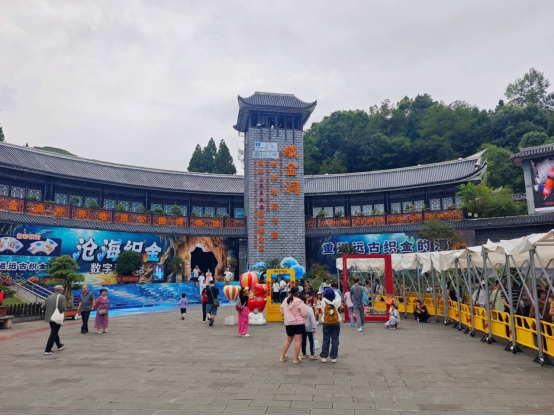
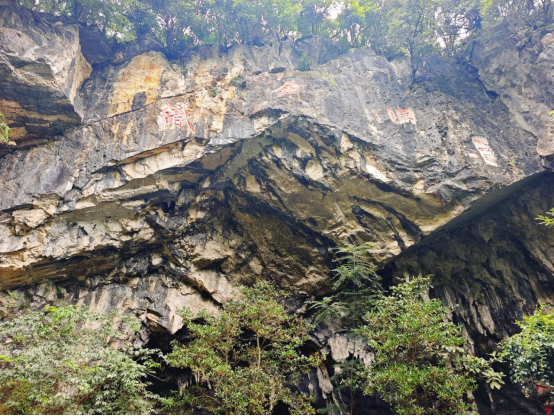
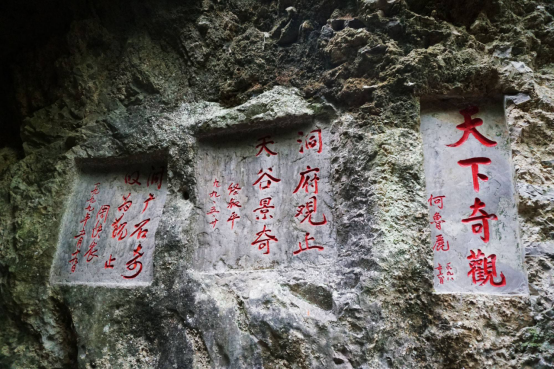
The sightseeing bus dropped us near a corridor displaying inscriptions left by visitors from different periods. From there, we continued toward the entrance to the cave.
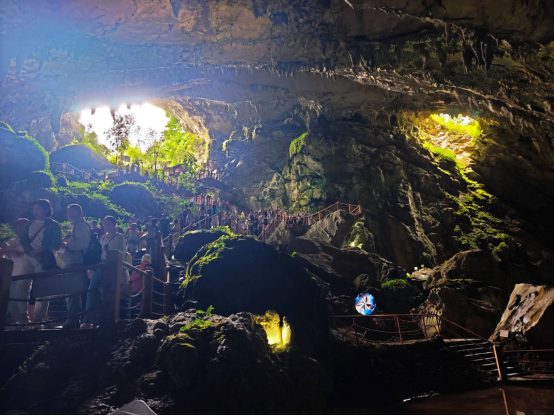
Zhijin Cave was originally known as Daji Cave. The cave system formed over an extremely long geological period through the repeated action of underground water.
The scale of the underground landscape makes the passage of geological time feel tangible.
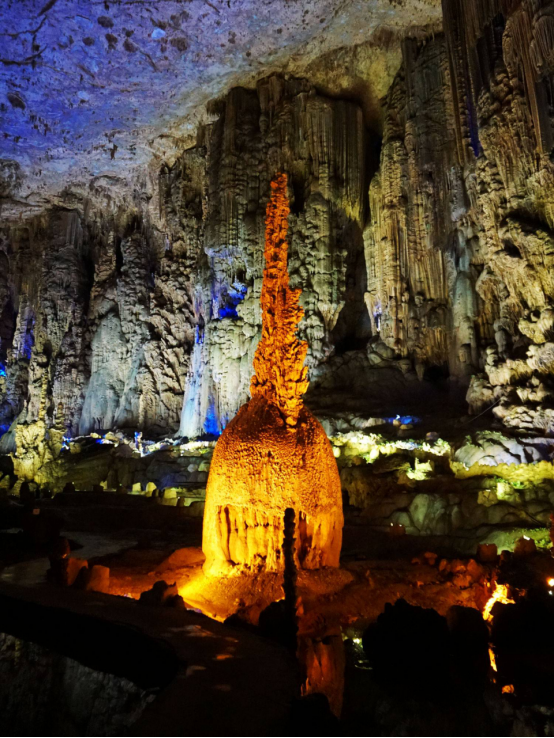
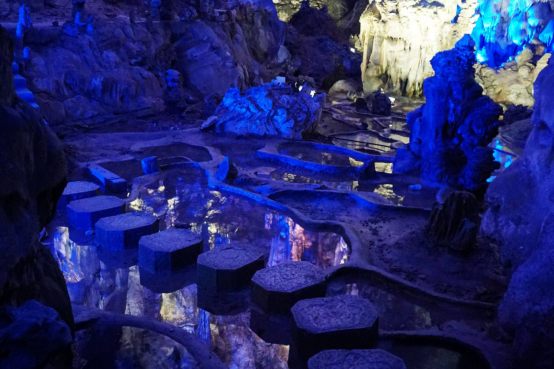
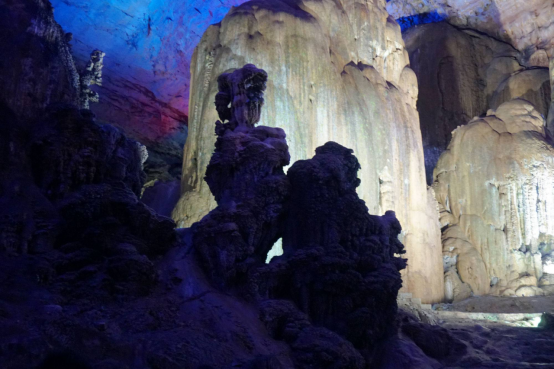
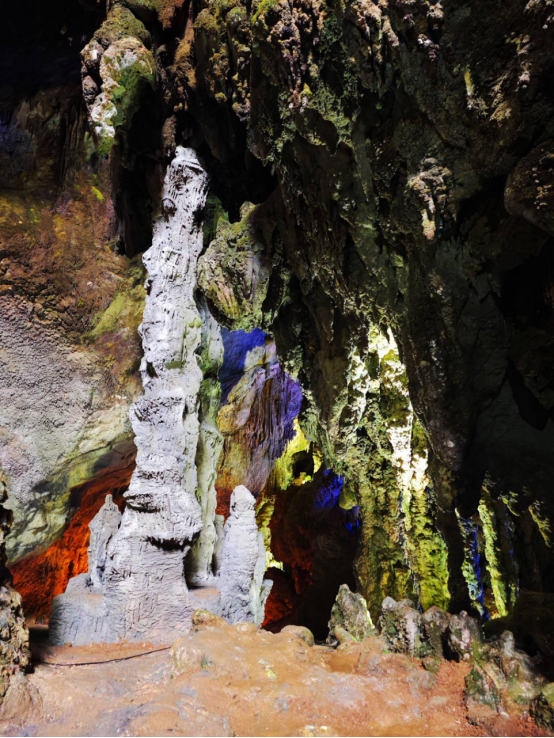
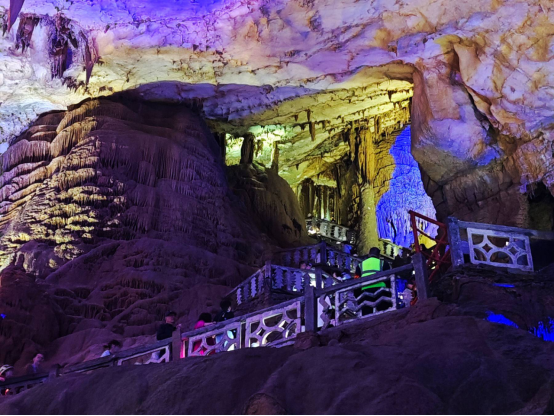
Inside the cave are enormous limestone formations, stalactites, stalagmites, stone curtains and other karst features.
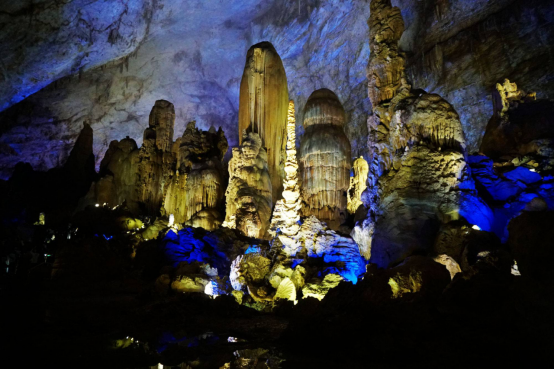
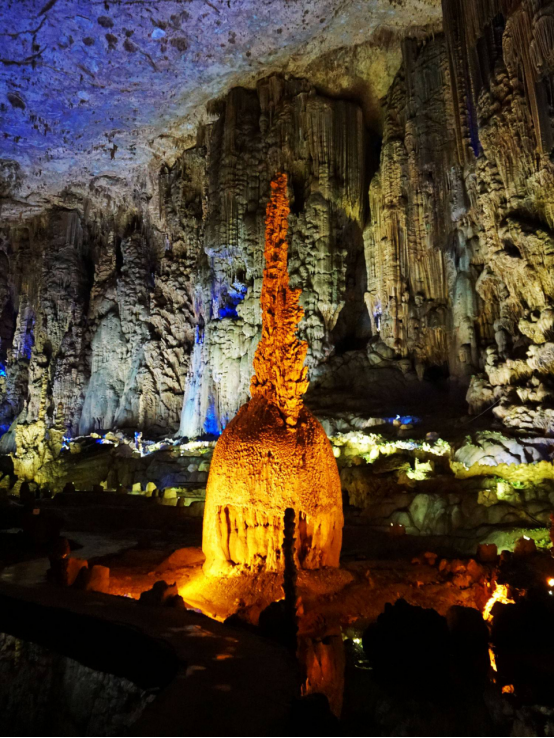
One of the best-known formations is the huge “Silver Rain Tree,” a spectacular stalagmite formation that rises inside the cave.
Other formations have names inspired by their shapes, including the “Overlord’s Helmet.”
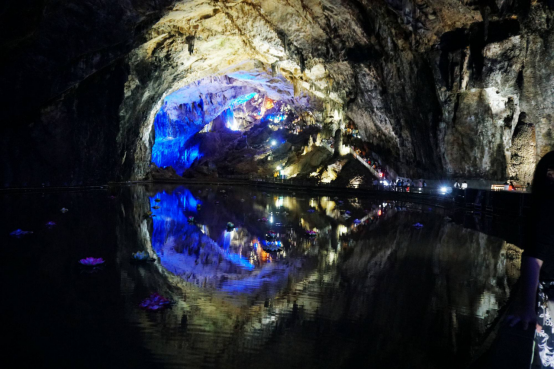
What impressed me most was the scale. Instead of feeling like a small decorative cave, Zhijin Cave feels like a huge underground landscape.
The lighting was also relatively restrained compared with some other developed caves in China. There were still artificial lights, but the use of color felt less excessive, allowing more of the natural character of the cave to remain visible.
The Zhijin Cave Walking Route
The cave system has more than 12 kilometers of explored passages, while the visitor walking route is approximately 6.6 kilometers.
The route is essentially one-way, meaning that once you enter the cave, you continue through the complete walking route rather than turning around halfway.
The route described in this trip was:
Visitor Center → sightseeing bus → Welcome Hall → Taling Palace → Wanshou Palace → Guanghan Palace → Shiwandashan → Silver Rain Tree → Overlord’s Helmet → Shuijing → Exit → sightseeing bus
There are restaurants near the exit. We had a simple buffet lunch before continuing to Zhijin Grand Canyon.
Zhijin Grand Canyon
Zhijin Grand Canyon is only about three kilometers from Zhijin Cave, so visiting both in the same day is convenient.
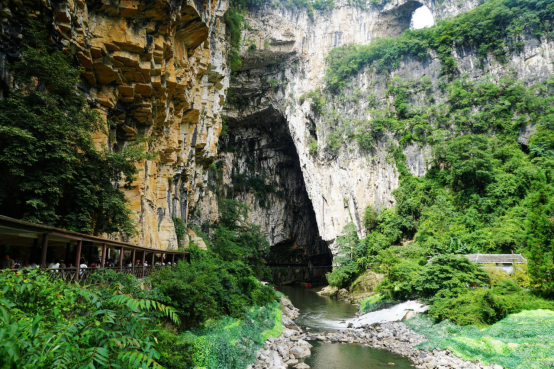
The canyon contains a remarkable combination of geological features, including cliffs, sinkholes, natural bridges, skylights and underground waterways.
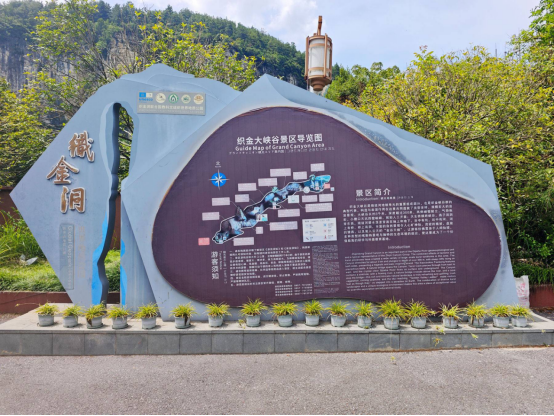
The visitor route is also designed as a one-way experience.
From the visitor center, we took a sightseeing vehicle to the east entrance and then used the approximately 108-meter-high Golden Valley Elevator to descend rapidly into the canyon.
The temperature at the bottom was noticeably cooler than above ground, which was particularly welcome on a hot summer day.
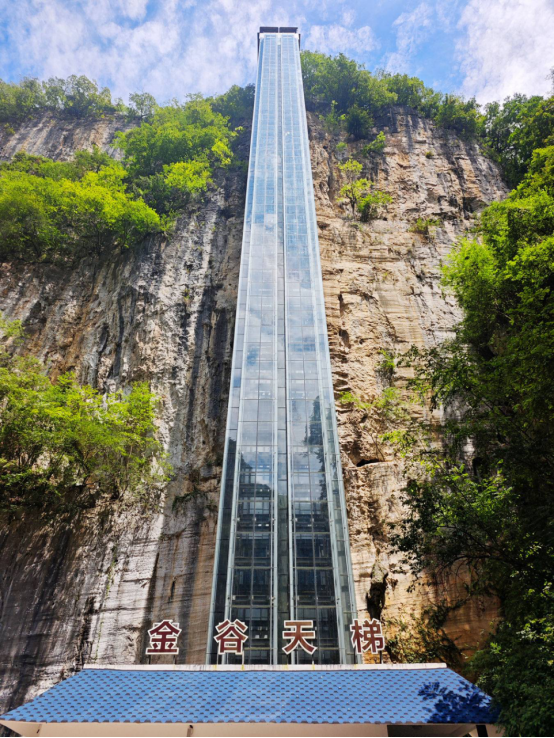
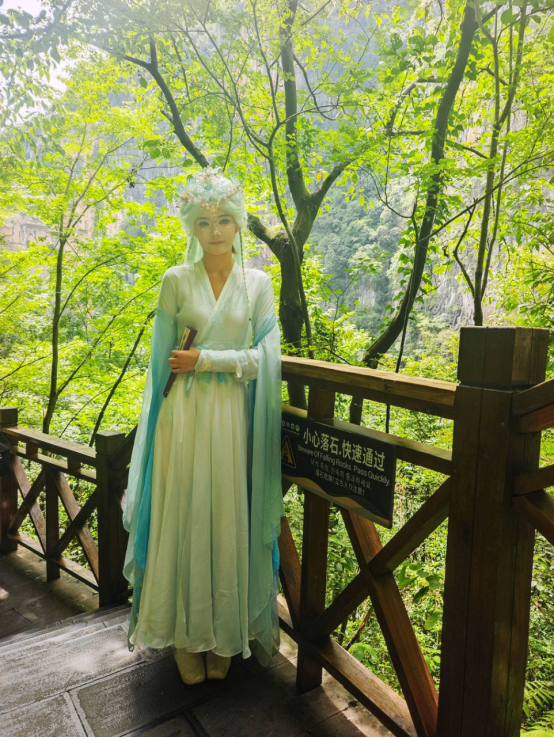
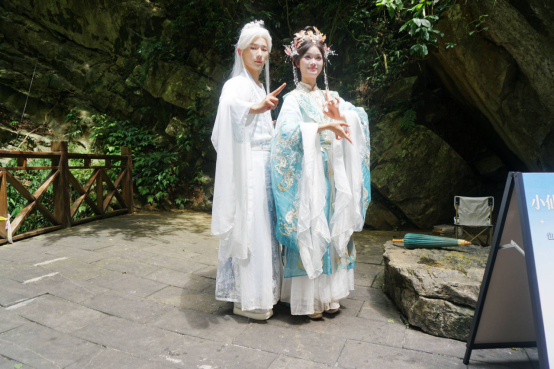
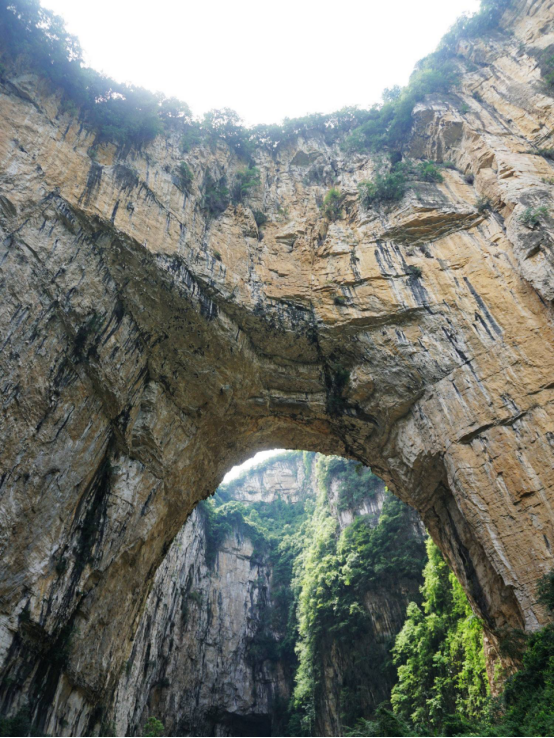
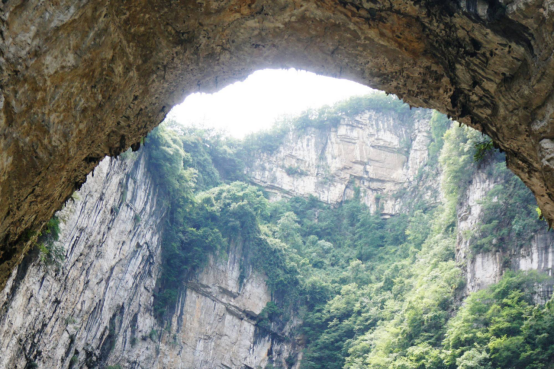
One of the highlights was Jin’gu Bridge, a natural limestone bridge formed through long-term erosion and weathering.
The canyon contains several large depressions and sinkholes. Looking upward from the bottom of one of the sinkholes gives the strange sensation of standing at the bottom of a giant well.
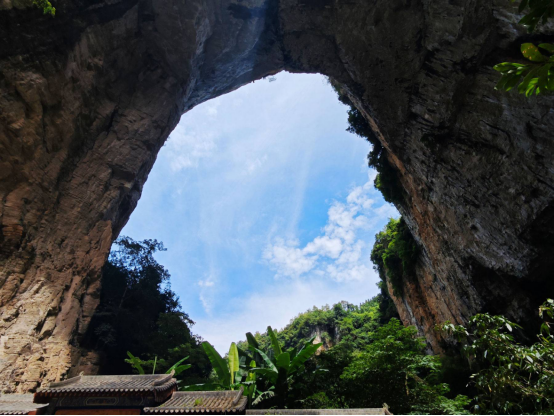
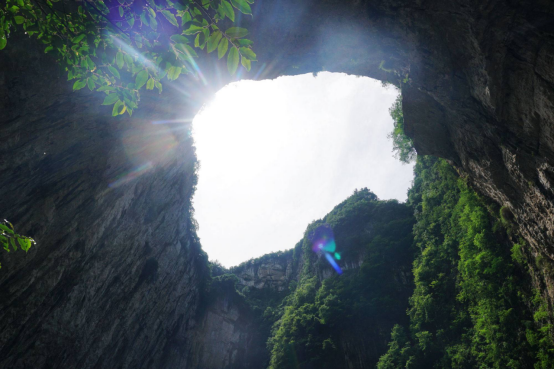
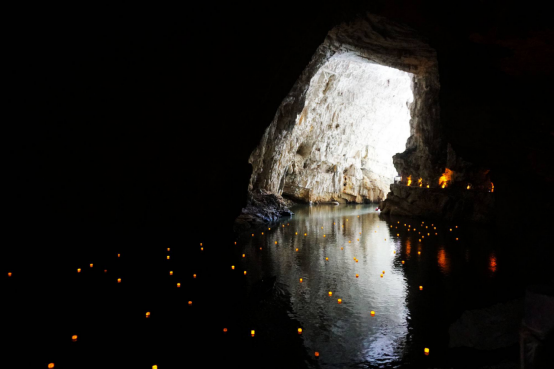
A cave opening reflected in the lake created another memorable landscape, resembling a crescent moon on the water.
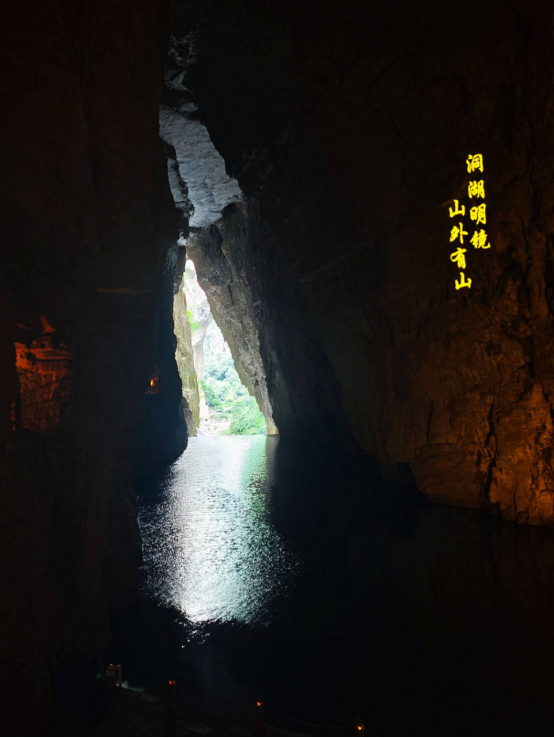
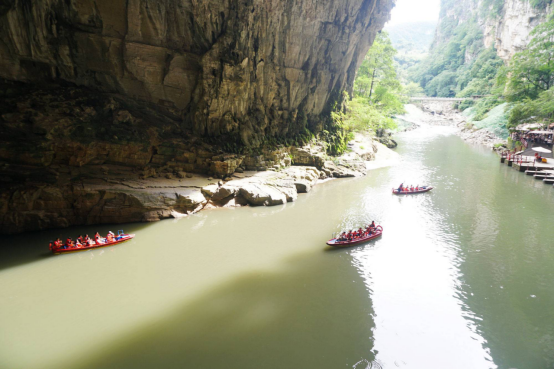
We had hoped to take a boat through the underground river at Yanzi Cave, but the queue was too long. Staff estimated a waiting time of about an hour, so we decided to skip it.
That evening we stayed in Nayong.
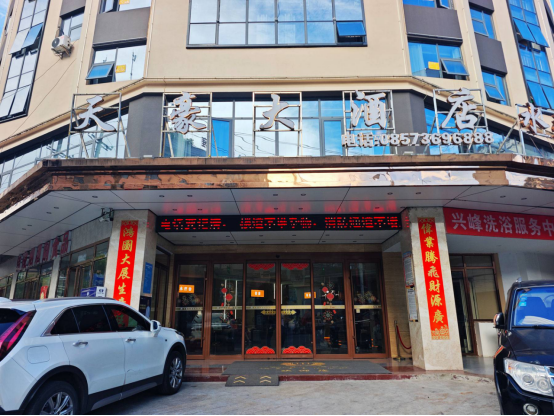
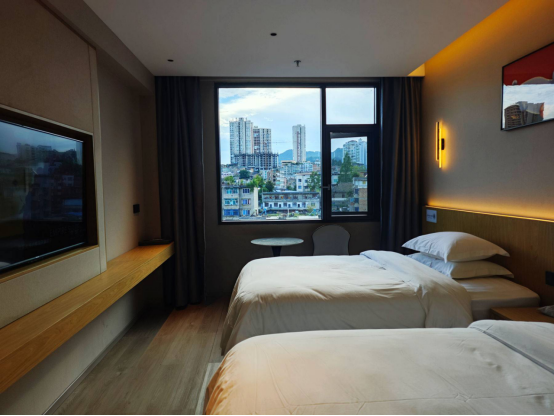
The Tianhao Hotel in Nayong was one of the better-located hotels of the trip. The room was comfortable and had a smart-room assistant, while the Wi-Fi connection was particularly good.
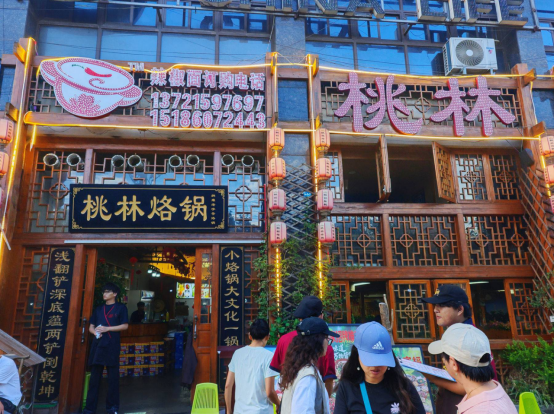
Taolin Luoguo in Nayong
Since this was our first time in Nayong, we wanted to try a local specialty.
Eventually, the group agreed on Nayong Luoguo, a local style of cooking in which different ingredients are grilled or pan-fried together in a large flat-bottomed pan.
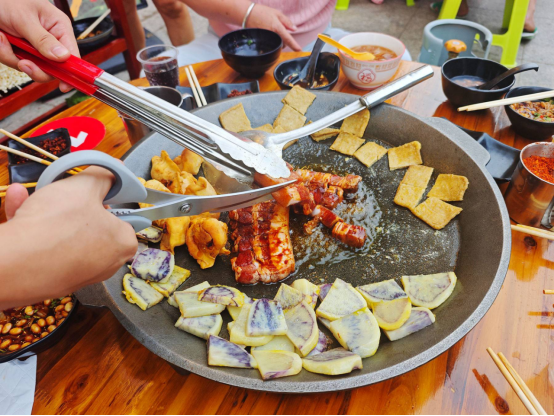
Nayong Luoguo has a history of more than 300 years according to the local account recorded in the original diary.
Potatoes and thin dried tofu are among the classic ingredients.
The dipping sauce is also an important part of the meal, often combining chili ingredients with zhe’ergen, a distinctive local herb.
The restaurant staff helped cook the food, and eating the hot grilled dishes with cold beer made for a relaxed end to the day.
Day 4: Jiudongtian and Liupanshui
Breakfast at the hotel was simple, and we left at around 8:30 a.m.
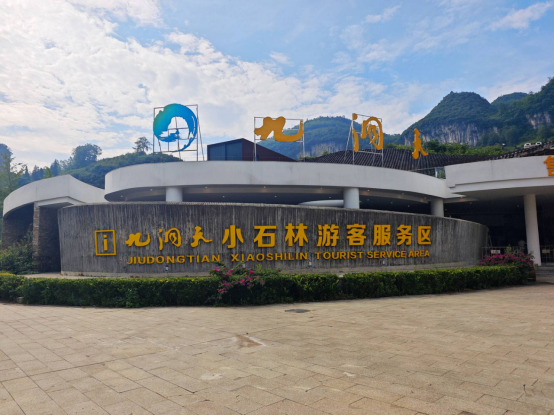
Jiudongtian
Jiudongtian lies near the border of Dafang and Nayong counties in Bijie.
We reached the west entrance at around 9 a.m. and bought tickets on site.
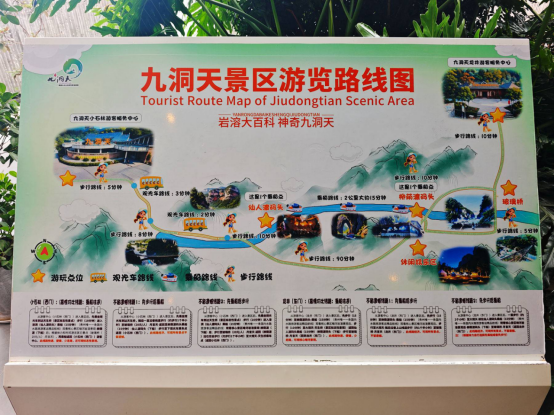
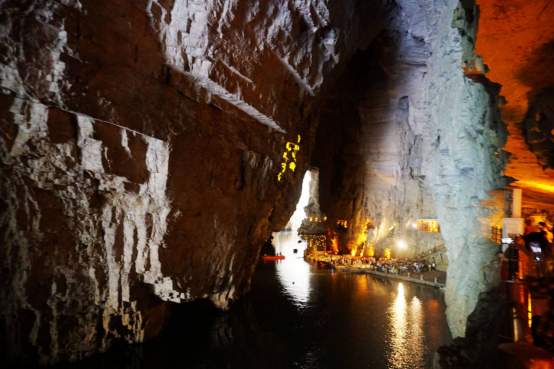
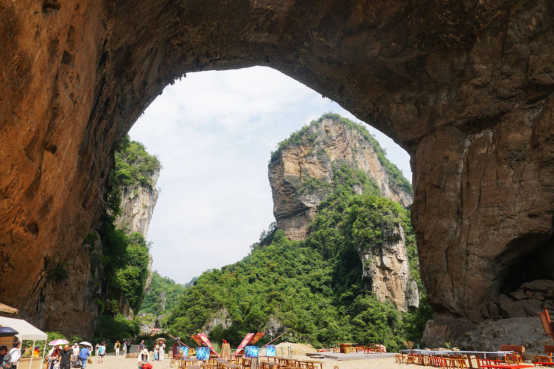
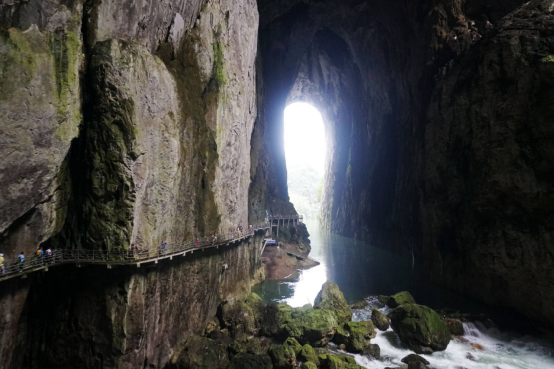
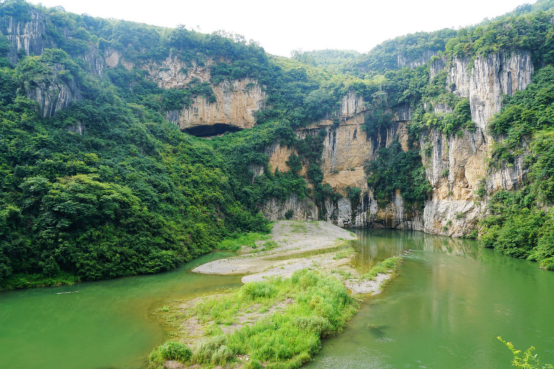
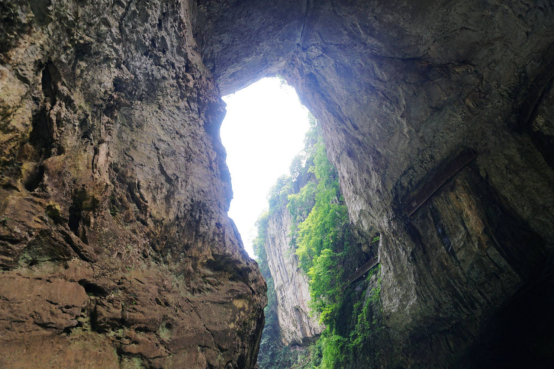
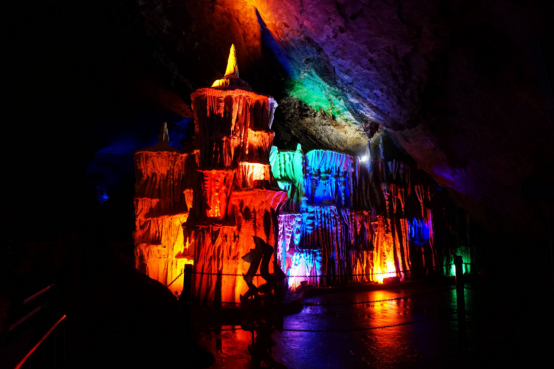
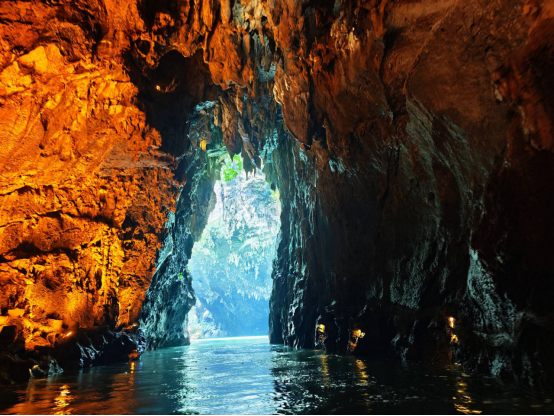
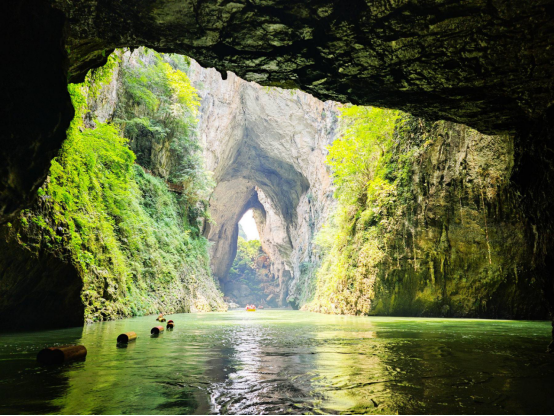
Jiudongtian is known for its unusual combination of underground rivers, caves, natural bridges and large openings in the limestone landscape.
The name literally refers to “nine openings in the sky.” Along a section of the underground river, collapses in the roof of the cave created a series of large natural openings through which daylight enters.
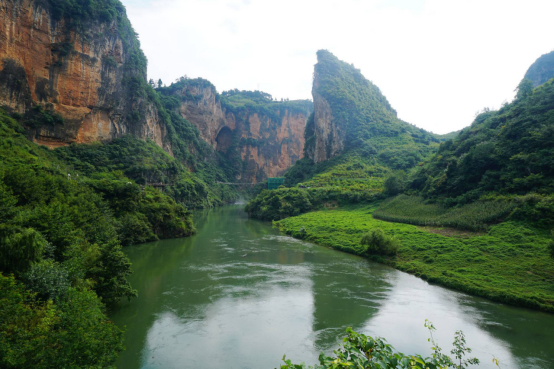
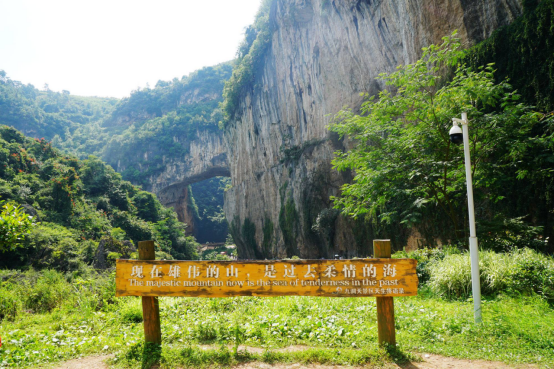
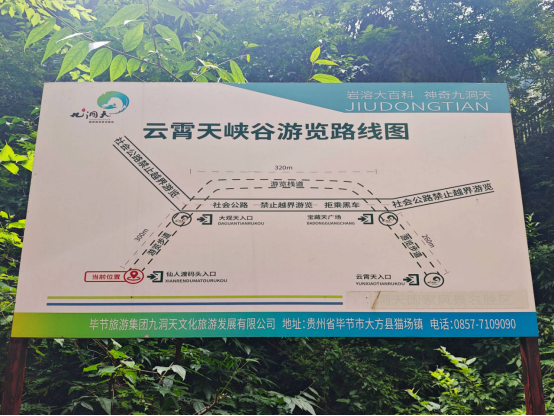
We followed the scenic area’s recommended west-entrance route.
The first part involved walking along suspended trails and paths through the karst landscape before reaching Liuyindu Pier, where we boarded a sightseeing boat.
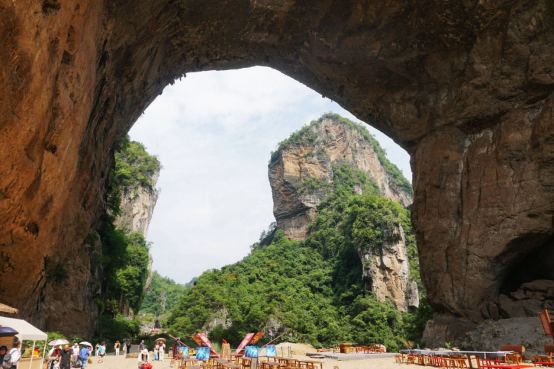
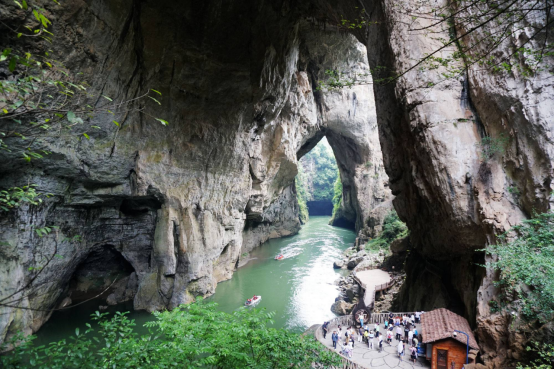
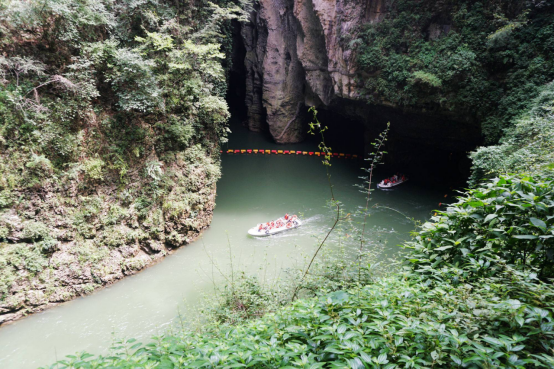
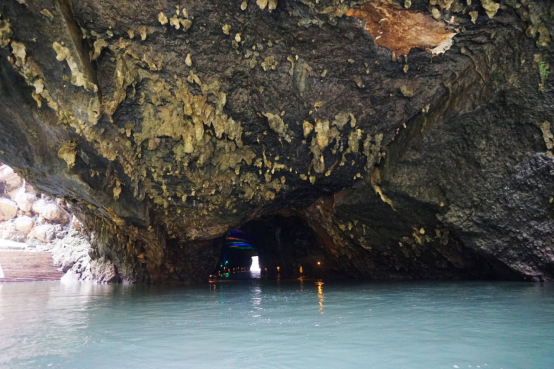
The boat ride was one of the highlights of the visit.
The boat passes through the nine cave openings, with daylight appearing and disappearing overhead. In the third opening, sunlight reaches the river through a natural bridge, while the fifth opening features an underground waterfall area.
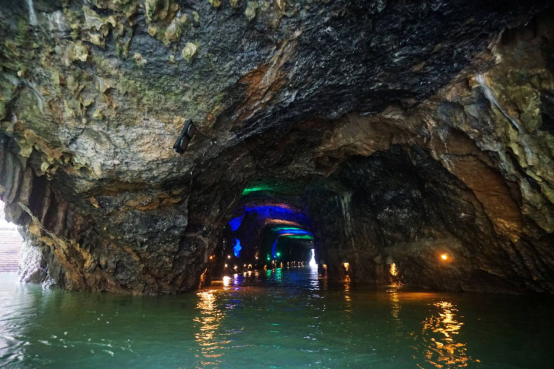
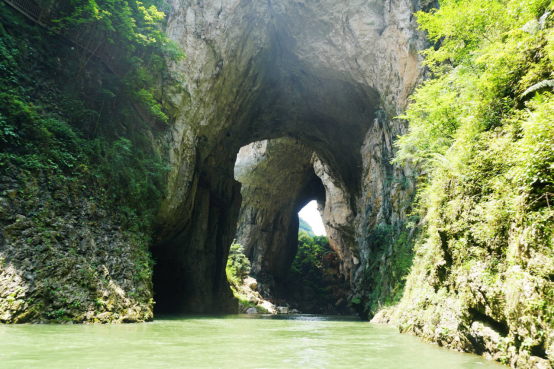
After getting off at Xianrendu Pier, we used the electric shuttle and sightseeing vehicle to return toward the west entrance.
One practical lesson was that the various transportation tickets are sold separately. The sightseeing vehicle could only be used once with a single ticket, while the boat required its own ticket.
Visitors who plan to use several forms of transport may therefore want to check the available combination tickets before entering.
When we left Jiudongtian, heavy rain had begun.
Fortunately, we had managed to complete most of the visit before the rain arrived.
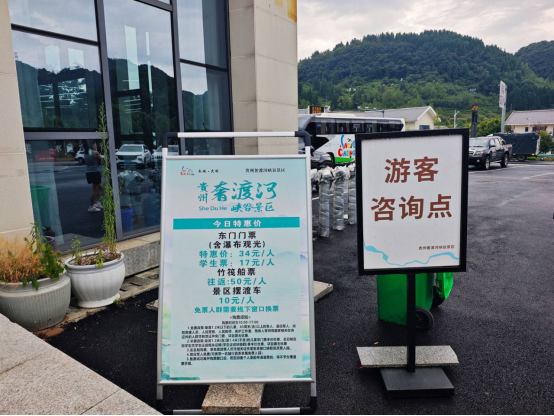
Shedu River
Our next stop was Shedu River in Liupanshui, a mountainous karst area in the region known as the “Cool City of China.”
Unfortunately, the heavy rain had a direct impact on our plans.
When we arrived, the scenic area had been closed for safety reasons because of the weather.
Haiping Yi Ethnic Cultural Street
With the afternoon still relatively young, the group looked for another option and decided to visit Haiping Yi Ethnic Cultural Street.
The temperature in Liupanshui was noticeably cooler than the places we had visited earlier. Combined with the rain, it was surprisingly chilly, and several people opened their luggage to find warmer clothes.
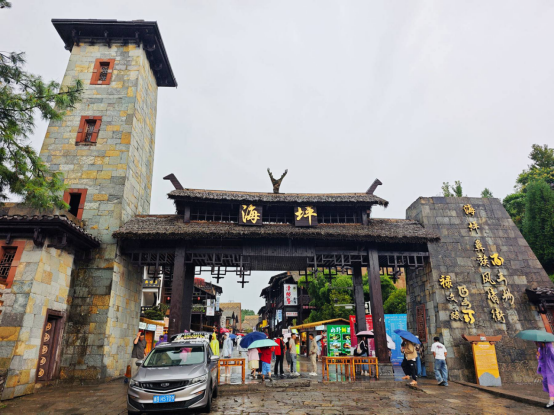
Haiping is designed around Yi culture and combines cultural experiences, tourism and entertainment in an open public area.
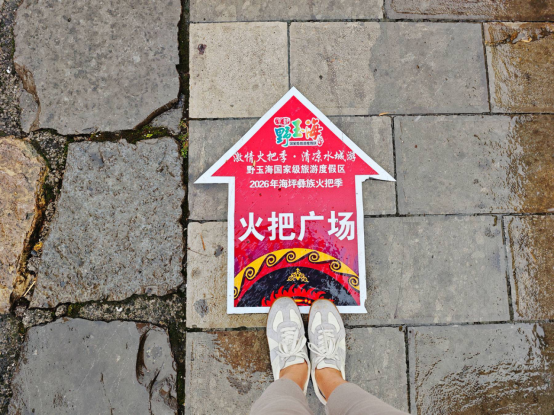
We were particularly interested because a Torch Festival event was scheduled for that evening.
Unfortunately, the rain became heavier. We decided to find somewhere to eat and wait for the weather to improve before deciding whether to stay for the evening event.
Local people told us that the festival would normally continue unless the rain became extremely heavy.
In the end, however, some members of the group were worried about getting soaked and decided to return to the hotel.
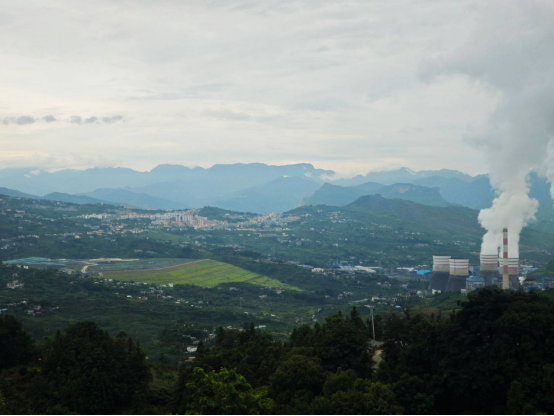
About half an hour later, the rain stopped.
Through the vehicle window, the sky had cleared and the landscape looked beautiful.
Missing the Torch Festival became one of the biggest regrets of the trip.
That evening we stayed at a hotel in Fag’er Town.
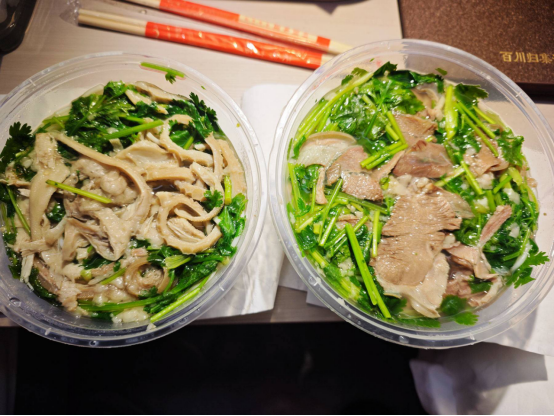
The hotel restaurant closed relatively early, and there were few nearby dining options. Fortunately, food delivery was available, so we ordered lamb noodles and lamb offal noodles.
Day 5: Wumeng Grassland and Panzhou
Breakfast was simple, and we left at around 8 a.m. for Wumeng Grassland.
Wumeng Grassland
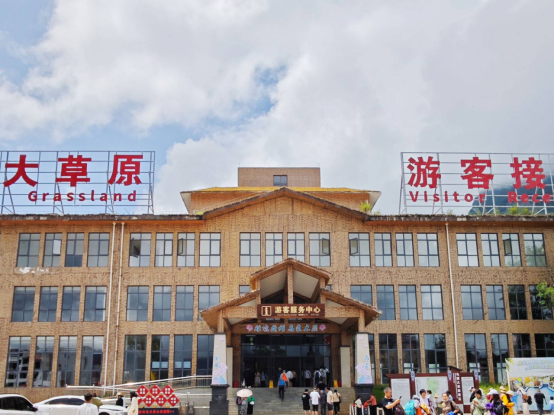
We arrived at around 9 a.m.
The entrance ticket was RMB 30, with discounted or free admission depending on age. The scenic‑area shuttle bus cost RMB 25.
One thing that was not particularly convenient was the shuttle-bus system.
Visitors using the scenic-area shuttle were required to remain with the same vehicle, and the bus stopped at only two major viewpoints during our visit, with a limited amount of time at each stop.
Private cars, however, could drive into the scenic area and stop more freely, giving self-driving travelers considerably more flexibility.
Wumeng Grassland is one of Guizhou’s largest natural grasslands and is also one of its highest-altitude landscapes.
The area is promoted as a year-round destination, with flowers in spring, cooler temperatures in summer, autumn scenery and winter snow activities.
The summer climate is considerably cooler than many lowland areas, which is one reason the region is popular during the hottest months.
Tianchi
Tianchi is one of the central attractions of Wumeng Grassland.
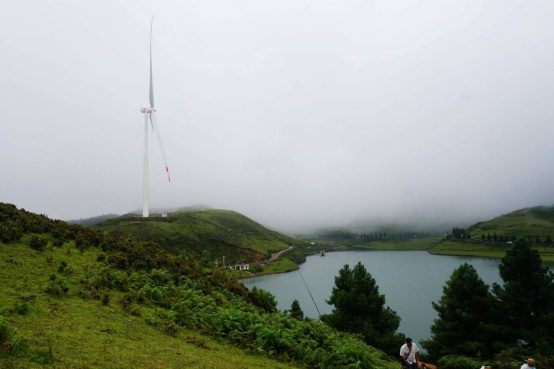
The highland lake is surrounded by open grassland and wind turbines. On a clear day, the combination of the lake, grass and turbines can create an impressive landscape.
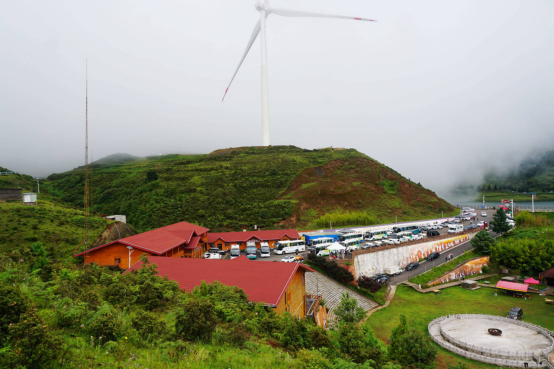
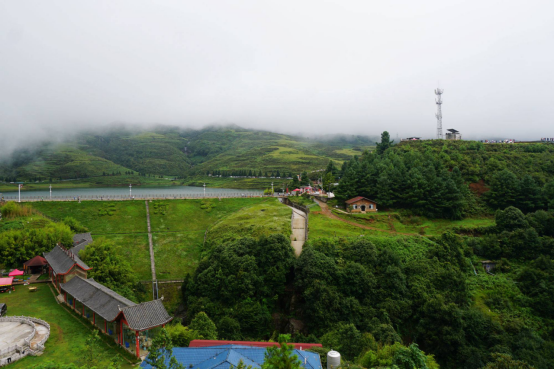
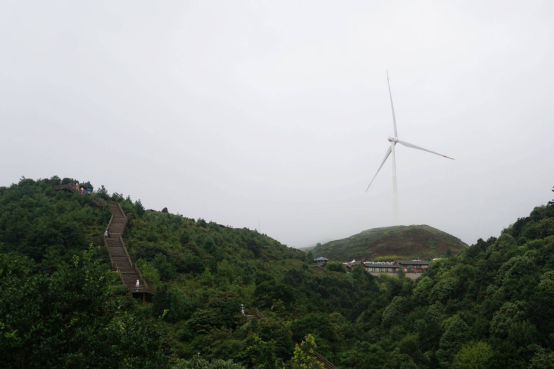
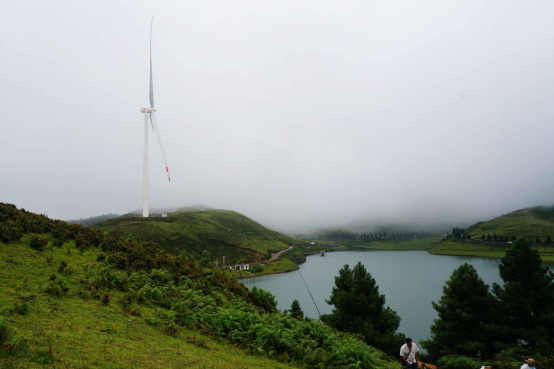
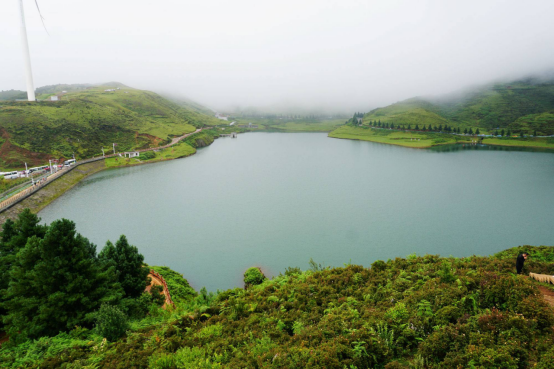
Unfortunately, the weather was poor during our visit.
Fog covered much of the landscape, making the grassland feel more like a sea of mist than the wide-open scenery we had expected.
Guanyintai Viewpoint
Guanyintai is one of the highest viewpoints in Wumeng Grassland and is known as a place to watch sea-of-clouds scenery, sunrise and sunset when conditions are favorable.
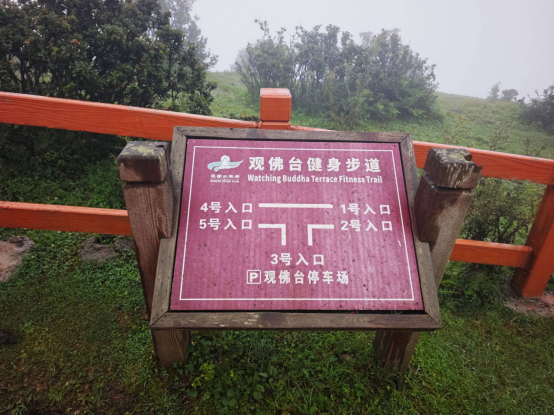
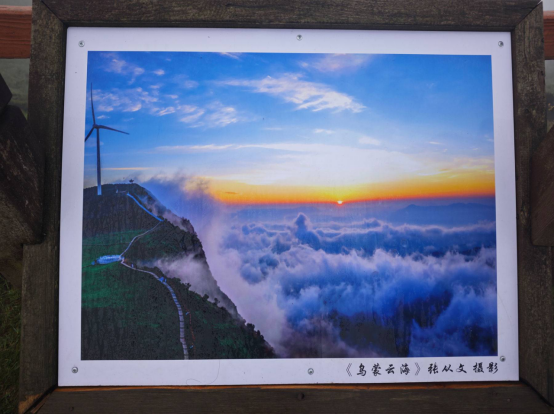
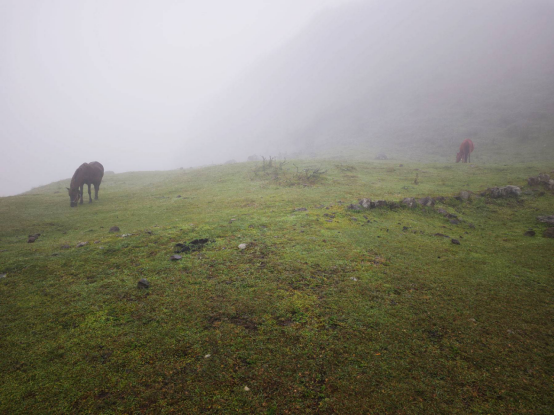
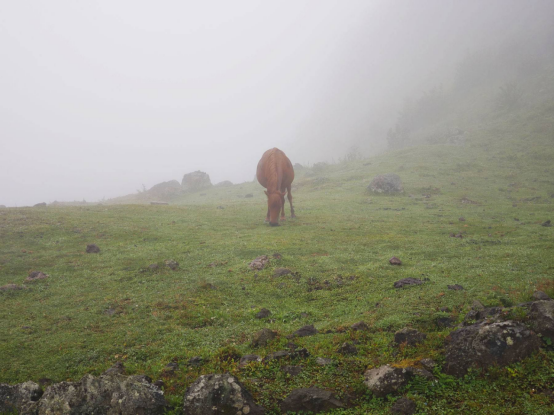
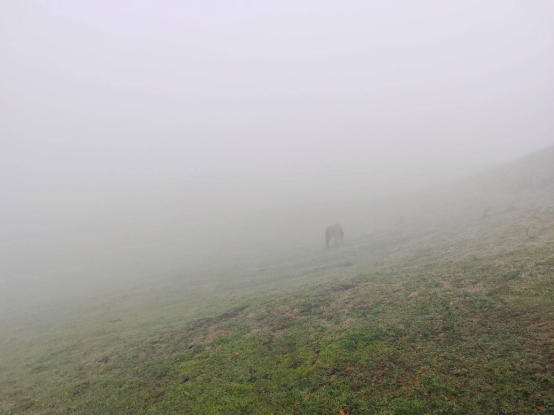
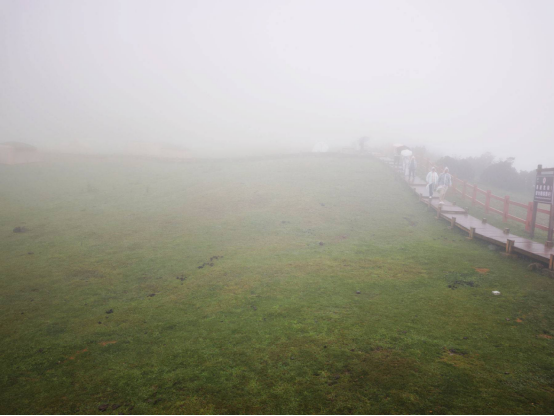
We completed the walking trail at Guanyintai, but visibility was extremely limited.
Even in poor weather, the scenic area was fairly busy. On a clear day, it would likely be considerably busier.
After walking down from the viewpoint, some members of the group stopped for a bowl of local lamb soup.
The soup was made with local black goat and had a rich but fresh flavor. We also had lamb noodles there, which effectively became our lunch.
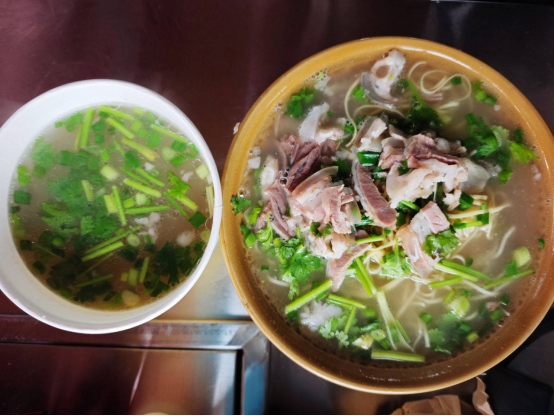
Interestingly, by the time we were ready to leave around noon, the fog had begun to clear.
Based on this experience, arriving very early on a rainy day may not always give you the best views. Mountain weather can change quickly.
Driving Toward Panzhou
After leaving Wumeng Grassland, we continued toward Panzhou.
The landscape visible through the vehicle windows was often as interesting as the official scenic areas themselves.
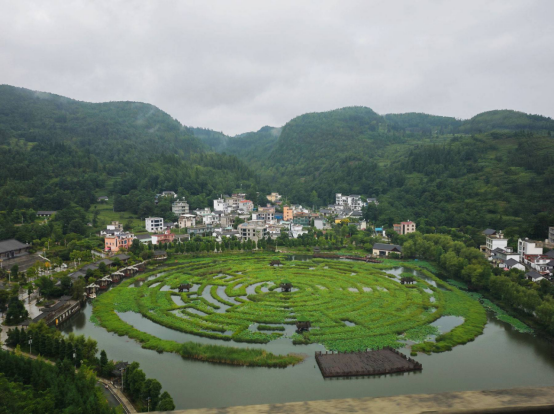
Shengjing Ancient Town
That evening we visited Shengjing Ancient Town.
Our experience was very different from what we had expected from the word “ancient town.”
There were very few people around. A group from an organization happened to be visiting, otherwise the streets might have felt almost completely empty.
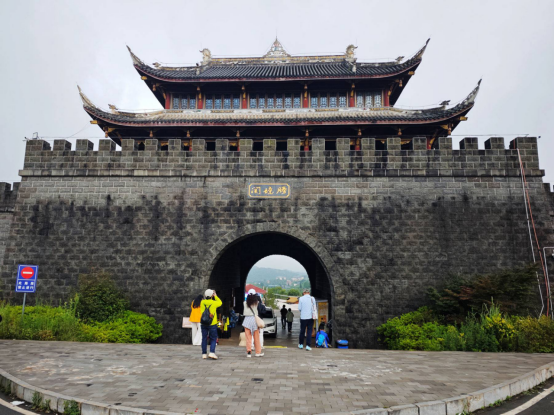
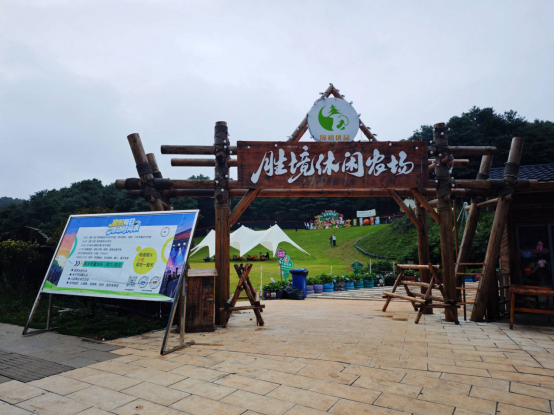
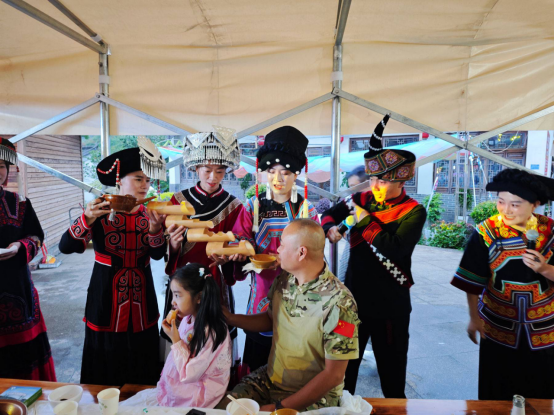
We had hoped to find local snacks, but there were very few options. There was a hotel serving hot pot and Chinese dishes, along with a small fried-potato stall.
We later learned that the area was developed partly through the redevelopment of former coal-mining subsidence areas and relocation projects.
The environment itself was pleasant and the air was fresh, but the low occupancy gave the area an unusually quiet atmosphere at night.
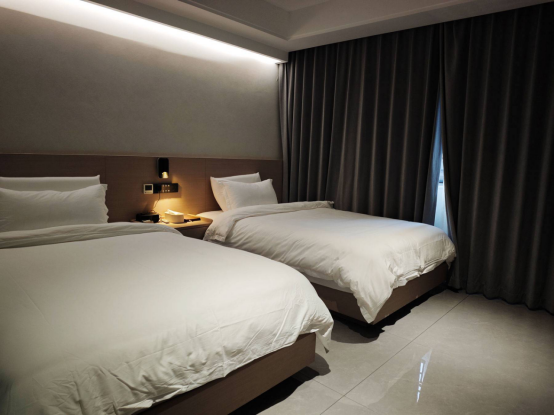
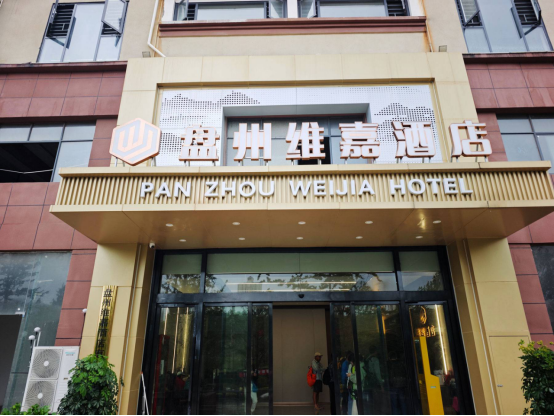
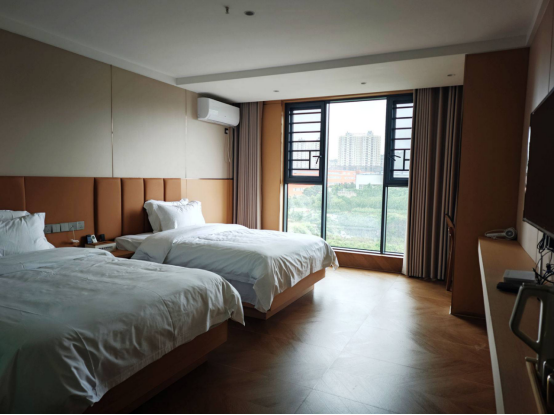
That evening we stayed at a hotel in Panzhou. The room was fairly ordinary, but the Wi-Fi was fast and the shower had strong hot water.
Day 6: Panzhou to Xingyi — Maling River Canyon and Wanfenglin
We left Panzhou at 7:30 a.m. for Xingyi, a drive of almost two hours.
After several days of rain, the weather finally began to improve.
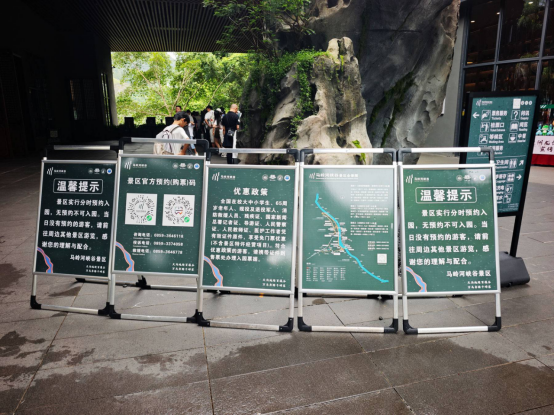
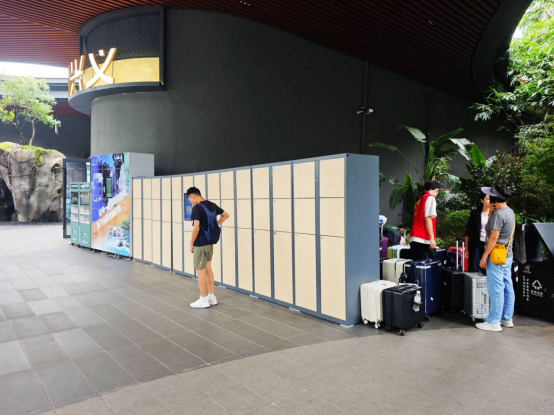
We had been warned to purchase our Maling River Canyon tickets in advance because the scenic area used timed reservations.
This turned out to be important.
The morning slots were already sold out on some platforms, so we eventually found available tickets through another Chinese travel mini-program.
For international visitors, this is a useful example of a practical challenge when traveling in China: some attractions rely heavily on domestic booking platforms and timed reservations.
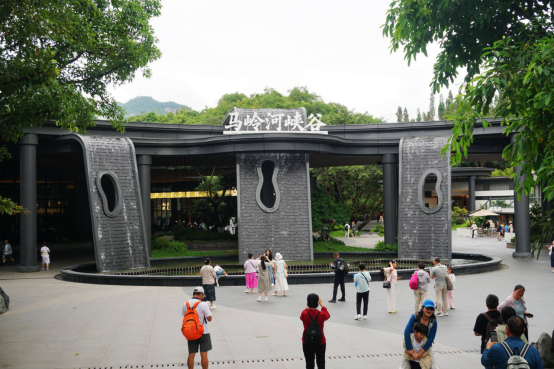
Maling River Canyon
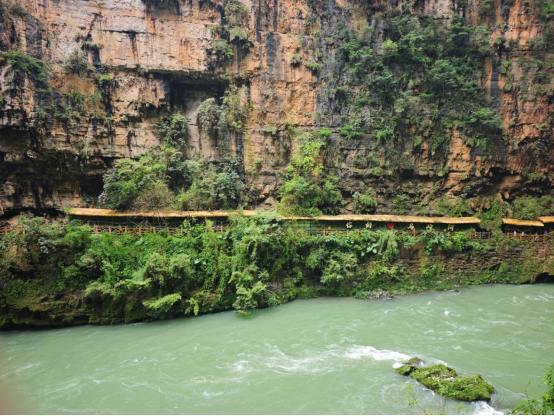
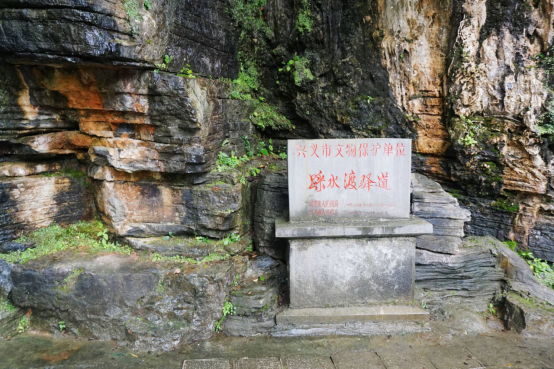
Maling River Canyon is often described as one of the most spectacular karst gorges in Guizhou.
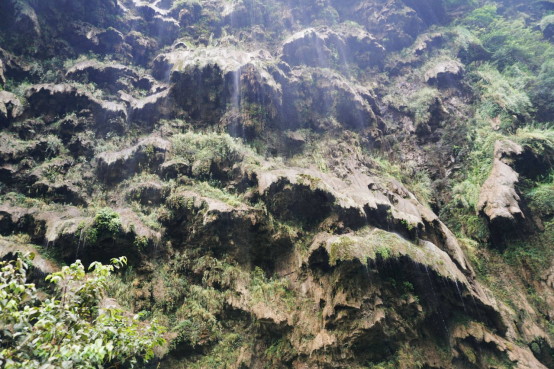
The canyon formed through the collapse and erosion of an underground river system, creating a dramatic geological landscape of cliffs, waterfalls, rivers and mineral deposits.
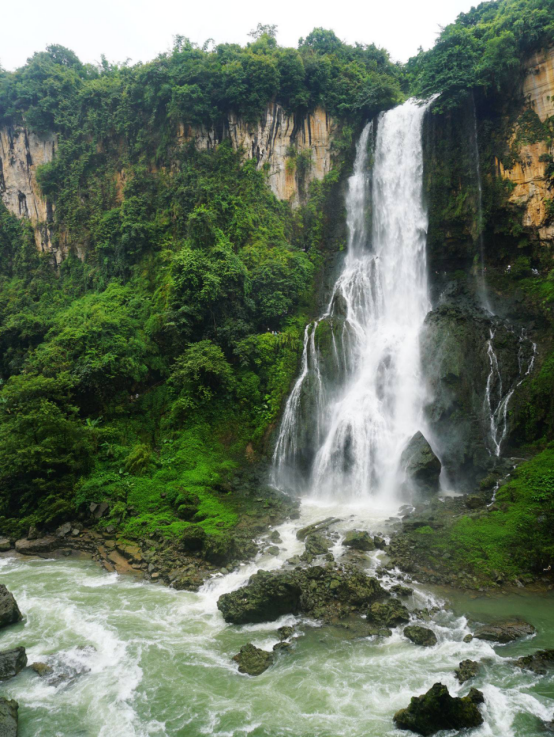
The most striking feature is the large number of waterfalls dropping from the canyon walls.
During the wet season, some waterfalls become enormous curtains of water, while smaller streams appear as thin silver threads against the rock.
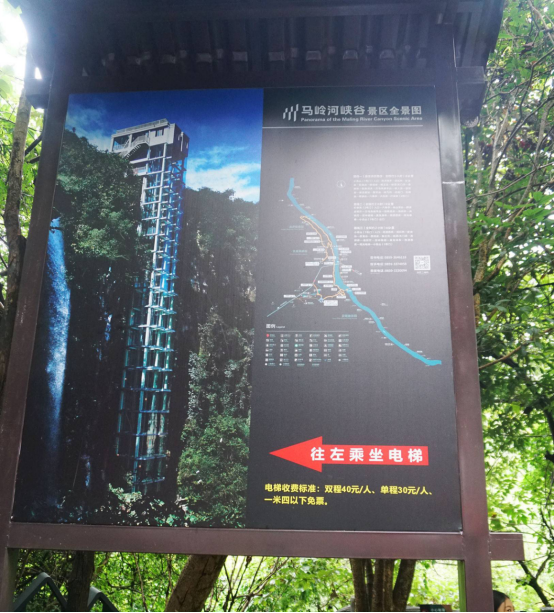
The central Tianxing Gallery section is particularly concentrated with waterfalls.
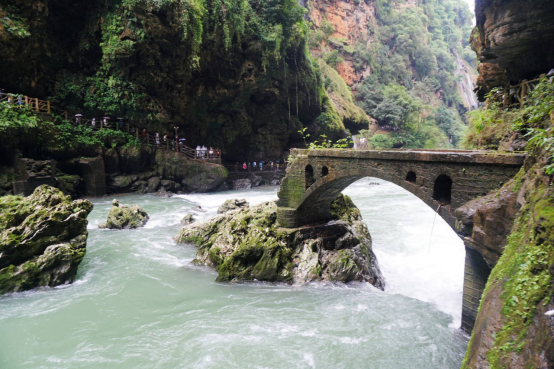
Our route formed a full loop. We entered from Xiaoqingshan, crossed Shuanghong Bridge and followed the eastern side before crossing Haishi Bridge and returning along the western side.
The trail involves a reasonable amount of walking, so comfortable shoes are important.
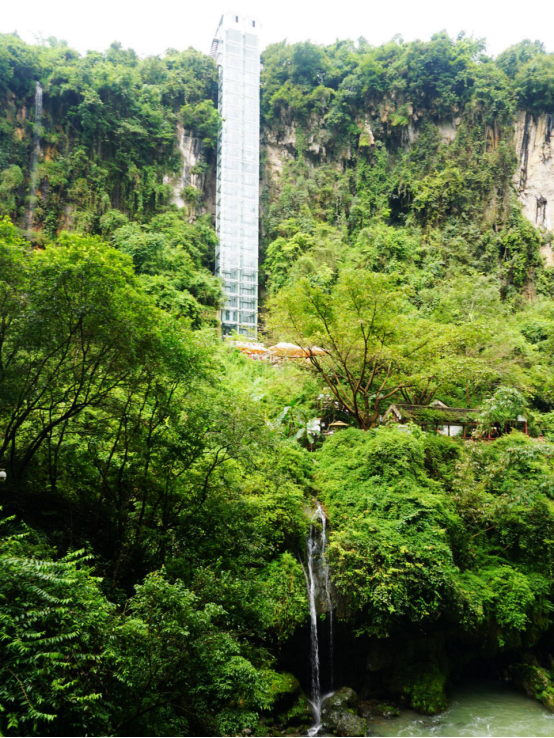
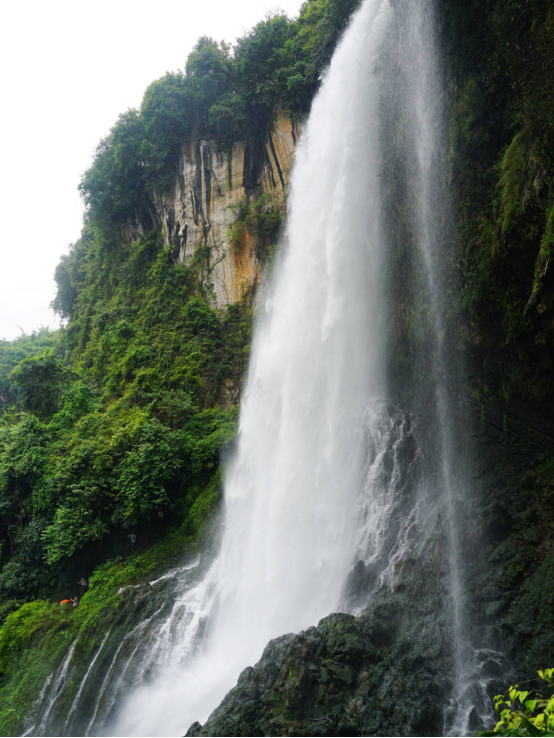
Wanma Benteng Waterfall
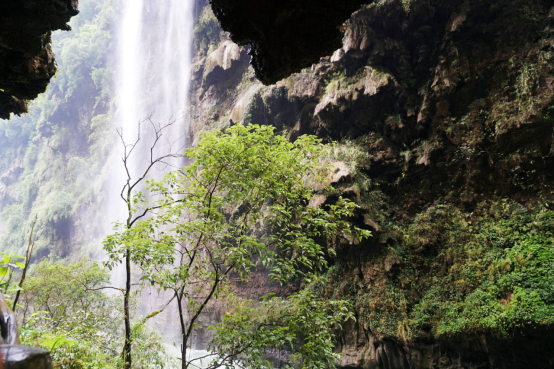
Wanma Benteng Waterfall was one of the visual highlights of the canyon.
During the wet season, multiple streams can descend side by side, creating a broad wall of falling water.
Huanglong Waterfall and Water Curtain Cave
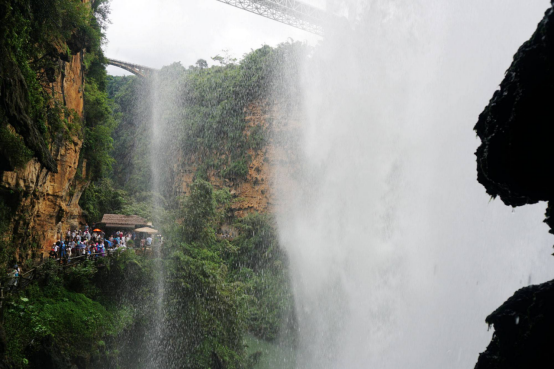
Huanglong Waterfall is another major waterfall along the route.
The path allows visitors to approach the Water Curtain Cave behind the waterfall, where the perspective changes completely.
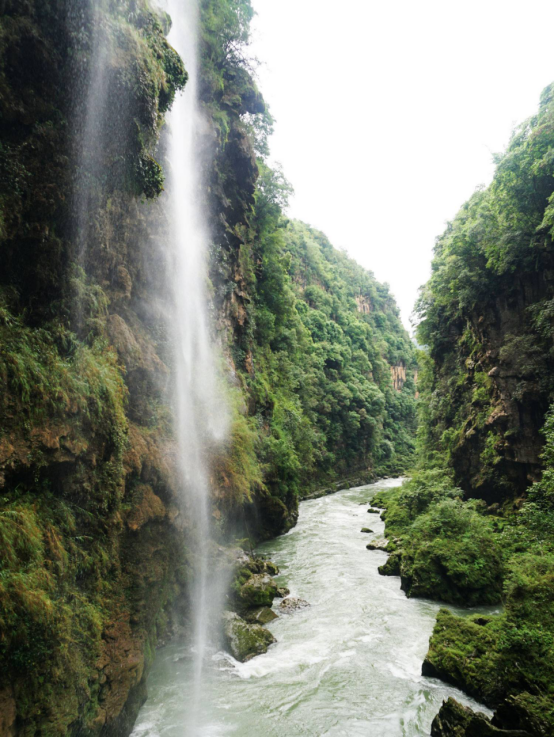
Haishi Suspension Bridge
Haishi Bridge crosses the canyon and provides a dramatic view over the waterfalls and surrounding cliffs.
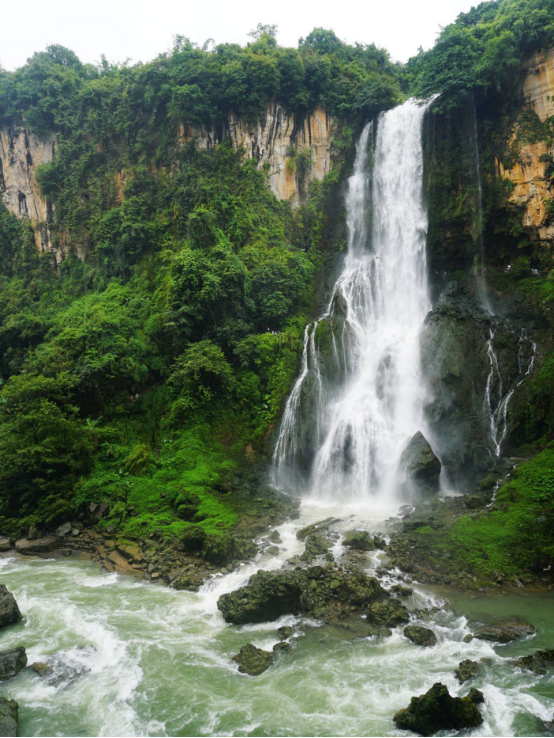
The canyon walls also contain extensive calcium-carbonate deposits formed over geological time, creating textures that resemble natural sculptures.
The entire visit took approximately three hours.
We chose to walk rather than take the elevator at Xiaoqingshan because the queue was extremely long. By the end of the route, the walking was beginning to test my sister’s knees.
Wanfenglin: A Long-Awaited Destination
Wanfenglin was one of the places I had wanted to visit for more than a decade.
Finally arriving there, especially after the rain had cleared, was a particularly satisfying moment of the trip.
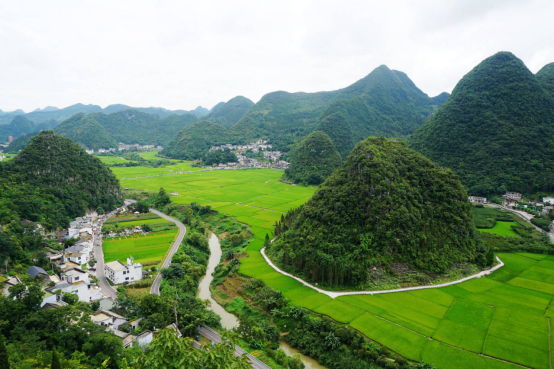
Wanfenglin is famous for its enormous concentration of cone-shaped karst peaks. The landscape combines mountains, farmland and villages in a way that is very different from the deep gorge we had just visited.
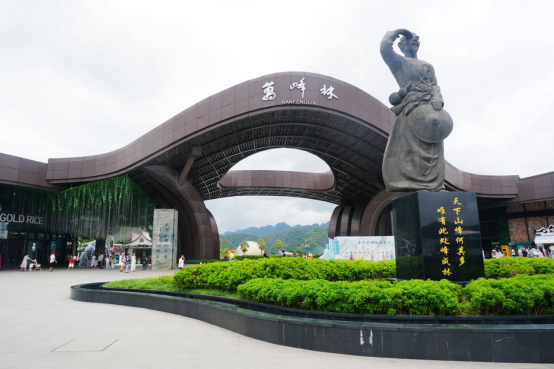
The experience of Wanfenglin is essentially divided into two perspectives: looking down over the landscape from the mountain viewpoints and then moving through the villages and farmland below.
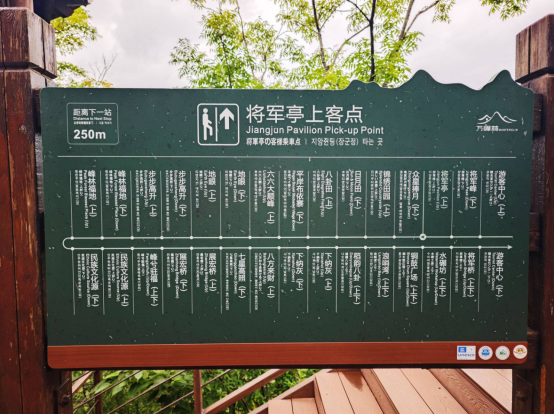
The scenic-area sightseeing buses stop at a number of viewpoints. During busy periods, the transport system can become crowded, so it is not necessary to stop at every viewpoint.
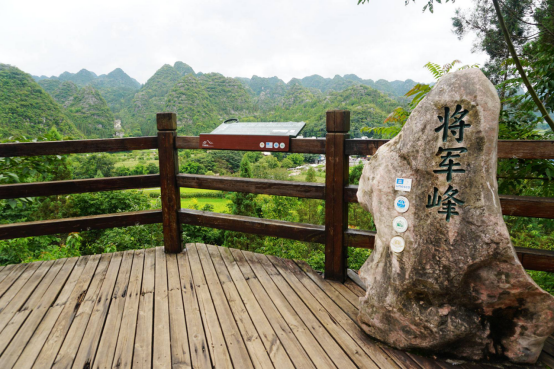
General Peak
General Peak is one of the recognizable landmarks near the entrance to Wanfenglin.
The isolated limestone peak has a shape that resembles a standing human figure and forms a natural gateway to the mountain landscape.
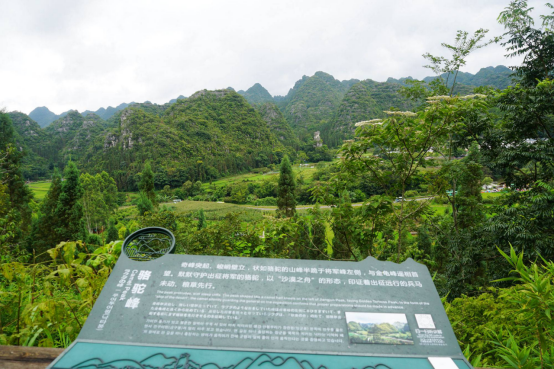
Camel Peak
Camel Peak is another distinctive isolated karst formation, named for its resemblance to a camel.
The viewpoint near General Peak provides a particularly good perspective of it.
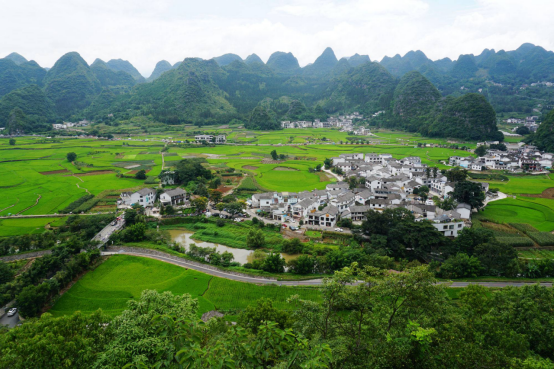
Jinxiu Farmland
Jinxiu Farmland is one of the major viewpoints along the sightseeing route.
From above, the flat agricultural fields contrast sharply with the cone-shaped karst peaks rising around them.
The combination of farmland, mountains and Buyi villages creates a landscape that feels almost like a traditional Chinese painting viewed from above.
Bagua Fields
Bagua Fields are agricultural fields arranged in a naturally distinctive pattern inside the scenic area.
The pattern resembles the traditional Bagua symbol.
Interestingly, I actually thought another section of farmland we photographed from the vehicle the previous day looked even more like the famous Bagua Fields.
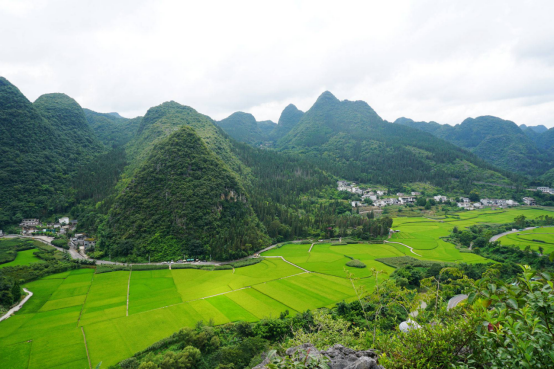
Bubugao Viewpoint and the Villages Below
Bubugao is one of the highest and most open viewpoints in Wanfenglin.
The viewpoint is reached by climbing a staircase of 99 steps.
From the top, the landscape opens toward the surrounding karst peaks and villages.
Another interesting feature is the large “Fu” character formed by agricultural crops in the fields below.
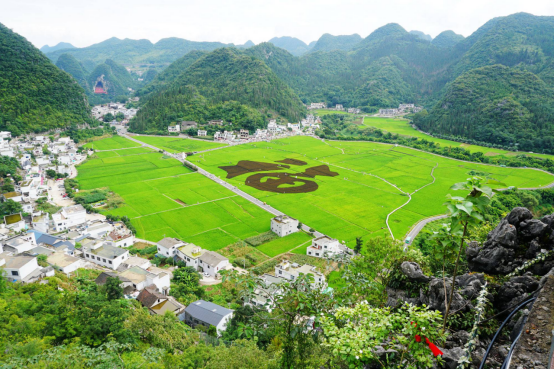
After descending from the mountain viewpoints, visitors can explore the villages and farmland below.
Xianahui Village is a historic Buyi village in the heart of Wanfenglin. Visitors can walk through the village, experience traditional crafts or explore the agricultural landscape.
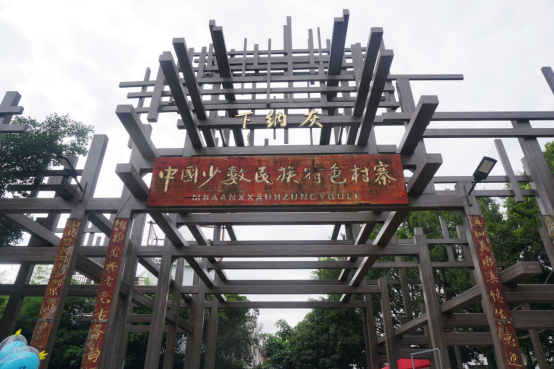
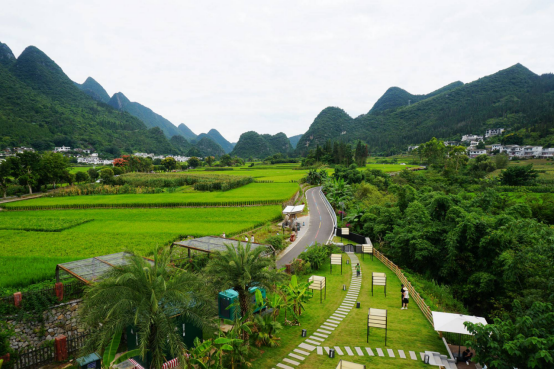
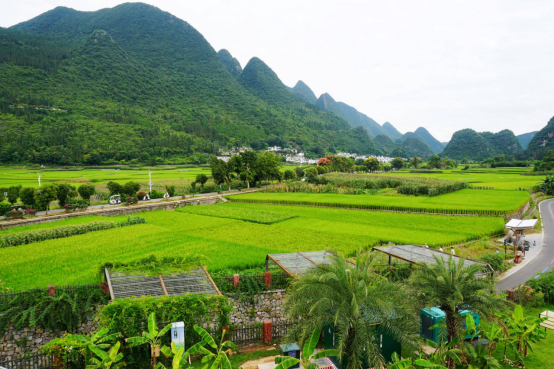
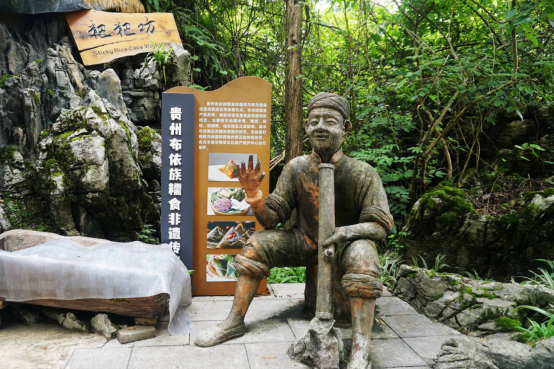
We spent approximately three hours exploring Wanfenglin.
What I Took Away From This Journey
After several days in Guizhou, the strongest impression was not a single attraction but the sheer variety of landscapes.
One day we were walking through a huge underground cave system. The next, we were following an underground river through natural cave openings. Later, we stood above a canyon surrounded by waterfalls and then looked across thousands of karst peaks and agricultural fields.
Guizhou is particularly interesting because these landscapes are not isolated from everyday life.
Roads pass through villages, farmland sits beneath dramatic mountains, and local food is often just as memorable as the scenic areas themselves.
Travel Lessons From the Road
Weather Matters
Summer weather in Guizhou can change quickly.
Rain affected our plans several times. Shedu River was closed because of heavy rain, while the Torch Festival we had hoped to watch was missed after the group returned to the hotel.
At Wumeng Grassland, thick fog also completely changed the experience.
If you travel through Guizhou during the rainy season, flexibility is essential.
Book Popular Attractions in Advance
Some major attractions use timed-entry reservations.
Maling River Canyon was a good example during this trip. Morning reservations had already become difficult to find, and we eventually had to use a different Chinese travel platform to secure tickets.
International visitors should therefore check ticketing arrangements before traveling rather than assuming that every attraction can be entered simply by purchasing a ticket at the gate.
Do Not Underestimate Walking Distances
Several attractions on this journey involve considerable walking.
Zhijin Cave has a long one-way walking route, Maling River Canyon involves substantial walking through the gorge, and some viewpoints at Wanfenglin require stairs.
Comfortable walking shoes are much more useful than fashionable footwear on this type of trip.
Expect Different Levels of Convenience
Guizhou has modern cities and highly developed tourist attractions, but some smaller towns and less-developed destinations offer fewer conveniences.
Hotel locations, restaurant choices, food delivery availability and public transportation can vary considerably.
That is part of the character of this kind of journey, but international visitors should be prepared for it.
Final Thoughts
This Guizhou journey was not a perfectly organized tour, and that was part of the experience.
There were missed attractions, unexpected rain, long queues, simple hotels, complicated ticket reservations and evenings when there was almost nowhere to eat.
But there were also moments that would have been difficult to reproduce on a perfectly scheduled package tour: sitting beside a train window for more than a day, unexpectedly meeting a former high-school classmate after 45 years, discovering an enormous underground cave, drifting through Jiudongtian by boat, watching rain move across the mountains and finally seeing Wanfenglin under clear skies.
For me, that is what travel is really about.
Guizhou is not simply a collection of famous attractions. It is a landscape of mountains, caves, rivers, villages and roads connecting them all.
Sometimes the most memorable part of the journey is not the place you planned to visit, but what happens between one destination and the next.
And that is exactly why I would remember this journey as a journey through Guizhou’s mountains — from the underground world beneath the earth to landscapes that seem to reach toward the sky.