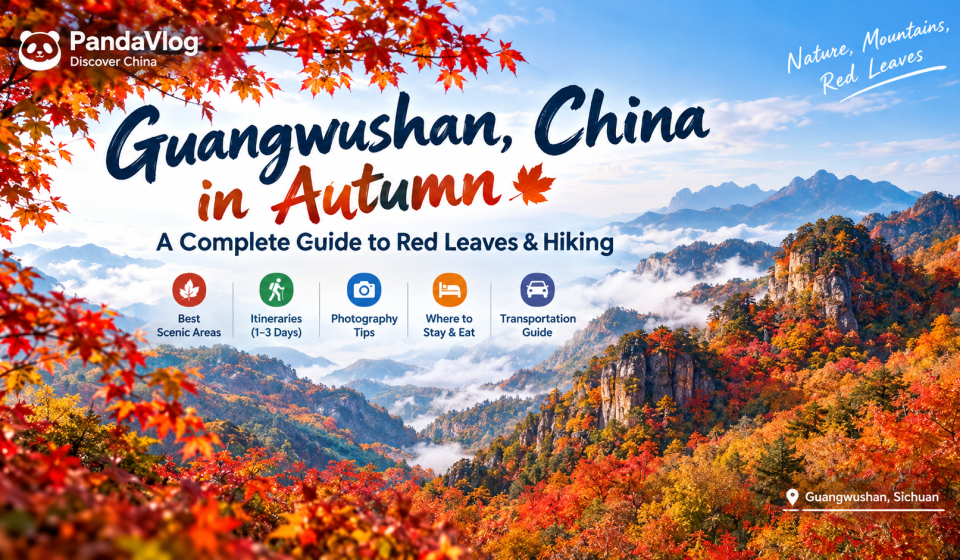

Guangwushan Autumn Travel Guide: Best Red Leaves, Scenic Areas & 1–3 Day Itineraries
When autumn arrives in northern Sichuan, the mountains around Guangwushan (光雾山) transform into one of China’s most spectacular autumn landscapes.
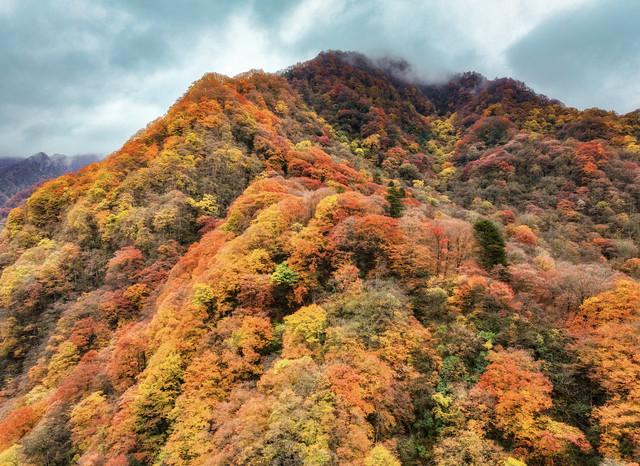
From late October into November, forests across the mountains turn into layers of red, orange, yellow, and green. Clear streams run through colorful valleys, while clouds and mist often drift between the mountain ridges.
Unlike a single viewpoint or small maple-leaf park, Guangwushan is a large mountain destination with several scenic areas. This is also what makes it confusing for first-time visitors.
You may find yourself wondering:
Which scenic area should I visit? Where are the best red-leaf viewpoints? How many days do I need? Should I stay in Guangwushan Town or somewhere closer to the mountains?
This guide is designed to answer those questions.
Whether you have one day, two days, or three days, this Guangwushan autumn itinerary will help you plan a more efficient trip without spending most of your time traveling between scenic areas.
Important: Autumn foliage dates, scenic-area opening arrangements, shuttle services, and ticket prices can change from year to year. Check the latest official information before traveling, especially during the October–November peak season.
Why Visit Guangwushan in Autumn?
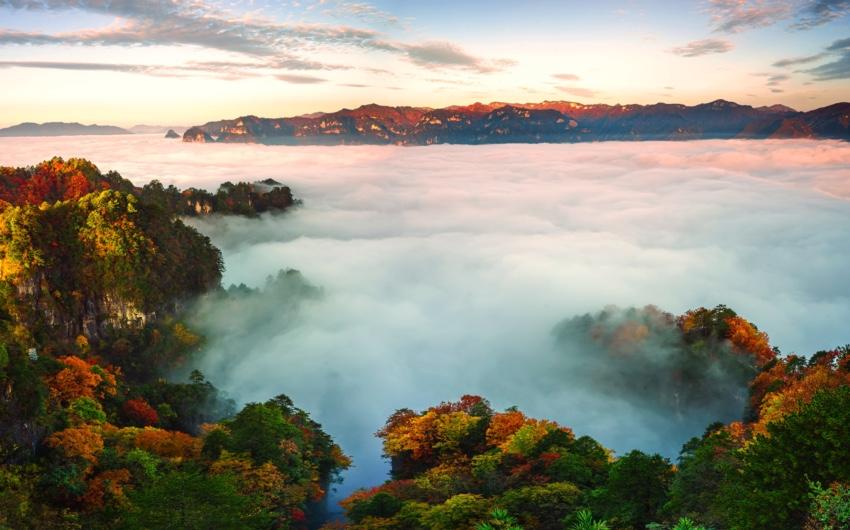
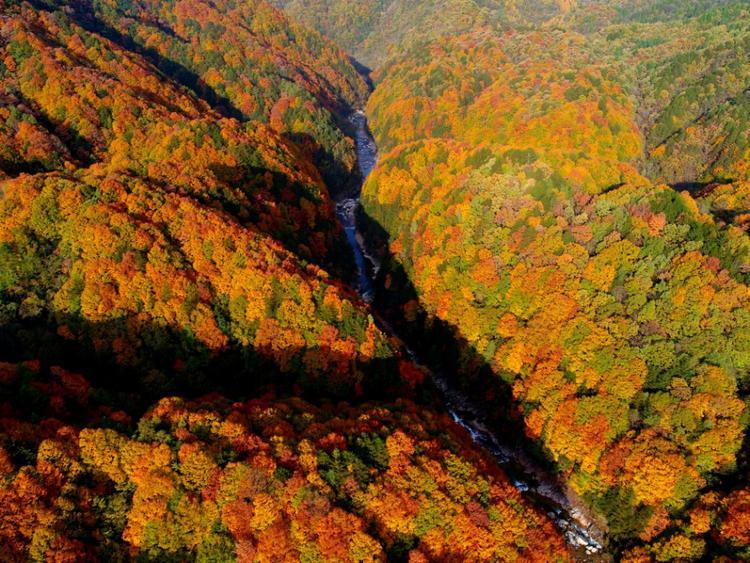
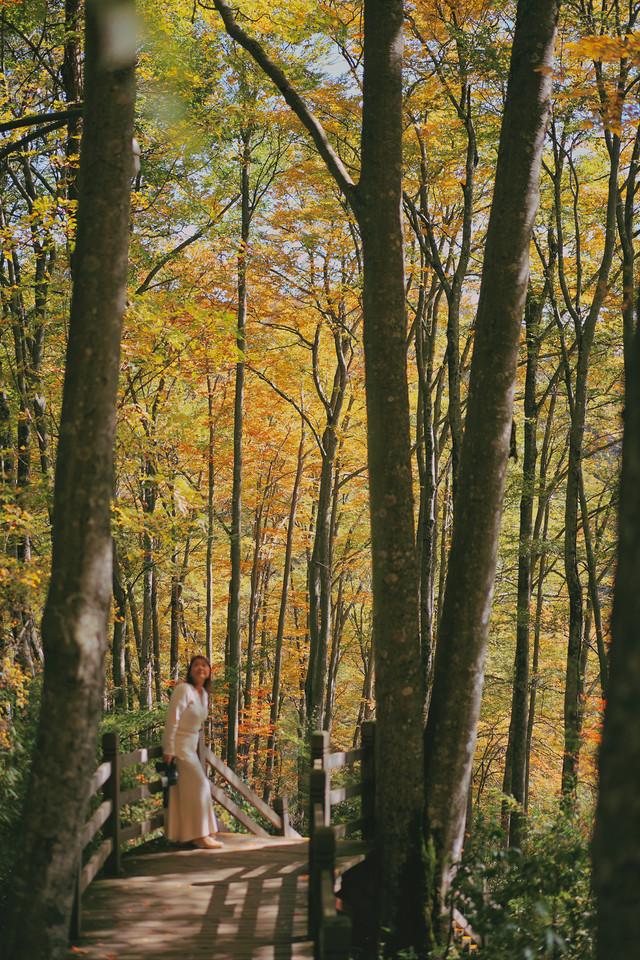
Guangwushan is particularly impressive in autumn because its scenery is not limited to red leaves.
The landscape combines:
- Vast colorful forests
- Mountain streams and waterfalls
- Deep valleys
- Limestone peaks
- Sea-of-cloud views
- Misty mountain ridges
- Long forest trails
The official planning materials for the Guangwushan area describe the annual red-leaf season as an October–November attraction, while local tourism materials highlight the area’s extensive autumn foliage landscape.
This combination makes Guangwushan especially attractive to travelers who enjoy landscape photography, hiking, road trips, and nature-focused travel.
When Is the Best Time to See Guangwushan’s Autumn Colors?
There is no single fixed date for peak foliage every year.
Temperature, rainfall, altitude, and the timing of the first cold weather can all affect when the leaves change.
A useful rule is to plan around late October to mid-November, while checking the latest local foliage reports shortly before your trip. Official planning documents identify October 25 as a typical key period for Guangwushan’s autumn foliage, but this should be treated as a general reference rather than a guaranteed date.
Late October
The forest usually begins showing stronger autumn colors.
You may see a mixture of:
- Green
- Yellow
- Orange
- Red
This period can be attractive for photographers because the landscape has more color variation rather than a single dominant tone.
Early November
This is generally the period most travelers should target if their main goal is peak autumn foliage.
Large areas of forest can become intensely colorful, creating the classic Guangwushan autumn landscape.
Mid-November
Some higher areas may already have lost part of their foliage, while lower areas can still retain attractive autumn colors.
This period can be quieter and may suit travelers who prefer a more peaceful atmosphere.
Best strategy: If autumn foliage is the main reason for your trip, aim for late October to early November, but confirm the actual foliage conditions before departure.
The 3 Main Scenic Areas of Guangwushan
One of the biggest mistakes first-time visitors make is treating Guangwushan as one compact attraction.
The major scenic areas offer very different experiences.
1. Micang Mountain / Daba Scenic Area
Best for: Red leaves, forests, panoramic views and photography
This is the area you should prioritize if you have never visited Guangwushan before and your main goal is to see the famous autumn foliage.
The scenery includes:
- Natural Art Gallery
- Black Bear Valley
- Large and Small Orchid Valley
- Xianglushan
- Forest viewpoints
- Mountain and cloud-sea landscapes
The combination of colorful forests and mountain valleys makes this one of the strongest choices for a first visit.
Best for:
📸 Landscape photographers
🍁 First-time visitors
🥾 Nature lovers
☁️ Cloud-sea photography
2. Shibayuetan — Eighteen Moon Ponds
Best for: Water, waterfalls and reflections
Shibayuetan (十八月潭) offers a completely different type of autumn scenery.
Instead of focusing mainly on large mountain panoramas, the landscape combines:
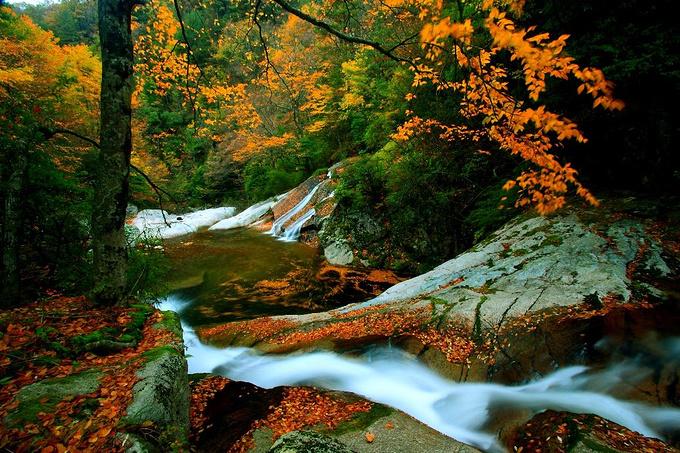
- Clear pools
- Small waterfalls
- Forest streams
- Red leaves
- Wooden walkways
The autumn foliage reflected in the water can create some of Guangwushan’s most atmospheric photographs.
This area is particularly appealing if you prefer quiet streams and intimate forest scenery over huge panoramic views.
3. Taoyuan Scenic Area
Best for: Mountain landscapes, rock formations and hiking
Taoyuan Scenic Area offers a more rugged mountain experience.
Expect:
- Dramatic peaks
- Rocky landscapes
- Forest trails
- Mountain viewpoints
- Cloud and mist
- Autumn foliage
It is a good choice for travelers who want to combine autumn scenery with hiking.
If your priority is simply to see the most colorful forests in the shortest possible time, however, I would prioritize the Micang Mountain area first.
How Many Days Do You Need?
For most international visitors, I recommend:
| Trip Length | Best For | Recommendation |
|---|---|---|
| 1 Day | Short trips | Micang Mountain only |
| 2 Days | First-time visitors | Micang Mountain + Shibayuetan |
| 3 Days | Photographers & slow travelers | Micang Mountain + Taoyuan + Shibayuetan |
If you are traveling a long distance to reach Guangwushan, two days is the best balance.
One day can feel rushed, while three days allows you to explore the mountains at a much slower pace.
1-Day Guangwushan Itinerary
Best for: Travelers with limited time
Morning: Enter Micang Mountain
Start early.
During the autumn peak season, arriving before the busiest period gives you a better chance of enjoying the forest with fewer visitors.
Begin with the major foliage viewpoints and forest corridors.
Late Morning: Natural Art Gallery
The Natural Art Gallery is one of the classic areas for viewing colorful forest scenery.
Rather than rushing from one photo spot to another, take some time to walk along the forest paths.
Afternoon: Black Bear Valley & Orchid Valleys
Continue toward:
- Black Bear Valley
- Large Orchid Valley
- Small Orchid Valley
These areas combine autumn foliage with streams and valley scenery.
Optional: Xianglushan
If weather and operating conditions are favorable, consider visiting Xianglushan for broader mountain views.
This is particularly worthwhile on a clear day.
If visibility is poor because of heavy fog or rain, however, a high-altitude viewpoint may not be worth the extra time.
Recommended Time
Allow approximately 5–7 hours for a focused day in this area, depending on transport arrangements, walking speed, and seasonal crowd levels.
2-Day Guangwushan Itinerary
Best for: First-time visitors, couples and families
This is the itinerary I would recommend to most travelers.
Day 1: Micang Mountain
Arrive in Guangwushan Town in the morning and head toward the Micang Mountain scenic area.
Spend the day exploring:
Natural Art Gallery → Black Bear Valley → Large & Small Orchid Valleys → Xianglushan (optional)
Do not try to see every attraction.
Instead, concentrate on the areas with the best foliage and photography conditions.
If the weather is clear, Xianglushan can provide a dramatic mountain panorama.
Return to Guangwushan Town in the evening.
Day 2: Shibayuetan
Start your second day with Shibayuetan.
This area is particularly beautiful in autumn because the colorful forest is combined with streams, waterfalls and pools.
Allow around 3–4 hours for a relaxed visit, depending on the route and operating conditions.
After lunch, leave Guangwushan and continue your journey.
Why This 2-Day Plan Works
You experience two very different sides of Guangwushan:
Day 1: Vast mountain forests and panoramic autumn colors
Day 2: Waterfalls, streams and red-leaf reflections
This gives you much more variety than spending two days in the same scenic area.
3-Day Guangwushan Itinerary
Best for: Landscape photographers and slow travelers
If photography is your main reason for visiting Guangwushan, three days will give you considerably more flexibility.
Day 1: Arrive in Guangwushan Town
Keep the first day relaxed.
Check into your accommodation and explore the town rather than immediately rushing into the mountains.
Use the evening to:
- Check the next day’s weather
- Prepare camera equipment
- Confirm scenic-area transport
- Rest before an early start
Day 2: Full Day in Micang Mountain
Spend the entire day exploring the main foliage area.
Instead of following a strict checklist, use the changing light to your advantage.
Morning
Soft morning light can create atmospheric conditions in the forest.
Midday
Use the stronger daylight for wide mountain landscapes.
Afternoon
Look for side lighting through the forest.
Late Afternoon
If the weather is clear and transport is operating, consider heading toward Xianglushan for broader mountain views.
Day 3: Taoyuan + Shibayuetan
Start the morning at Taoyuan Scenic Area.
Explore its mountain trails and distinctive rock formations before heading toward Shibayuetan.
Finish your trip among the streams, pools and autumn foliage of Shibayuetan.
This route gives photographers a useful combination of:
mountains → forests → rock formations → water → autumn foliage
Where to Stay in Guangwushan
For most international travelers, Guangwushan Town is the most practical base.
It offers access to restaurants, accommodation and transportation connections, making it easier to organize a multi-day trip.
Accommodation ranges from simple guesthouses to more comfortable hotels.
Why Stay in Guangwushan Town?
- Convenient for first-time visitors
- More dining choices
- Easier transportation planning
- Good base for multiple scenic areas
During the autumn foliage season, demand can rise sharply, so booking accommodation in advance is recommended.
What to Eat in Guangwushan
Autumn in the mountains is also a good time to explore local Bashan food.
Look for:
Guangwushan Smoked Bacon
A traditional mountain-style cured pork with a distinctive smoky aroma.
Bashan Chicken Soup
A simple, comforting soup that works particularly well after a cool day outdoors.
Wild Mushroom Dishes
Mountain mushrooms are commonly used in local cooking and can be served in soups or stir-fried dishes.
Seasonal Vegetables
Simple locally grown vegetables are often served alongside richer meat dishes.
For international travelers, local restaurants in and around Guangwushan Town are generally a good place to sample regional food without needing to travel far after a long hiking day.
How to Get Around Guangwushan
This is one of the most important things to understand before visiting.
Guangwushan is not one compact park.
The scenic areas are spread across a large mountainous region, and internal transport arrangements vary by scenic area and season.
Do not assume that you can simply walk from one major scenic area to another.
For a multi-area trip, a private car, rental car where practical, or private transfer can make the journey considerably easier.
Within individual scenic areas, use the designated shuttle buses or other official transport where required.
Because transport arrangements can change during the autumn festival period, check the latest operating information before departure.
Should You Take the Xianglushan Cable Car?
If the cable car is operating during your visit, the decision largely depends on the weather.
Good Weather
Yes.
Clear weather can provide excellent views across the colorful mountain landscape.
Foggy Weather
Think twice.
Heavy fog can completely hide the surrounding mountains.
Rainy Weather
Unless you specifically enjoy misty mountain photography, the panoramic value may be limited.
The rule is simple:
Don’t pay for a mountain panorama when you can’t see the mountains.
Photography Tips for Guangwushan
Shoot Early
Morning light is often softer and the trails can be quieter.
Look for Reflections
At Shibayuetan, water can add a second layer of autumn color to your composition.
Don’t Photograph Only Red Leaves
The most interesting images often combine:
red leaves + green forest + water + rocks + mist
rather than simply filling the frame with red foliage.
Watch the Weather
Mist is not necessarily bad.
At Guangwushan, fog and clouds can create atmospheric photographs that are impossible to capture on a completely clear day.
Essential Travel Tips
1. Check Foliage Conditions Before You Go
Do not rely entirely on a fixed date such as “October 25.”
Autumn color changes with weather and altitude.
2. Start Early
During peak foliage season, popular areas can become busy.
An early start is especially useful for photographers.
3. Bring Warm Clothing
Guangwushan is mountainous and temperatures can change quickly in autumn. The local climate also has noticeable seasonal and altitude-related variation.
Bring:
- Windproof jacket
- Warm layers
- Comfortable hiking shoes
- Rain protection
4. Wear Proper Shoes
Some routes include steps, slopes and wet surfaces.
Running shoes with good grip are preferable to casual fashion shoes.
5. Don’t Pick Leaves
The autumn foliage may be beautiful, but the forest is a protected natural environment.
Stay on designated trails and avoid damaging vegetation.
6. Plan Around the Scenic Areas
Do not try to visit every scenic area in one day.
It is better to experience one area properly than spend most of the day sitting in a vehicle.
Is Guangwushan Worth Visiting for International Travelers?
Absolutely — especially if you are looking for an autumn destination beyond the better-known tourist routes of Beijing, Shanghai, Chengdu and western Sichuan.
Guangwushan offers something different.
It is not primarily about famous historical buildings or city attractions.
Instead, the experience is about:
mountains + forests + water + mist + autumn color.
For photographers and nature lovers, that combination can be particularly rewarding.
Frequently Asked Questions
When is the best time to visit Guangwushan for autumn leaves?
Late October to early November is generally a strong period to target, but the exact peak changes each year depending on weather and altitude. Official planning information identifies late October as a key period for the area’s autumn foliage.
How many days do I need in Guangwushan?
Two days is the best choice for most first-time visitors.
One day is possible if you focus on Micang Mountain. Three days is better for photographers and travelers who prefer a slower pace.
Which Guangwushan scenic area is best for first-time visitors?
If your main goal is autumn foliage, start with Micang Mountain / Daba Scenic Area.
Is Guangwushan suitable for families?
Yes, but choose your routes carefully. Some scenic areas have easier boardwalk sections, while others involve more hiking and uneven terrain.
Can I visit Guangwushan without a car?
It is possible, but planning is more complicated because the scenic areas are spread out and transportation arrangements vary. For a multi-area trip, a private transfer or organized transport can make the journey easier.
Is Guangwushan worth visiting outside the peak foliage period?
Yes. The mountain landscape itself is attractive throughout the year, although autumn is the main season for travelers specifically seeking colorful foliage. Local official materials describe Guangwushan as a year-round mountain destination with distinct seasonal scenery.
Final Thoughts
Guangwushan is one of the places where autumn is not simply a change of color.
It changes the entire character of the landscape.
Red and golden forests cover the mountains, streams reflect the changing leaves, and clouds drift through the valleys.
For first-time visitors, the most important thing is not trying to see everything.
Choose your scenic areas carefully, allow enough time, check the foliage conditions before you travel, and leave some room for the weather to surprise you.
If you have only one day, focus on Micang Mountain.
If you have two days, add Shibayuetan.
And if you have three days, slow down and explore Taoyuan as well.
For an autumn trip through Sichuan, Guangwushan deserves a place on your China travel list.