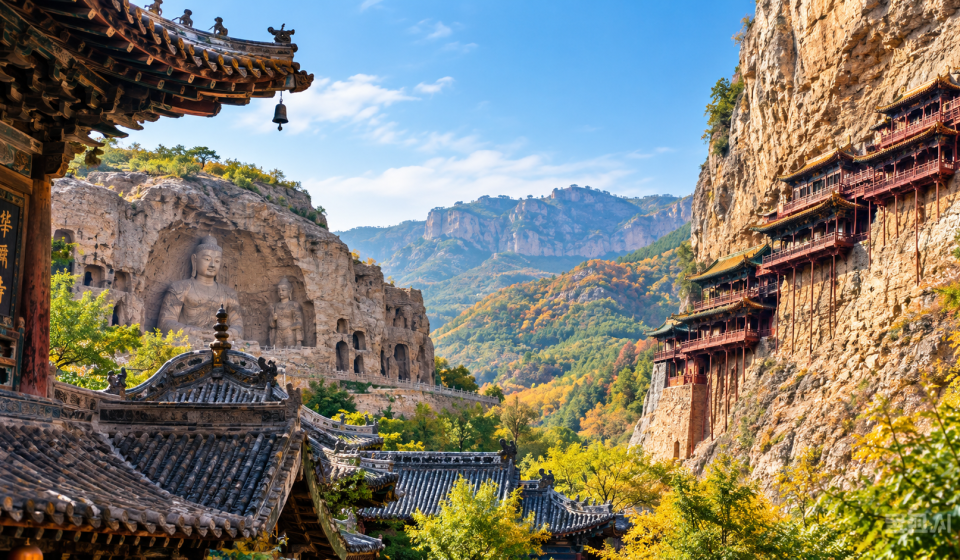

I first visited Datong in 2007. At the time, my strongest memory of the city was its dusty brown and gray landscape. The whole city seemed to be covered by a thin layer of haze, giving it a somewhat quiet and austere atmosphere.
More than a decade later, I returned to Datong—and the city had changed in many ways.
The greenery around the Yungang Grottoes softened the dry early-autumn landscape, while tiny wildflowers scattered across the mountains of Hengshan added unexpected color to the journey.
During my first visit, I only explored the Yungang Grottoes and could only admire the Hanging Temple from a distance. This time, I finally had the chance to visit several of the ancient temples I had wanted to see for years.
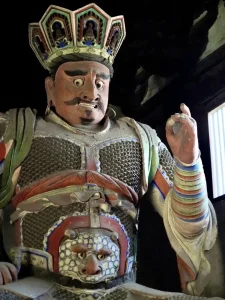
Among them, two left the st solemn, restrained, and remarkably quiet. Its architecture has a simple and dignified appearance that does not immediately reveal what awaits inside.
Step into the main hall, however, and the atmosphere changes completely.
The vivid Ming Dynasty guardian-king murals immediately catch your attention. Their dramatic expressions, powerful composition, and strong visual presence create a striking contrast with the quiet exterior of the temple.
It was one of the most memorable surprises of this trip.
Shanhua Temple: A More Gentle Kind of Beauty
Shanhua Temple felt very different.
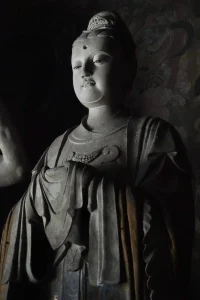
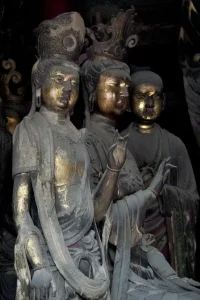
Its name can be roughly associated with the idea of “cultivating goodness,” and for me, one particular image inside the temple seemed to embody that feeling perfectly.
The lowered gaze and compassionate expression of the Auspicious Heavenly Maiden create a remarkably gentle atmosphere.
Standing in front of the statue, I found myself thinking that the idea behind the name “Shanhua” was expressed more vividly here than words could describe.
My 3-Day Datong Itinerary
This trip was relatively short, so I focused mainly on Datong’s most important historical and cultural sites.
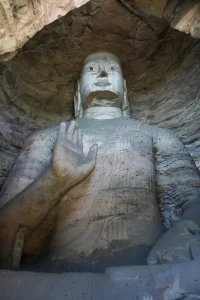
Day 1 — Yungang Grottoes
Morning: Arrive at Datong Airport
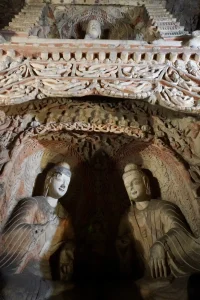
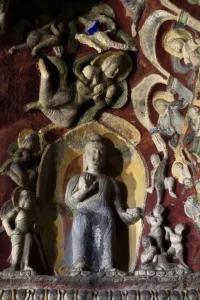
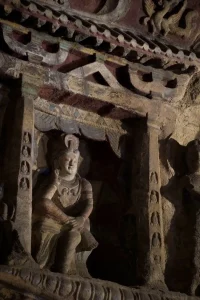
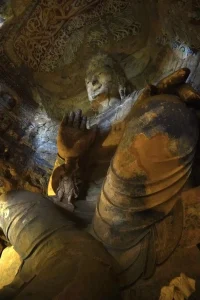
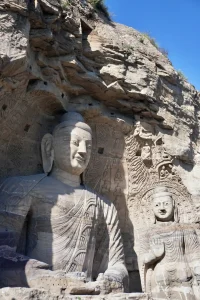
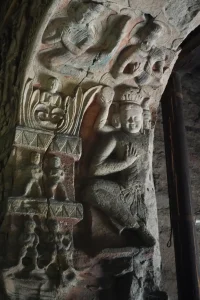
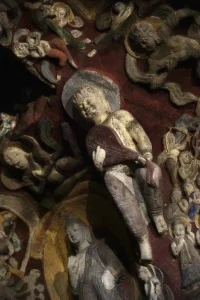
Afternoon: Visit the Yungang Grottoes
After arriving in Datong, I spent the afternoon at the Yungang Grottoes.
The site is one of the highlights of any trip to Datong, and it is worth allowing several hours rather than trying to rush through the caves.
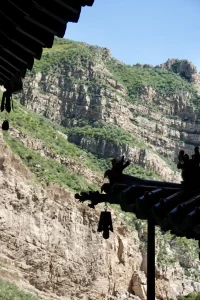
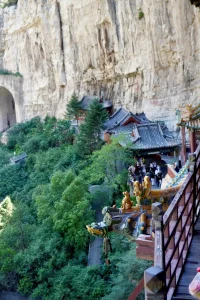
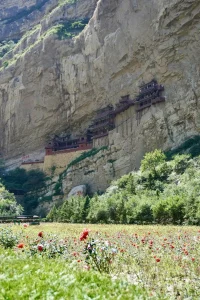
Day 2 — Hanging Temple and Ancient Temples
Morning: Hanging Temple
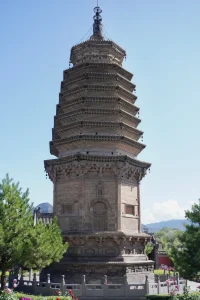
Afternoon: Yuanjue Temple → Chan Temple → Historical and Cultural Exhibition Hall
Evening: A short walk around Datong Ancient City
The second day was dedicated to the temples and historic sites around the Hengshan area.
After visiting the Hanging Temple in the morning, I spent the afternoon exploring several lesser-known historic sites nearby.
In the evening, I returned to Datong Ancient City for a short walk.
Unfortunately, the schedule was too tight to properly explore the old city, which became one of the few regrets of this trip.
Day 3 — Huayan Temple and Shanhua Temple
Morning: Huayan Temple → Shanhua Temple
Noon: A short visit to the ancient city walls
The final morning focused on two of Datong’s most important Buddhist temples.
After visiting Huayan Temple and Shanhua Temple, I made a brief stop at the ancient city walls before continuing the journey.
Practical Tips for Visiting Datong
Yungang Grottoes: A Simple Way to Avoid the Crowds
If you want to enjoy the Yungang Grottoes with fewer people around, timing can make a noticeable difference.
Based on my experience, arriving at around 12:30 PM worked well.
Instead of following the caves in numerical order from the beginning, consider heading directly to Cave 6 first and then continuing toward Cave 20 and the later caves.
After that, return to explore Caves 1–5.
As the afternoon gets later and the park approaches closing time, visitor numbers tend to decrease. This can also give you a better chance to return to Cave 20 and take photos without large crowds in the background.
Hanging Temple: Go Earlier in the Day
If you want to actually climb onto the Hanging Temple rather than simply view it from below, I recommend going in the morning.
We arrived around noon and found that the number of visitors was still relatively manageable. By around 1 PM, when we came back down, a long line had already formed below the temple.
The situation can vary depending on the day and season, but visiting earlier is generally a safer choice if climbing the temple is important to you.
Yuanjue Temple and Chan Temple
Yuanjue Temple and Chan Temple are both located in the historic area near the Hanging Temple.
Rather than treating them as quick photo stops, I recommend leaving an entire afternoon for this area if you are interested in ancient architecture, Buddhist art, and historic temples.
Some of these sites are much quieter than Datong’s major tourist attractions, which makes the experience feel very different.
Huayan Temple: See the Liao-Jin Architecture First
Huayan Temple contains a number of later reconstructed buildings and popular photo spots.
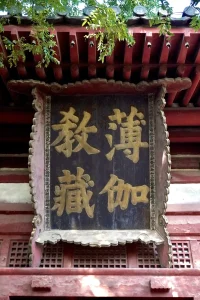
If your main interest is in the surviving architectural heritage associated with the Liao and Jin dynasties, consider arriving when the temple opens and heading directly to the Bojia Tibetan Scripture Hall (薄伽教藏殿).
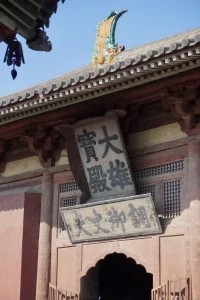
Afterward, you can continue to the Mahavira Hall (大雄宝殿) and explore the rest of the temple at a more relaxed pace.
This approach can help you prioritize the historical buildings before spending time at the more modern or reconstructed areas.
Transportation Around Datong
Datong is relatively convenient for independent travelers, even if you are not driving.
There are buses from Datong Ancient City to several nearby attractions, including the Hanging Temple and Yingxian Wooden Pagoda.
For solo travelers, these buses can be a practical alternative to renting a car or joining a tour group.
When purchasing tickets, make sure to use official or reputable channels.
Getting to the Hanging Temple
If you drive or take a bus to the North Hengshan Visitor Center, you will need to transfer to a shuttle bus to reach the Hanging Temple area.
During our visit, the round-trip shuttle ticket was RMB 20.
You may encounter posts online claiming that there are other ways to enter the area for free. I would not recommend relying on unofficial routes or shortcuts. Following the official transportation arrangements is a much safer and more straightforward option.
Travel Tip: Transportation arrangements and ticket prices can change, so check the latest official information before your trip.
What Is Autumn Weather Like in Datong?
Datong’s autumn weather can be surprisingly variable.
The temperature difference between day and night can be significant. Early mornings and evenings may feel cool and comfortable, while direct sunlight during the day can still feel surprisingly dry and hot.
When checking the weather forecast, don’t look only at the day’s highest and lowest temperatures.
Instead, pay attention to the actual temperature during the hours when you will be outdoors.
For example, if you plan to visit the Hanging Temple in the afternoon, check the afternoon forecast rather than relying only on the daily high and low.
This makes it much easier to decide whether you need a jacket, long sleeves, or lighter clothing.
What to Visit After Datong
Our journey did not end in Datong.
After leaving the city, we traveled south and continued exploring some of the region’s historic Buddhist and architectural treasures.
Our route included:
Datong → Jingtu Temple → Yingxian Wooden Pagoda → Shuozhou → Chongfu Temple
We stayed overnight in Shuozhou before visiting Chongfu Temple the following day.
If you are interested in ancient Chinese architecture, this extended route can be a natural continuation of a Datong trip.
Instead of treating Datong as a destination that can be completed in just two or three days, you can use it as a starting point for exploring some of the remarkable historic buildings scattered across northern Shanxi.
Coming Back to Datong After More Than Ten Years
The biggest difference between my two visits was not simply how Datong looked.
It was how much more there was to discover.
In 2009, I came to Datong mainly for the Yungang Grottoes. This time, I was able to connect the grottoes with the temples, ancient architecture, mountain landscapes, and historic towns surrounding the city.
And yet, I still feel that I only saw part of Datong.
I didn’t have enough time to properly wander through the ancient city, sit down somewhere, explore its streets slowly, or simply experience the city without following a schedule.
Perhaps that is a good reason to come back again.
Next time, I hope I can spend less time checking the itinerary—and more time simply walking through Datong.
Panda Vlog Travel Note:
Datong is more than a gateway to the Yungang Grottoes and the Hanging Temple. For travelers interested in Chinese history and ancient architecture, the surrounding area offers an impressive concentration of historic Buddhist sites and surviving Liao- and Jin-period architectural heritage. A slower itinerary can make the journey much more rewarding.rongest impression on me.