English Signage at Tourist Attractions in China: What International Visitors Can Expect

If you’re planning a trip to China, navigating major tourist attractions is generally straightforward, even if you don’t speak Chinese.
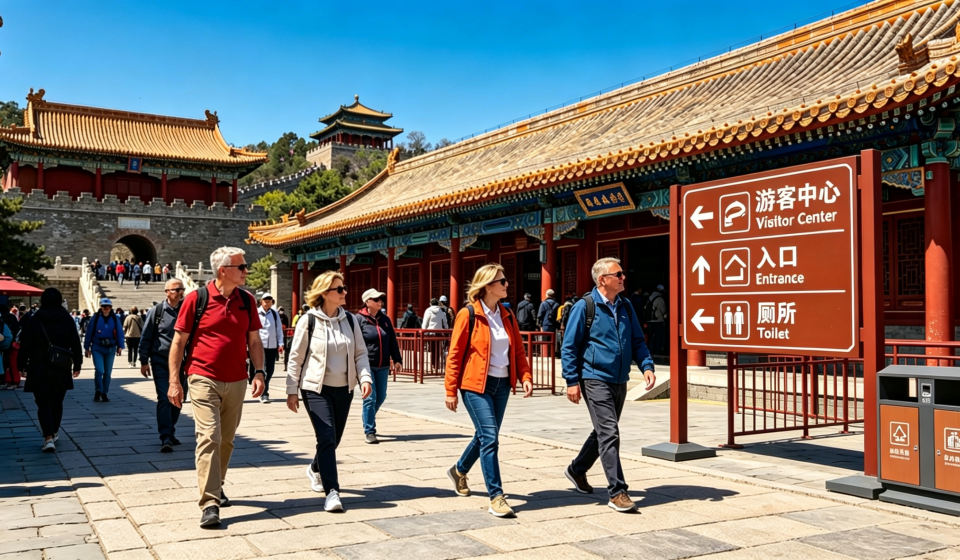
Most of China’s popular tourist destinations—including 4A and 5A-rated scenic areas, UNESCO World Heritage Sites, and attractions in major cities—provide bilingual public signage in both Chinese and English. For most international visitors, especially those from Europe and North America, the available English information is sufficient for getting around and understanding the main attractions.
English Signage Is Widely Available at Major Attractions
At China’s most popular destinations, English signage is considered a standard visitor service.
You’ll typically find bilingual signs at:
- Entrances and exits
- Visitor maps and wayfinding signs
- Tourist information centers
- Ticket offices
- Restrooms
- Restaurants and souvenir shops
- Scenic viewpoints
- Safety notices and emergency information
Well-known attractions such as the Forbidden City, the Great Wall, the Terracotta Army, Jiuzhaigou National Park, Huangshan (Yellow Mountain), Dunhuang, and Sanxingdui all provide comprehensive Chinese-English signage throughout their visitor areas.
Major Tourist Cities Offer Excellent English Support
Cities that regularly welcome international visitors generally provide bilingual signage not only inside attractions but also throughout surrounding tourist districts.
This is especially common in cities such as:
- Beijing
- Shanghai
- Xi’an
- Chengdu
- Hangzhou
- Nanjing
- Guilin
Visitors will often see English signs in metro stations, airports, railway stations, museums, parks, pedestrian streets, and other popular tourist areas.
What Types of Signs Will You See?
Navigation and Directions
Most attractions provide English translations for essential navigation, including:
- Entrance
- Exit
- Visitor Center
- Information
- Restroom / Toilet
- Parking
- Shuttle Bus
- Emergency Exit
Large attractions also include bilingual site maps and directional signs to major landmarks.
Attraction Information
Historical sites, museums, cultural landmarks, and natural attractions usually display interpretive panels in both Chinese and English.
These signs commonly explain:
- Historical background
- Cultural significance
- Architecture
- Archaeological discoveries
- Natural features
While English descriptions are often shorter than the Chinese versions, they generally provide enough context for international visitors.
Safety and Visitor Guidelines
Safety notices and visitor regulations are almost always bilingual.
Common examples include:
- No Smoking
- No Photography
- Please Queue
- Keep Off the Grass
- Caution
- Mind Your Step
- Do Not Climb
These translations follow internationally recognized wording and are easy to understand.
Visitor Facilities
Facilities throughout major attractions are clearly marked in English, including:
- Ticket Office
- Gift Shop
- Restaurant
- Café
- First Aid
- Accessible Facilities
- Lost & Found
What Is the Overall Experience Like?
At Popular Attractions
The quality of English signage is generally very good.
Most well-known destinations use standardized translations with clear layouts and internationally familiar terminology, making it easy for foreign visitors to navigate independently.
At Smaller or Remote Attractions
English support can be more limited.
Some lesser-known scenic spots, rural attractions, or non-rated destinations may have only Chinese signage or very brief English translations. If you’re planning to visit these places, it’s helpful to download the attraction’s official app or use a translation app before your visit.
Translation Quality
Translation standards have improved significantly over the past decade.
While you may occasionally notice minor spelling mistakes or slightly literal translations at smaller attractions, these rarely affect comprehension. At major tourist sites, English translations are generally accurate and professionally produced.
Digital Information
Many attractions now supplement physical signage with QR codes.
By scanning a QR code, visitors can often access:
- Detailed English introductions
- Audio guides
- Interactive maps
- Visitor information
- Recommended walking routes
This provides much more information than can fit on traditional signboards.
Bottom Line
For most international travelers, visiting China’s major tourist attractions is easier than many people expect. English signage is now standard at popular destinations, UNESCO World Heritage Sites, and 4A/5A-rated scenic areas, making navigation and sightseeing straightforward even without speaking Chinese.
If your itinerary focuses on China’s best-known attractions and major cities, you’ll have little difficulty finding bilingual information. For smaller or more remote destinations, carrying a translation app or checking official visitor information in advance is still recommended.